How do supercomputers pave the way for laptops?
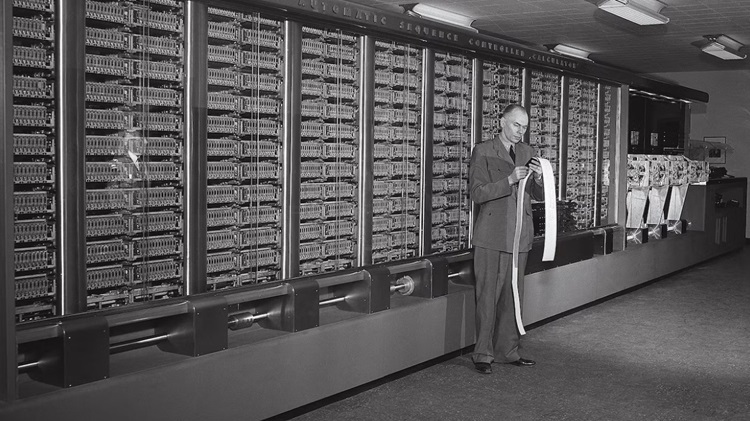
During the 1940s and 1950s, programmable machines that could perform calculations on an unprecedented scale were born one after another, mainly in the United States. Despite their enormous size, they are the prototype of personal computers, according to National Geographic.
Mark I (1944)

In 1936, Howard Aiken, a graduate student at Harvard University, decided to create a programmable computer inspired by the 19th century research of British mathematician Charles Babbage. In 1939, Aiken obtained funding from IBM. Two years later, the US Navy joined the project with the goal of using the machine to determine the flight path of long-range artillery shells, a highly complex calculation. Mark I was completed by a group of men and women scientists in 1944 and was used to calculate the range of an atomic bomb explosion. Mark I has impressive dimensions, nearly 15 m long, weighs 5 tons and includes 750,000 parts. Three tape readers at the back of the room were used to collect data.
ENIAC (1945)
In 1943, the US military funded a computer project led by two engineers at the University of Pennsylvania, John Mauchly and John Presper Eckert, Jr. The goal was to create an electronic machine that was faster and more reliable than the Mark I. The ENIAC (Electronic Numerical Integrator and Computer) machine occupied an entire 15 x 9 m room, with 40 panels over 1.8 m high. ENIAC contained more than 17,000 vacuum tubes, coordinating electrical circuits much faster and more efficiently than the mechanical switches of the Mark I. This computer was programmed using three function tables. It could perform 5,000 additions per second while the Mark I could perform fewer than 4. Launched in February 1946 as "the world's first electronic computer", ENIAC was used by the military to calculate the feasibility of a hydrogen bomb design.
EDVAC (1949)
At the end of World War II, interest in creating a "universal computer" based on the ideas of British scientist Alan Turing spread. American theorist John von Neumann published a pioneering paper in 1946. In it, he showed that computers of the future would make do with programs stored in the same memory as data, instead of using external circuit boards.

That same year, ENIAC inventors, Mauchly and Eckert, began building EDVAC (Electronic Discrete Variable Automatic Computer). Introduced in 1949, this was the second von Neumann-type computer to contain both data and instructions after EDSAC (Electronic Delay Storage Automatic Calculator), built at Cambridge University 3 months earlier. EDVAC used a new information storage system called the mercury delay line, a precursor to the transistor. This allows for reduced use of frequently melted vacuum tubes. EDVAC occupies an area of 45.5 m2.
UNIVAC (1951)
EDVAC was used to calculate ballistic trajectories for the military, but the designers were also interested in creating civilian computers. In 1946, Eckert and Mauchly won a contract to build computers for the US Census Bureau to replace the tabulating machines used since the late 19th century to summarize information stored on punch cards. Although the couple encountered financial difficulties and their company was acquired by typewriter manufacturer Remington, in 1951 they introduced UNIVAC (Universal Automatic Computer). In its electronic circuitry, UNIVAC also used a mercury delay line for memory, allowing the number of vacuum tubes to be reduced to 5,000.
The result is a smaller but equally powerful computer. It can read 7,200 decimal numbers per second. Information is entered using the keyboard and control panel. Results were recorded on magnetic tape instead of punch cards, an initiative that took bureau officials some time to get used to. The information on the magnetic tape is then printed out on specialized computer paper.
IBM 650 (1954)

The development of computers was directly threatened by the business of IBM, which developed in the early 20th century through the production of punch card machines. IBM's response was to develop its own computer. In 1954, engineers introduced the world's first successful commercial computer. IBM costs $500,000, less than half the price of UNIVAC's $1 million. In 8 years, 1,800 units were produced. However, the IBM 650 was far from a modern computer. It worked with magnetic blank memory instead of hard disks (IBM introduced in 1956). It used vacuum tubes instead of transistors (IBM's rival Bell Labs created an all-transistor computer in 1954 and IBM followed suit in 1959) and programs were written on punch cards.
An Khang (According to National Geographic)