SpaceX set a record for the fastest American spacecraft to fly to the ISS
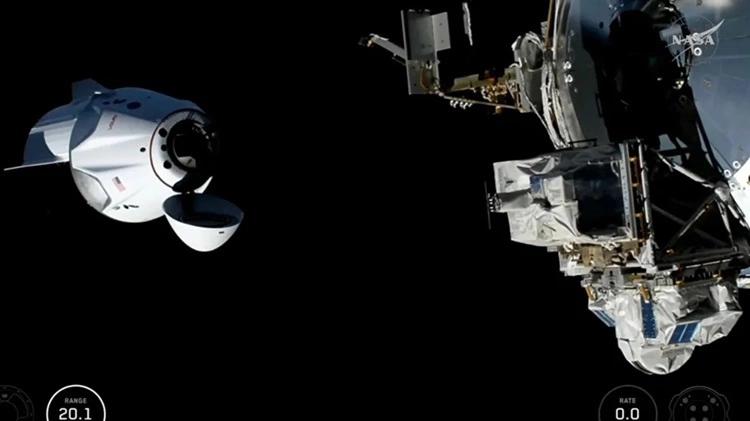
Space reported that SpaceX's Crew-13 mission arrived at the International Space Station (ISS) at 6:05 a.m. on October 2, Hanoi time, after 7 hours and 55 minutes of launch from the Cape Canaveral Space Station in Florida on a Falcon 9 rocket.
NASA's old record is 12 hours and 33 minutes, set in November 2024 by SpaceX's Dragon spacecraft during the CRS-31 supplies flight. For manned flight, the previous fastest time was 14 hours and 43 minutes during the Crew-11 mission in August 2025.
Julianna Scheiman, director of science for NASA and SpaceX's Dragon program, explained that the space station's advantageous position in space and orbital mechanics helped the company's Dragon spacecraft reach its destination in the shortest time ever. According to Anadolu Ajansı, at the time of launch, the ISS station was moving at a speed of about 28,200 km/h at an altitude of 423 km northwest of Havana, Cuba.
However, the Crew-13 crew's time is far from the world's fastest flight record to the ISS. In May 2020, the Russian Soyuz spacecraft carrying three astronauts arrived at the orbiting laboratory just 3 hours and 3 minutes after taking off from the Baikonur Cosmodrome in Kazakhstan. Soyuz caught up with the ISS station after just two revolutions around the Earth. The reason is not because Soyuz is faster or more powerful than the Dragon ship. The difference in flight time is mainly due to Russian mission controllers' tendency to aim for shorter "shortcut" orbits.
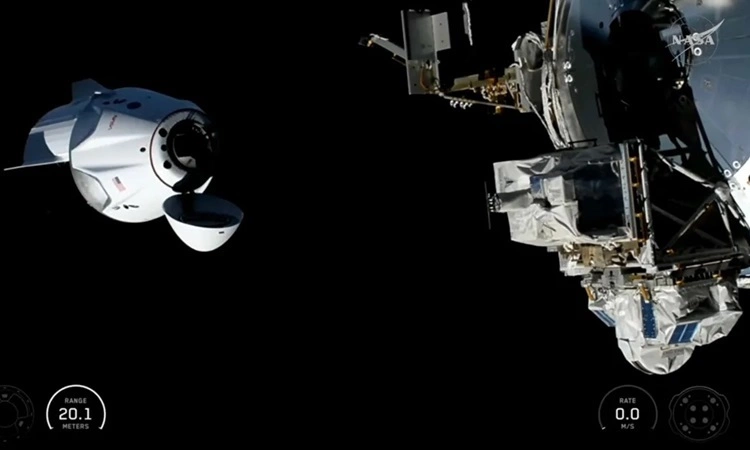
Le Monde said that Crew-13 was initially scheduled to launch in mid-September but had to be postponed due to a leak on the Dragon ship. Crew-13 carried four astronauts to the ISS, including Jessica Watkins and Luke Delaney of NASA, Joshua Kutryk of the Canadian Space Agency and Sergey Teteryatnikov of the Russian space agency Roscosmos. They will live and work on the station for the next 6 months, replacing four astronauts from the Crew-12 mission launched in mid-February: Jessica Meir and Jack Hathaway of NASA, Sophie Adenot of the European Space Agency (ESA) and astronaut Andrey Fedyaev. The Crew-12 crew could return to Earth aboard the Crew Dragon as early as October 5.
Despite continuous human habitation for the past 25 years, the aging ISS will leave orbit and fall into the ocean around 2030. The US and other partners will continue to cooperate with Russia to operate the space station until then.