Startup builds 1 GW data center, may only use Chinese chips
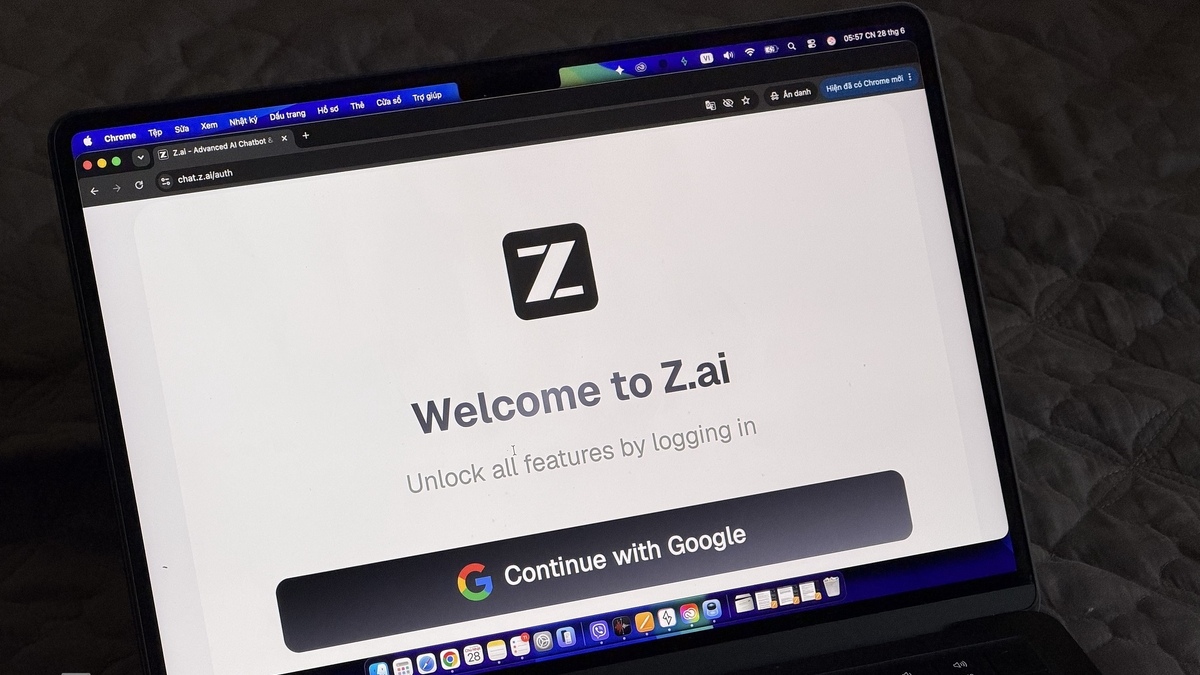
Bloomberg quoted sources saying that the new center has a capacity of 1 GW, enough to supply electricity to about 750,000 households at the same time, and is designed to help Z.ai develop an advanced GLM model. At this scale, the new facility will be among the largest server centers built by a Chinese AI company. Z.ai already operates several computer clusters, each with more than 10,000 chips.
Z.ai has not responded to a request for comment.
According to Tom's Hardware, Z.ai did not name the chip supplier, but information about their recent model training suggests it is most likely Huawei. Last month, Z.ai released GLM-5.2, an open weight model that is said to undergo training entirely on the Huawei Ascend accelerator, without using hardware from Nvidia.
GLM-5.2 rose to the top of the open weight model rankings (public parameters used in training, allowing others to download and modify) within just a week of launch. According to cybersecurity company Semgrep, in several benchmark tests, Zhipu's GLM-5.2 outperformed Anthropic's Claude Opus 4.8. When provided with additional instructions, Opus 4.8 and GLM-5.2 can compete with Mythos - the most powerful model today in terms of security bug finding capabilities.

Founded at Tsinghua University in 2019, Z.ai (originally named Zhipu AI) is one of China's earliest AI startups. The company develops platform models as well as applications based on them, including ChatGLM chatbot and Ying AI video creator.
Like many other Chinese technology companies, Z.ai has difficulty accessing the most advanced hardware from the US. Even among China's emerging AI startups, Z.ai is the first name to catch the eye. In January 2025, they were placed on the US Department of Commerce's export control list for allegedly contributing to the modernization of the Chinese military through advanced AI research. Z.ai denied, claiming this had "no significant impact" on its operations.
According to an HSBC report last month, China's AI computing demand is expected to reach about 5 GW in 2028, more than five times higher than in 2025, due to the increasing training and inference of large language models (LLM).
Z.ai's rival, Moonshot AI, also has problems with computing power. The startup attracted attention last week when it introduced its new open weighting model Kimi K3, challenging leading products from OpenAI or Anthropic. Demand increased suddenly, exceeding the ability to meet, causing Moonshot AI to announce a temporary suspension of new registrations earlier this week.
According to Bloomberg, to solve the bottleneck in computing capacity, China is preparing to spend about 2,000 billion yuan (295 billion USD) in the next 5 years to build data centers across the country.