'Glacier collapse could repeat Nepal's flash flood disaster'
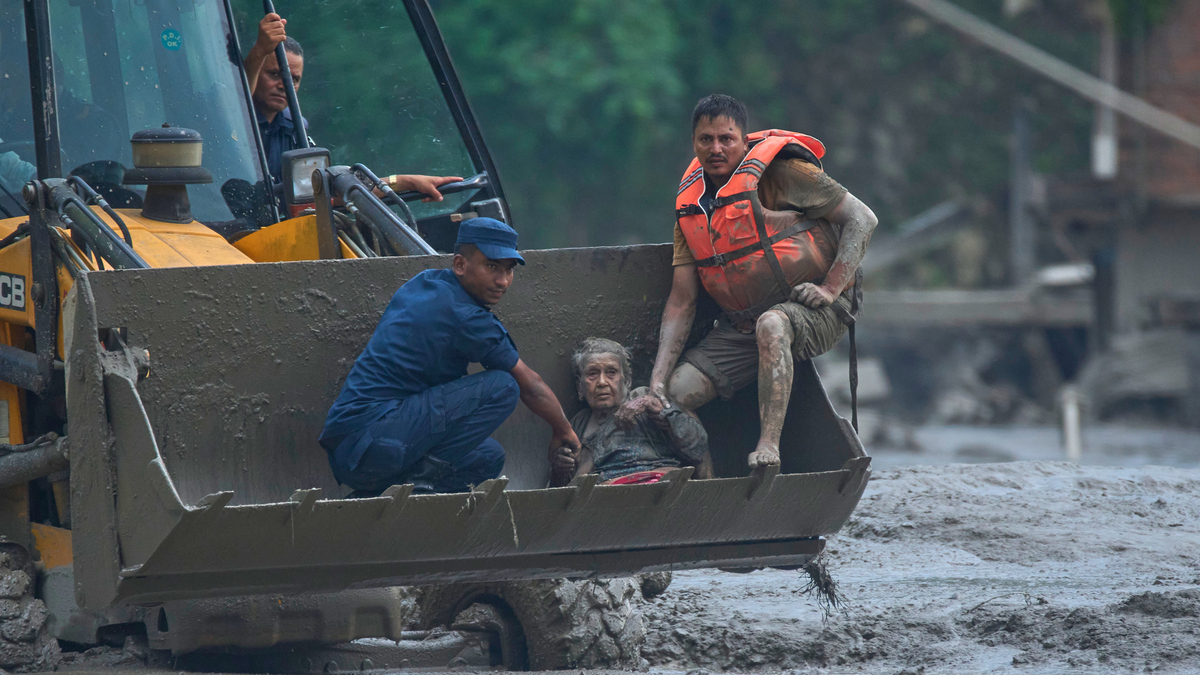
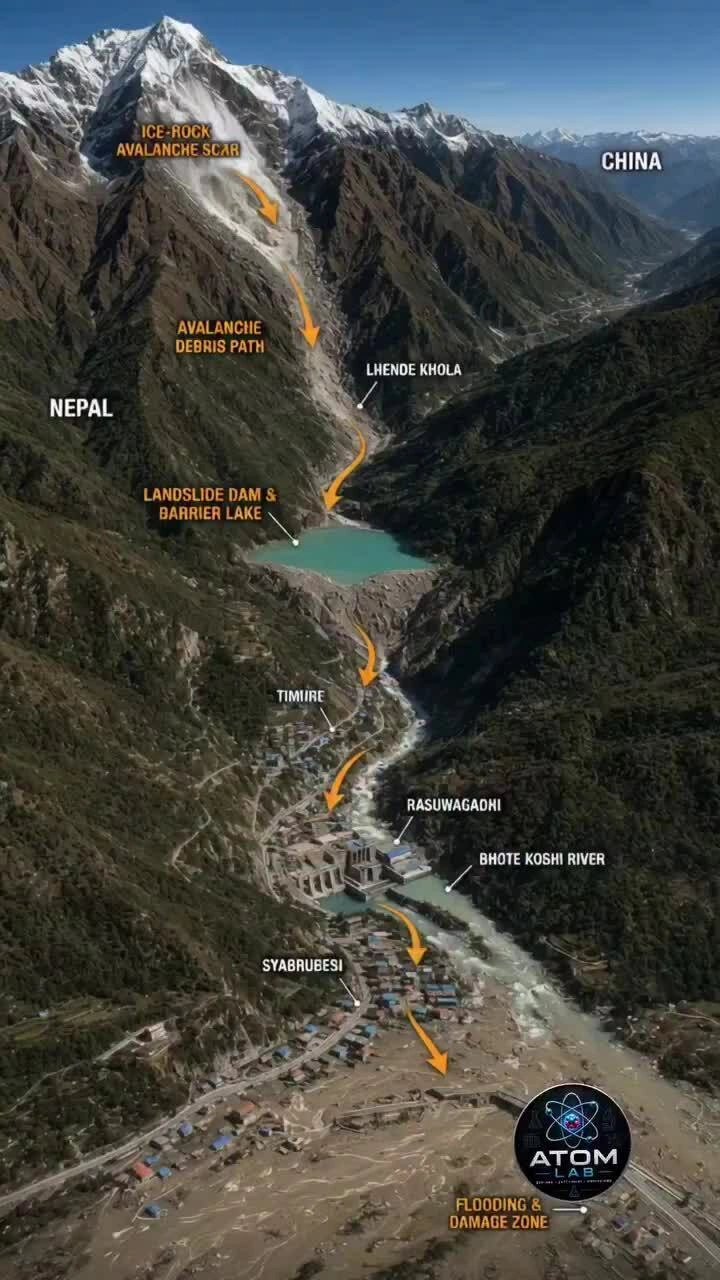
According to AP, the deadly flash flood that killed nearly 360 people in Nepal on August 26 may have been caused by a large piece of glacier breaking off and temporarily blocking the Lhende River, causing water to accumulate and flow downstream a few hours later. The US Geological Survey (USGS) on the same day recorded that the collapsed glacier caused a 5.2-magnitude tremor, dragging debris straight into the valley below, based on data from nearby seismic stations, long-period seismic waves and satellite images. Jakob Steiner, a geoscientist at the University of Graz in Austria, said the block of ice broke off the glacier and fell from a great height like a bomb exploding.
Jon Tunnicliffe, a hydrologist at the University of Auckland in New Zealand, warns that in events such as flash floods on the Nepal-China border, the danger does not necessarily end after the initial spill has passed. Instead, material deposited after a flood can raise the river bed, divert the flow and create new temporary dams, creating a further hazard days, weeks or even years later. Speaking to Live Science, Basanta Raj Adhikari, director of the Disaster Research Center at Nepal's Tribhuvan University, also emphasized that there is a risk of "second and third floods" in the next few days.
Scientists emphasize that it is too early to directly link climate change and the flash flood disaster in Nepal. However, they say that as the Earth's temperature increases due to human activities such as burning oil, gas and coal, the possibility of similar natural disasters is increasing, especially in the Himalayas, which are warming faster than many other regions in the world.
According to Steiner, this area has a history of devastating mountain hazards. Last year, floods originating from a glacier lake swept through the same valley while a rock and ice avalanche occurred elsewhere in 2024. The wider Langtang region also experienced multiple avalanches during the 2015 earthquake in Nepal.
Climate scientists say the Hindu Kush Himalaya is warming rapidly, causing major changes to glaciers, snow cover, permafrost and mountain slopes. This is the place that contains the largest amount of snow and ice outside the polar regions. More than 63,000 glaciers in the region supply water to at least 10 major river systems in Asia, supporting food security and livelihoods for billions of people. However, about 78% of the glacier area, located between 4,500 and 6,000 m above sea level, is at risk of warming.
The past decade has had some of the hottest years globally on record, and 2024 is the hottest year on record. The United Nations report shows that between 2000 and 2019, glaciers lost 267 billion tons of ice per year, equivalent to the mass of 46,500 Giza Pyramids. It is predicted that by 2100, all glaciers except Greenland and Antarctica will lose 50% of their mass, even if global warming is limited to 1.5 degrees Celsius.
A research team in Kathmandu found that glaciers on the mountains here are melting at an increasing rate, doubling since 2000. Melting glaciers can provide water and expand glacial lakes, increasing the likelihood of sudden floods. As glaciers shrink, mountain rocks previously insulated by ice are susceptible to warmer temperatures, rain, and repeated freeze-thaw processes. Permafrost can also melt, weakening rock faces and mountain slopes.
"The likelihood of material starting to fall from mountains increases and what happened in the last disaster will become the new normal," Steiner said.
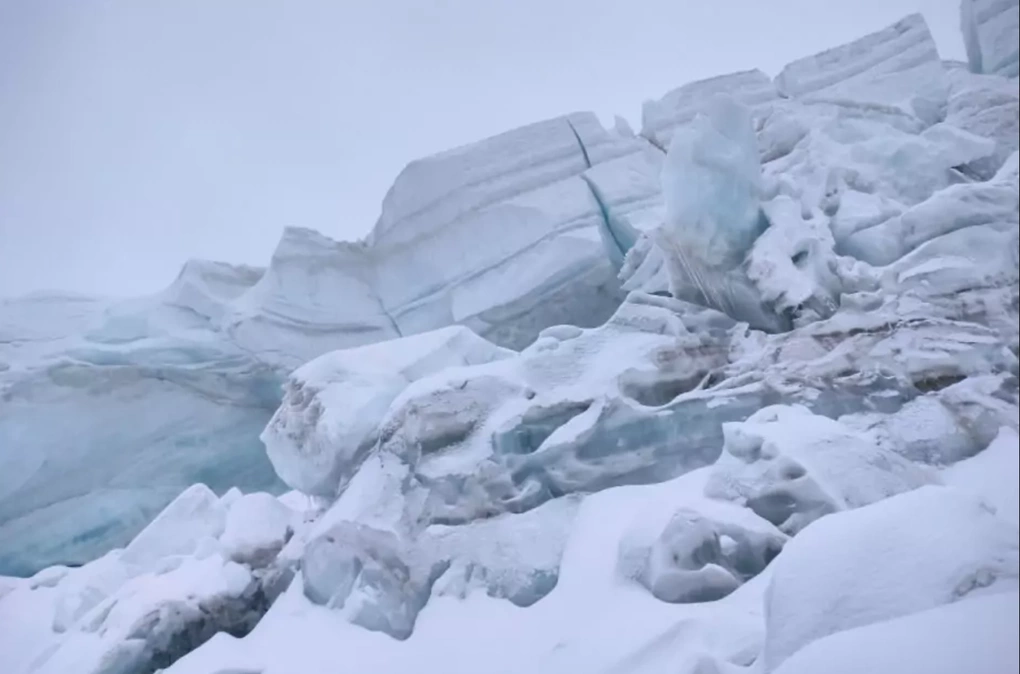
According to National Geographic, the Himalayas are not the only places at risk from glaciers. In Norway, New Zealand, Iceland, Chile, time bombs are hidden under the ice on the highest peaks. Depending on the location, glacier collapse can cause anything from sudden flash floods to super tsunamis as high as skyscrapers.
In May 2025, a large part of the Birch glacier in the Lötschen valley in the Swiss Alps broke off, creating a rock-ice avalanche that caused 20 million tons of debris to cover most of the village of Blatten. In 2023, a giant ice-rock avalanche in eastern Greenland poured into the fjord below, forming waves nearly 200 meters high that destroyed the cliffs on the side of the bay.
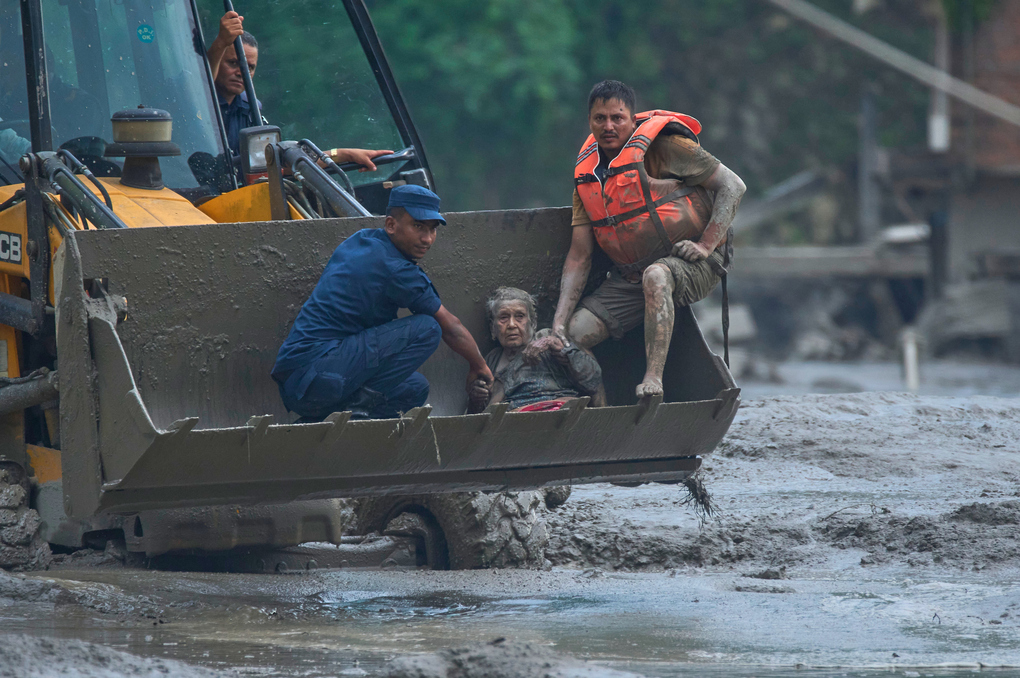
The Andes, especially the Cordillera Blanca mountains in Peru, have experienced many glacial lake overflow floods since the 1940s, partly because the region's glaciers, located at low altitudes, were affected by rising temperatures earlier and more rapidly.
Kristen Cook, a geomorphologist at Grenoble Alpes University in France, predicts that in the next few decades, if Earth's atmospheric and ocean temperatures continue to increase, the risk from glaciers will increase in both frequency and intensity. "We expect more instability in the high mountains. The Nepal disaster was an extremely large event but smaller collapses will certainly continue to occur," Cook said.
According to Adhikari, satellite monitoring of glaciers, lakes and mountain slopes needs to be combined with seismic monitoring, river measuring stations and warning systems capable of detecting flood overflows. Authorities also need to plan for infrastructure, evacuations and land use controls to prevent the risk of future disasters.