NASA spacecraft 'awakens' after nearly a year of hibernation
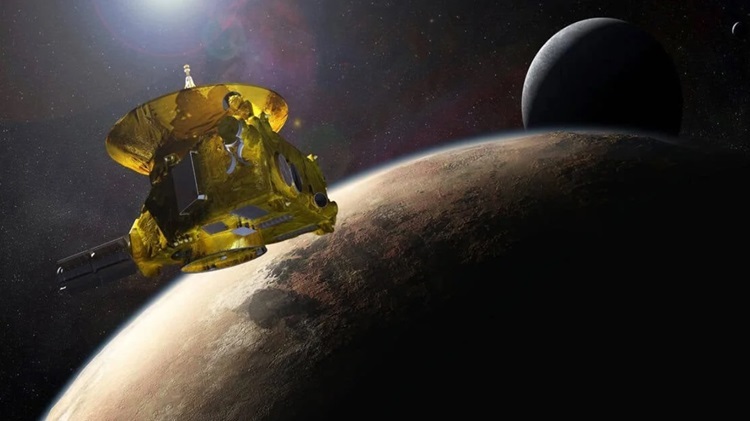
According to Space, when having to fly across large distances between the most distant celestial bodies in the solar system, the New Horizons spacecraft often collects data passively for many months. During that time, the probe went into hibernation mode and shut down most of its systems.
After flight controllers at the Johns Hopkins Applied Physics Laboratory switched the ship to hibernation mode on August 7, 2025, New Horizons "awakened" itself through an automatic command sequence on June 23. The probe returned to operation in good condition and began transmitting data collected over the past 321 days. Currently, the ship flies 9.5 billion km from Earth, so far that a radio signal takes about 9 hours to transmit from the ship to the antenna on the ground.
New Horizons was the first and only spacecraft to fly past the Pluto system in 2015. Four years later, the spacecraft studied the most distant object ever discovered in the solar system, the snowman-shaped asteroid Arrokoth, when it flew past Pluto 1.6 billion km. Since then, this probe has explored the edge of the solar system and studied objects in the Kuiper belt, a giant doughnut-shaped region of space containing millions of icy objects located just behind the orbit of Uranus.
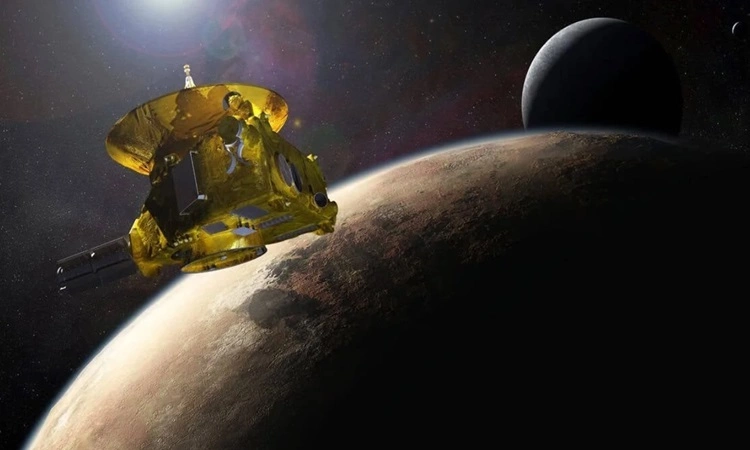
According to NASA, the New Horizons spacecraft is flying farther and farther from Earth at a speed of 483 million km per year. In three weeks, the spacecraft will begin conducting hydrogen research in the periphery of the heliosphere, the area of space affected by the solar wind. The data the probe is collecting could help scientists learn what happens at the boundary between the Sun's sphere of influence and interstellar space. Previously, only two spacecraft had ever crossed that boundary: NASA's Voyager 1 and 2. Built decades after Voyager, New Horizons is equipped with many modern, highly sensitive equipment that can analyze data that its predecessors could not perform.
According to Cnet, since 2007, the New Horizons spacecraft has hibernated 23 times, each time lasting from a few days to many months. Hibernation is a solution to help prolong spacecraft life and reduce mission operating costs. While hibernating, the three scientific instruments on board continue to collect scientific data.
According to Geekspin, it is expected that the New Horizons spacecraft will continue to operate until the 2030s, although the exact mission end date depends on the rate of power depletion and how NASA manages the systems on board. The probe uses power from a radioisotope thermoelectric generator, a type of nuclear battery that produces less electricity over time as the plutonium fuel decays.