US commercial spacecraft intercept targets in orbit
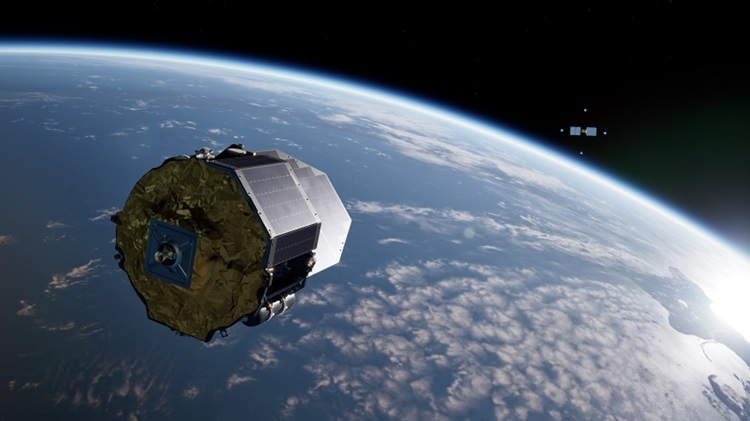
According to Tech Times, the US Space Force declared the Victus Haze mission a success on July 3, confirming that a commercial spacecraft operating using automated software for the first time completed orbital target interception and non-cooperative satellite characterization in 61 hours. Previous national secret programs took months to carry out similar tasks.
Victus Haze is a collaborative mission between two American commerce startups. True Anomaly, founded in 2022 by US Space Force veteran Even Rogers, offers the Jackal-0004 hunter craft built specifically for close encounters and maneuvers, along with the Mosaic software platform that automates sortie planning and command. Rocket Lab Company prepares the Puma satellite (hunted ship) in 18 months under a contract worth about 32 million USD. The ship is equipped with advanced optical sensors from Lawrence Livermore National Laboratory.
According to Tech Crunch, Rocket Lab broke the global fast launch record, placing the Puma satellite into low Earth orbit on June 19, just 16 hours and 42 minutes after receiving launch notification from the Space Systems Command, 10 hours faster than the previous record. As Puma entered orbit, True Anomaly's Jackal spacecraft, which launched in May on SpaceX's Falcon 9 rocket, began operating. The ship searched for Puma from a distance of 2,000 km using only sensors and Mosaic software.
The sortie ended 11 hours before the deadline set by the Space Systems Command's Space Safari office. Jackal conducted multiple orbits around Puma, providing photos from multiple angles and characterization data to the Space Force, then returned to its original orbit without direct human control.
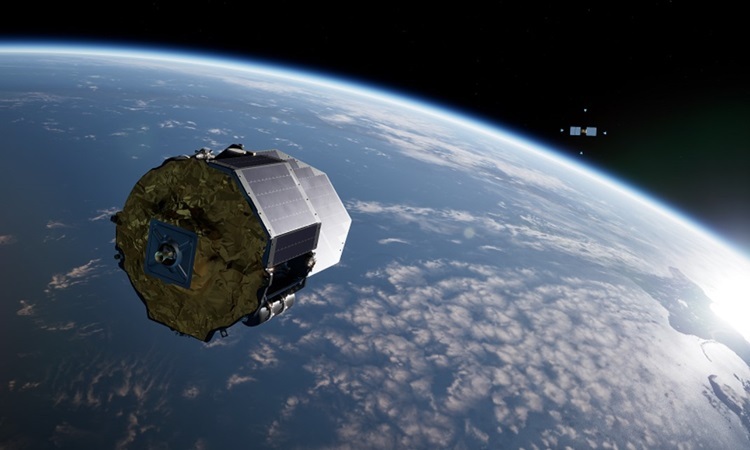
The technical challenge behind the Victus Haze mission is unlike anything commercial spacecraft have attempted before. Proximity encounter and operation (RPO) consists of three distinct phases, each with different physical and software requirements. In the far field phase (more than 185 km away), the hunter uses orbital mechanics to get closer to the target. In the intermediate phase (shortened from 185 km to 1.8 km), engineers switched the navigation mode to relative positioning, and at the same time put the chasing ship in the correct approach position. At close range, the hunting ship points its sensors, controls the shooting angle, and manages fuel consumption and collision risk.
During the Victus Haze mission, Mosaic planned and executed all three phases without constant human intervention. When the mission began, True Anomaly handed control of the Jackal to Mosaic to direct the spacecraft's propulsion engine burn, manage closed-loop tracking, direct photography and return to the original orbit. Instead of following a route planned weeks in advance and handling the target cooperatively, Mosaic had to search for the alien object with sensors, plan the interception in near real time, and complete the entire sortie within 72 hours.
This is architecturally different from the way longevity vehicles – such as Northrop Grumman's Mission Extension Vehicles, which dock and keep commercial satellites alive – operate. Those missions plan orbits weeks in advance toward a known, cooperative target. Jackal's Mosaic must find an unidentified object, approach it using only sensors, plan an interception trajectory in near real time, and complete the entire sortie within 72 hours.
According to Space, Victus Haze is the second mission in the Space Force's Tactical Response Space (TacRS) program, managed by the Space Safari office. In the first mission named Victus Nox, Firefly Aerospace's spacecraft took off within 27 hours after receiving the launch command in September 2023, showing the ability to launch quickly on request. That mission carried a passive spatial awareness system and had no interactions between spacecraft in orbit.
The Space Force plans to use the Victus Haze satellites for close encounter and maneuver training. Over the next two years, another TacRS mission, Victus Surgo, co-sponsored by the Defense Innovation Unit, will use SpaceX's Falcon 9 rocket to launch a more flexible spacecraft built by Impulse Space. Victus Sol, the program's first full mission, will launch on request from an actual combat command or exercise request.