Thermonuclear rockets could cut the flight time to Mars in half
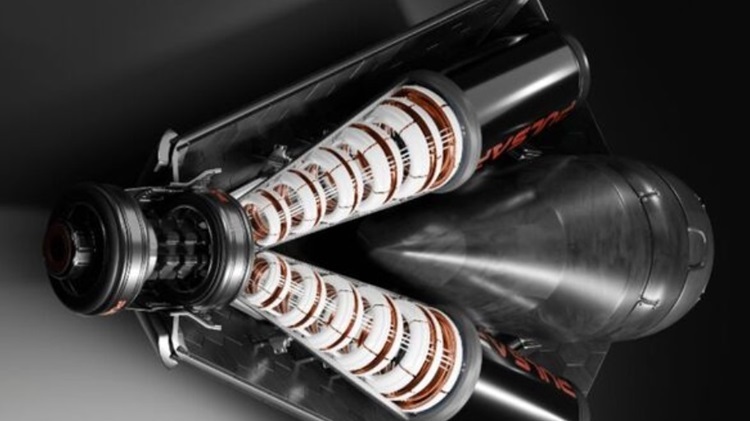
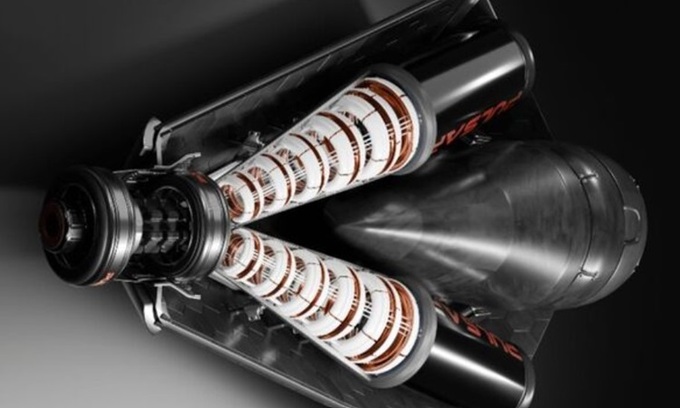
According to Pulsar founder and CEO Richard Dinan, Sunbird is in the early stages of construction with funding from the British Space Agency and there are many technical challenges to overcome, but the company hopes to be able to perform fusion in orbit for the first time in 2027. If the rocket becomes operational, it could one day cut the time of a mission to Mars in half, according to CNN.
Fusion reactions are different from fission reactions in today's nuclear power plants. Fission works through the destruction of heavy radioactive elements such as uranium into lighter elements, using neutrons. The enormous energy released during the process is used to produce electricity. Fusion reactions take place in the opposite direction, combining very light elements such as hydrogen into heavier elements, using high temperature and pressure.
Thermonuclear reaction has become a realistic goal for researchers because it releases 4 times more energy than fission and 4 million times more energy than fossil fuels. Unlike fission, fusion does not require dangerous radioactive materials but only uses deuterium and tritium, hydrogen atoms with extra neutrons. It operates on small amounts of fuel and produces no hazardous waste.
However, fusion reactions require a lot of energy to get started, due to the need to create conditions similar to the core of a star of extremely high temperature and pressure, along with effective controls to maintain the reaction. The challenge for researchers on Earth is to generate more energy from fusion than they take in.
The reaction that produces fusion energy takes place inside plasma, a hot, electrically charged gas. Similar to proposed reactor models on Earth, Sunbird would use powerful magnets to heat the plasma and create the conditions for it to collide with each other and fuse. While the reactors are circular to prevent particle loss, on the Sunbird the reactor will be linear because the released particles will help propel the spacecraft.
Instead of creating neutrons from the fusion reaction that reactors on Earth use to produce heat, Sunbird will use the more expensive fuel helium-3 to create protons, which can be used to provide propulsion. The reaction process on Sunbird would be expensive and unsuitable for energy production on Earth. But because Pulsar's goal is not to produce energy, this process may be inefficient and expensive, but still useful because it will save fuel costs, reduce spacecraft weight and get the ship to its destination much faster.
Sunbird will operate similarly to city bikes at the stations. "We launch a rocket into space and have a station where the rocket can wait to rendezvous with the spacecraft. Customers can turn off the inefficient internal combustion engine and use fusion energy for most of the journey. In 2027, we will send a small part of the Sunbird into orbit to test whether the physics works as the computer predicts," Dinan shared.
That prototype will cost about $70 million and is not a full version of the Sunbird rocket but more of a proof-of-concept experiment. The first operational Sunbird model will be ready in 4-5 years if the necessary funding is available. According to Pulsar, Sunbird can carry out a number of missions such as carrying 2,000 kg of cargo to Mars in less than 6 months, deploying a probe to Jupiter or Saturn in 2-4 years (NASA's Europa Clipper launched in 2024 to Saturn's moon will take 5.5 years) and completing a round-trip flight to a near-Earth asteroid in 1-2 years instead of 3 as currently.
Bhuvana Srinivasan, a professor of Aerospace Engineering at the University of Washington, said that thermonuclear rockets would be extremely beneficial for a trip to the Moon by providing the means to deploy an entire base in one mission. Harnessing the thrust from thermonuclear reactions would not only allow humans to fly further into space, but would also transform unmanned missions such as collecting the helium-3 resource that could be abundant on the Moon.
An Khang (According to CNN)