The Starship rocket flies into orbit for the first time
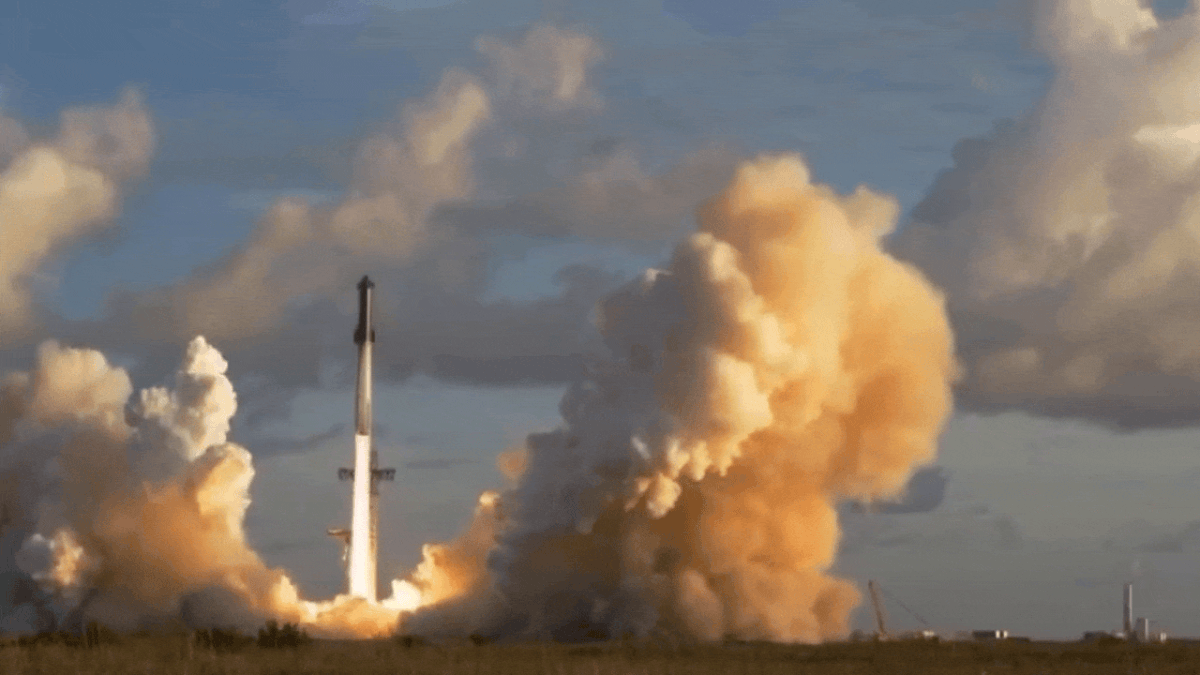
According to NPR, the Starship rocket fired 33 engines on the Super Heavy booster stage and left the launch pad at SpaceX's Starbase complex located along the Gulf of Mexico at 8:48 a.m. on September 28 (7:48 p.m. Hanoi time) in test flight 14.
About 2.5 minutes after takeoff, the Starship separated from the booster rocket and flew into space. The Super Heavy booster completed its mission, returned to Earth and landed in the Gulf of Mexico seven minutes after launch, experiencing an engine shutdown during flight but not serious enough to affect the landing process.
Reuters said that during takeoff, one of the six engines on the Starship's upper stage stopped working. Dan Huot, a SpaceX spokesman, initially declared that the Starship could not continue flying. However, a few minutes later, he changed his mind when engineers confirmed that the ship could still conduct important engine burn tests to enter orbit. 25 minutes after takeoff, Ship 41 briefly burned a Raptor engine and achieved the main goal of test flight 14, which was to fly into orbit for the first time.
The Ship carries 26 SpaceX next-generation Starlink V3 satellites and deploys in 30 minutes. These are the first satellites of the super constellation consisting of about 100,000 satellites. Previously, the ship deployed Starlink V3 on test flight 13 in July, but could not reach the target orbit and soon fell back to Earth. Three of the 26 satellites are equipped with cameras used to scan the Ship. SpaceX engineers will study this image to see if it is possible to improve the ship's heat shield, helping the vehicle survive its journey through Earth's atmosphere at the end of the mission.
According to Space, the Ship is expected to continue flying around the Earth for about 8 hours, then return and land in the Pacific Ocean off the coast of Chile. From launch to landing, the mission is estimated to last 9 hours and 50 minutes, marking SpaceX's longest Starship test flight ever. However, after successfully deploying 26 Starlink V3 satellites, SpaceX decided to let the Ship end its mission early. According to Live Science, the vehicle landed in the Pacific Ocean about 3 hours and 8 minutes after launch and exploded.
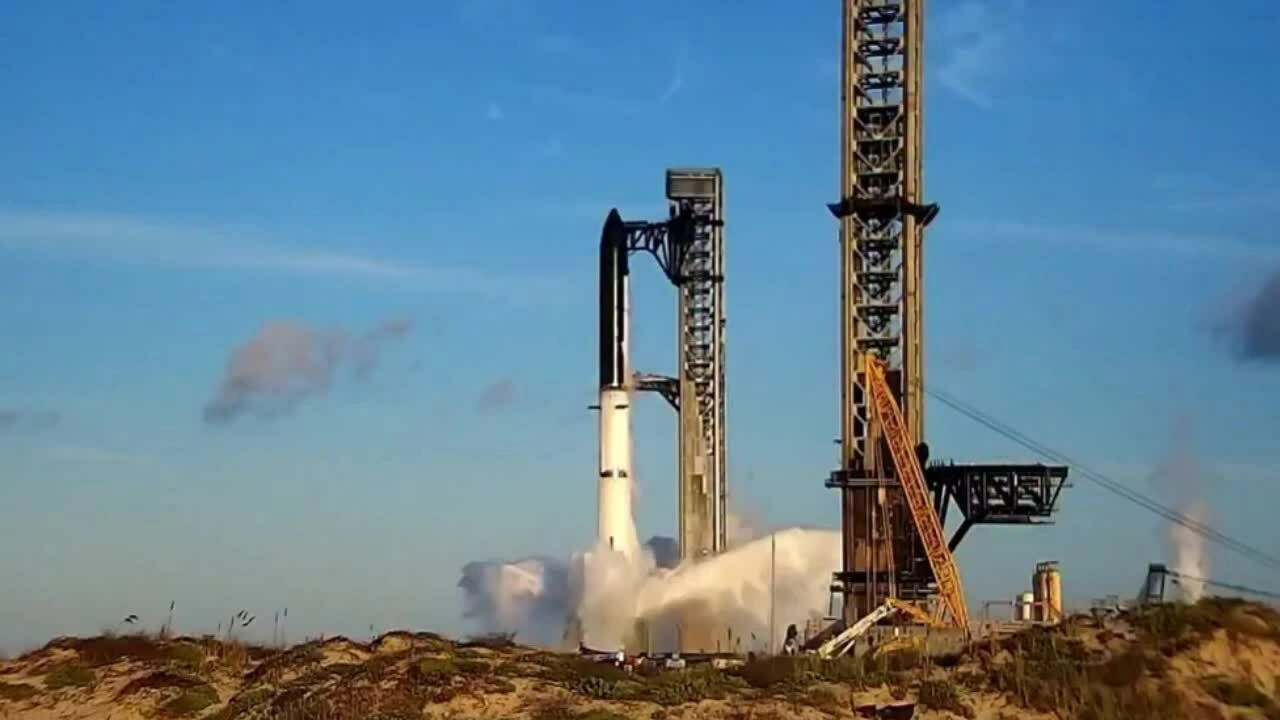
Flight 14 was the third launch of Starship V3, a relatively complete version capable of deploying satellites, flying to the Moon and Mars, and performing many other missions.
The Starship rocket has a height of 124 m and can carry more than 100 tons of cargo into Earth orbit. Both the Super Heavy booster stage and the Ship above are designed for complete and rapid reuse. SpaceX believes that the combination of power and reusability will create a major change, allowing humanity to expand space exploration in an unprecedented way. Elon Musk, CEO of SpaceX, hopes that Starship can make the ambition to settle on Mars become economically feasible.
NASA also chose Starship as the first manned lander in the Artemis program, with the goal of building a base near the Moon's south pole in the next 5 years. If all goes according to plan, the Ship upper stage will join the manned Artemis III mission to low Earth orbit in mid-2027, and send astronauts near the moon's south pole a year later with the Artemis IV mission.
After test flight 14, the company plans to return the Super Heavy booster and the Ship to the launch pad at the end of each mission, recovering both using a mechanical arm nicknamed a "chopstick" on the launch tower, a strategy that makes reuse faster and more efficient. To date, SpaceX has tested recovering Super Heavy with a pair of chopsticks in three test flights but has never tried it with the Ship.
Starship missions to the Moon or Mars also require multiple launches of "tanker" ships to refuel the Ship in Earth orbit. SpaceX has not yet proven its ability to refuel outside of Earth, so this will be a big task that the company needs to complete in the near future.