Chinese rocket explodes upon takeoff

According to Space, the state-owned China Aerospace Science and Technology Corporation (CASC) launched the Long March 7A rocket at 8:00 p.m. on August 10 (7:00 p.m. Hanoi time) from the Van Twitterong Space Launch Center, Hainan Island. However, only about 85 seconds later, the missile suddenly exploded in mid-air.
According to China National Radio, the rocket carried the Zhongxing-4B communications satellite, headed for geostationary transfer orbit (GTO). The Zhongxing satellites provide telecommunications and broadband Internet services, and are said to provide services to the Chinese military.
CASC has not made an official statement about the incident, but according to images and videos posted on social networks, the mission is definitely considered a complete failure, with the loss of both the launch vehicle and cargo. According to Xinhua, the cause of the incident is being analyzed and investigated.

Elon Musk, founder and CEO of SpaceX, commented under a post about the failed launch on Twitter that "building rockets is crazy hard" and "hope they recover soon".
Jonathan McDowell, emeritus professor at Durham University, explained to Reuters that the video shows the missile was completely destroyed at a relatively low altitude and velocity, meaning neither cargo nor debris reached orbit.
This is the 18th mission of Long March 7A since the first launch in 2020, which also ended in an explosion. China at that time said that the incident occurred due to engine failure shortly after the first stage separated.
The first stage separation typically occurs approximately three minutes after launch, during which the four side thrusters and the core stage will separate simultaneously in clusters. However, last night's incident occurred just 85 seconds after launch, the rocket was still in the initial engine combustion stage to escape the Earth's atmosphere, and had not yet reached the stage separation step. It is unclear how the explosion will affect upcoming Chinese space missions.
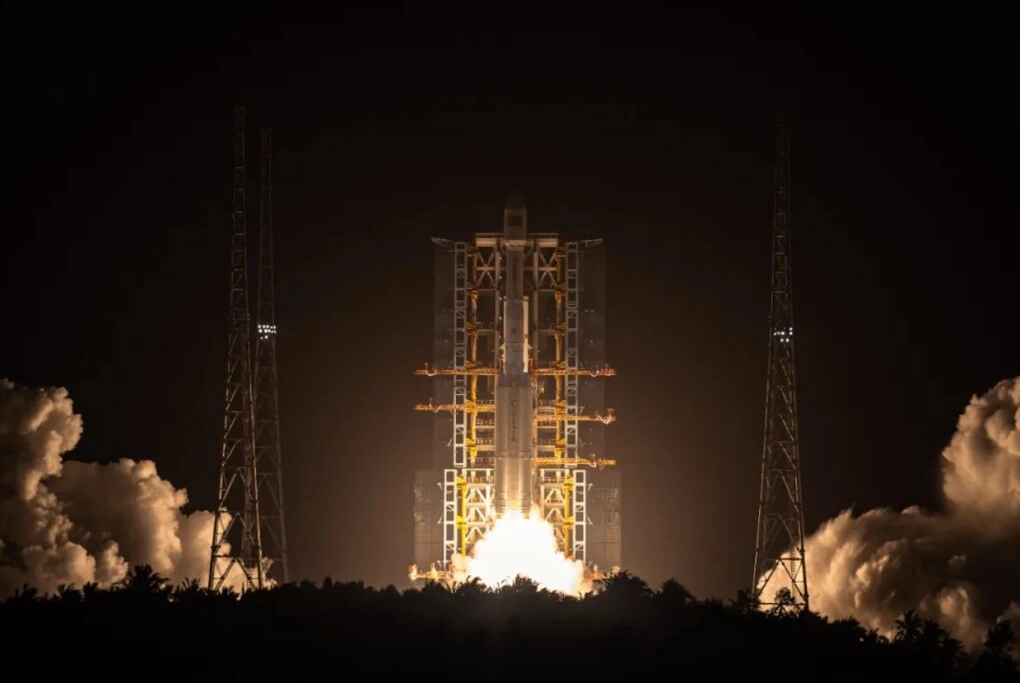
The Long March 7A rocket is more than 60 meters high, consisting of the first two stages of the Long March 7 combined with a third stage using hydrolox fuel (liquid hydrogen and liquid oxygen), capable of carrying 7 tons of cargo to geostationary transfer orbit (GTO).
CASC uses the standard version of the Long March 7 rocket to transport goods to the Thien Cung space station, which operates in low Earth orbit, about every 8 months. The most recent mission launched in May, so the next launch is likely to take place around January 2027. Space said that while China investigates the explosion last night, this supply mission and some other missions may be delayed.