The ambition of the startup co-founded by a Vietnamese 'AI monster'
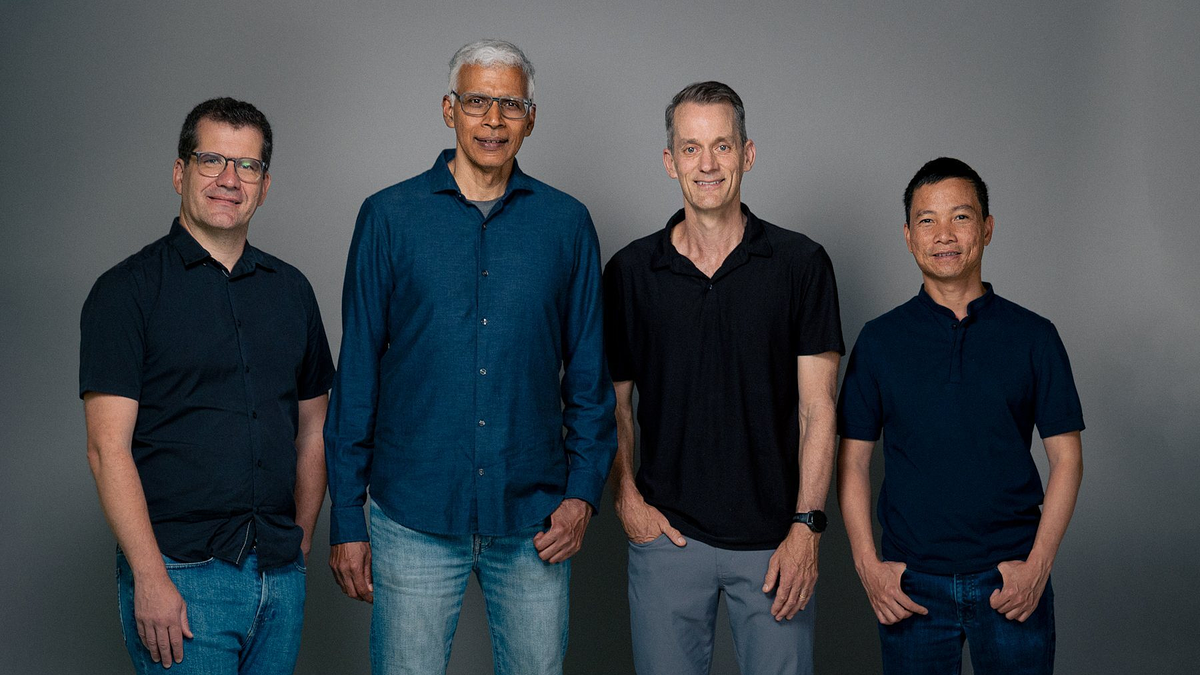
In the middle of this week, the team including Jeff Dean, Sanjay Ghemawat, Oriol Vinyals and Le Viet Quoc announced the establishment of artificial intelligence company Discovery Loop. "Discovery Loop will aim for the public good, with a mission to automate machine learning, science and engineering to accelerate discoveries and progress," Dean wrote on Twitter.
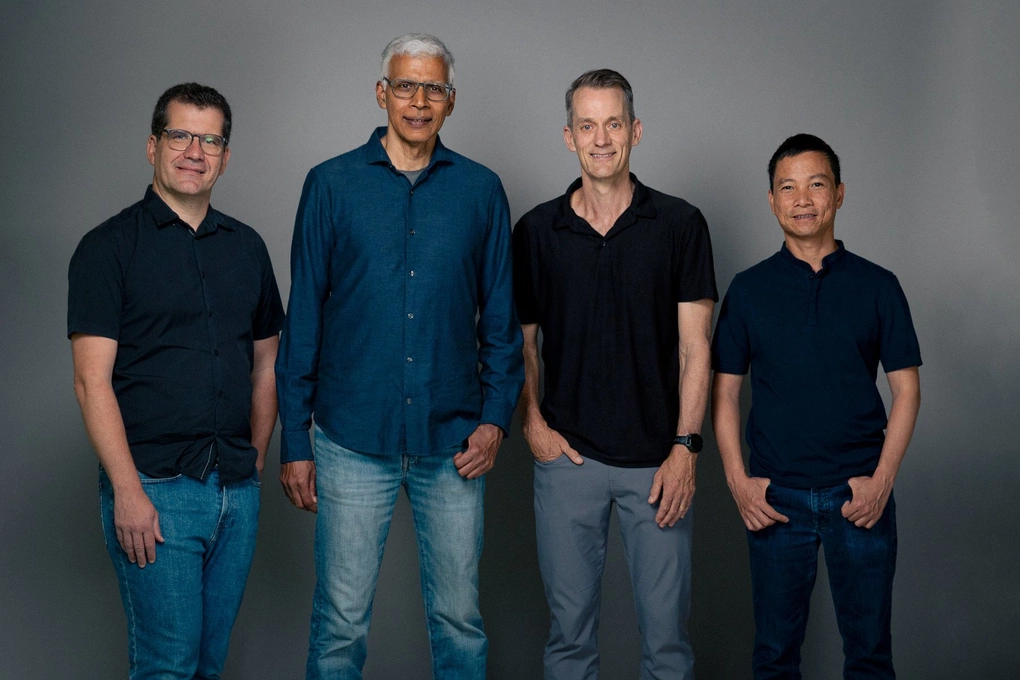
In the next series of announcements on the website and on Twitter of the co-founder group, information about this startup gradually becomes more detailed. According to Dean, the "loop" part of the name comes from the main goal: to automate the process by which scientists and engineers propose an experiment, execute and operate it, and evaluate the results, helping to "solve some of the most difficult problems in science and engineering by performing thousands of experiments in parallel."
Discovery Loop's Twitter account also explains that the company wants to build systems that can solve part of the 14 challenges set by the world's most brilliant scientists and engineers in 2008 to improve lives.
Called the National Academy of Engineering Grand Challenges, the list includes 14 of the most important engineering goals in the 21st century, from "decoding the structure of the brain" to "preventing nuclear terrorism". This initiative aims to orient engineers and scientists to solve vital issues of energy, environment, health, security and joy of life for humanity. Larry Page, co-founder of Google, is also in the proposal group.
Although newly established, Discovery Loop has quickly received great attention from Silicon Valley. Radical Ventures and Khosla Ventures, two prominent American investment firms, led the funding round, while names such as Lightspeed, Kleiner Perkins and Doerr Capital also participated. According to Tech Crunch, the company also receives financial support from Alphabet - Google's parent company.
Reputation of founding members
According to Business Insider, Discovery Loop received attention because the team behind it were all the most important people at Google before leaving. Among them, the most famous person is Jeff Dean, Google's 30th employee. His career spans from establishing Google's dominance in search to creating generative AI models.
During his 27 years working at Google, Dean contributed to promoting the development of Google Search, Google News, Google Translate and Google Ads. He co-founded the Google Brain team, which, as "AI godfather" Geoffrey Hinton describes, "transformed basic research on neural networks into groundbreaking products." Dean is also the man behind the AI Tensor chip (TPU). Big names who have worked under him include Anthropic CEO Dario Amodei or OpenAI co-founder Ilya Sutskever.
Sanjay Ghemawat is one of Dean's longest-standing associates. The two's relationship started before they joined Google, when they were still working at Digital Equipment Corporation. At Google, the two became so close that Dean's children called Ghemawat "Uncle Sanjay," according to The New Yorker.
Ghemawat and Dean also became Google's first level 11 engineers with the title of Senior Fellows and are both the most cited distributed systems researchers. Wired described him as one of "the most important software engineers of the Internet age".
Oriol Vinyals is also the principal scientist at Google DeepMind. According to his Google bio, he focuses on machine learning and reinforcement learning, and is a key figure in projects that provide the foundation for Google Translate. Additionally, one of his research projects called AlphaStar once defeated a top professional gamer in the game StarCraft II.
Le Viet Quoc was also a key figure at Google Brain from the beginning. This expert born in 1982 in Thua Thien Hue participated in one of Google Brain's first major projects: developing a neural network of 1,000 machines with 16,000 processors, demonstrating AI's self-learning ability by training on 10 million images randomly taken from YouTube videos, according to The New York Times.
Mr. Quoc was honored by MIT's Technology Review magazine as one of the world's outstanding inventors under 35 years old, with many contributions to the field of global artificial intelligence. He also returned to Vietnam many times to share about AI research and development as well as science and technology in general.
According to research firm Futuresearch, with the co-founders likely to have the same announced goals, Discovery Loop will likely focus the most on AI chip design with a 38% chance of achieving a major breakthrough by 2028. Secure cyber solutions and tools for scientific discovery reach the next potential, with the same 28%.
Emergent evaluates that the fact that a group of former senior Google employees separated themselves and joined the field of AI-based research automation shows that this field has great potential. Previously, companies such as Recursion Pharmaceuticals and Atomwise applied machine learning to drug discovery, or Google DeepMind's AlphaFold changed protein structure predictions. However, Discovery Loop's focus on general-purpose laboratory automation rather than specialized applications could create a differentiating position in the market.
In addition, the public benefit structure also differentiates Discovery Loop from its competitors. While most AI research companies pursue traditional venture capital and acquisitions, public interest enterprises can facilitate collaborations with academic institutions and government research labs that prioritize open science.
"The public interest company model shows a commitment to democratizing scientific discovery rather than pursuing purely commercial goals," Emergent commented. "If successful, Discovery Loop could establish a new paradigm where AI systems actively participate in the research process, reducing time from years to months and enabling discoveries that would not be possible with manual experiments alone."