Brain implant controlled from a distance of 10,596 km
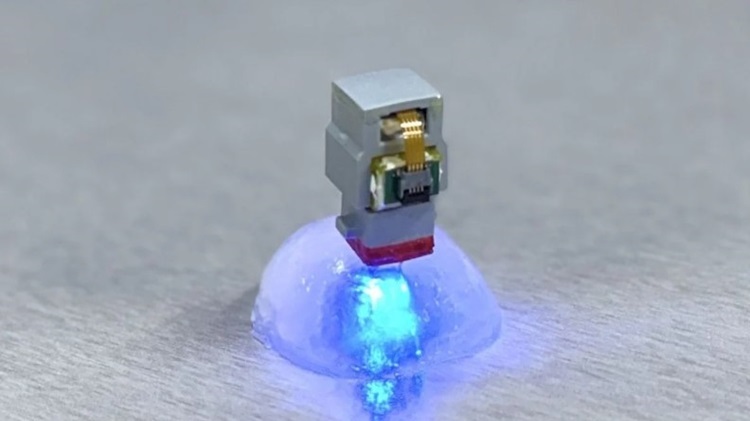
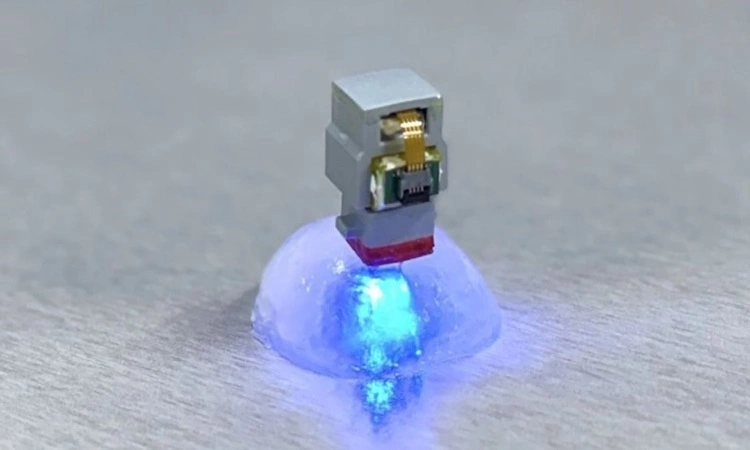
A research team from the Korea Advanced Institute of Science and Technology (KAIST) collaborated with Yonsei University to develop a compact brain implant called Rapido, integrating the capabilities of drug delivery, light stimulation, wireless communication and remote control.
According to research published in the journal Science Advances, they sent commands from Chicago, USA, to a wireless brain implant in Daejeon, South Korea, 10,596 km away. The signal travels over the Internet to a computer in a Korean laboratory, which then relays commands to the implanted device. The system's average response time is about 109 milliseconds.
News1 said that to overcome physical limitations, the research team connected the brain implant device to the Internet. This innovative approach allows them to deliver drugs or stimulate specific brain neurons in real time without being physically present in the lab. The device can also be pre-programmed to operate automatically at predetermined times.
Rapido is about the size of a sugar cube, allowing test animals to move freely and virtually undisturbed. This implant design prevents the researcher from having to repeatedly manipulate the device near the subject because the presence of humans can stress the animal, distorting behavior and experimental results.
Rapido contains a sophisticated microfluidic system to deliver drugs precisely to targeted brain areas, along with tiny light-emitting diodes (LEDs) to control specific neurons with light. Researchers can adjust drug doses and light stimulation independently or in combination. For added convenience, the medication compartment features a magnetic attachment system that makes it easy to remove and refill when supplies run low.
The research team, led by Jae-Woong Jeong, an electronics engineer at KAIST, implanted the device into living mice to confirm its performance over the course of four weeks. The successful experiment of controlling a brain implant in Daejeon, Korea, from Chicago via the Internet in real time proves Rapido's high reliability despite the large distance. In addition, researchers also demonstrated the ability to inhibit addictive behavior by infusing cocaine into the brains of rats and using light to stimulate neurons.
The groundbreaking technology has great potential to revolutionize research into conditions that alter brain function and behavior such as addiction, depression and neurodegenerative disorders. Rapido could pave the way for the development of smart implantable devices, combining brain state sensing technology with artificial intelligence to deliver drugs or nerve stimulation when needed. However, the research team emphasizes the need to conduct further preclinical validation, rigorous safety assessment and pass the approval process before widespread application of the device.
In the future, Jeong and his colleagues plan to build an automated platform so that more research institutions can use remotely implanted devices. They also plan to expand research into smart implantable devices to treat many brain disorders.