Fraudulent tricks to fake recruitment of models, actors... on social networks

Phu Tho Provincial Police have just issued a warning about cyber fraud targeting students during summer vacation.
Taking advantage of young people's need to find part-time jobs, participate in experiential activities, and desire to develop skills, they created many fake recruitment scenarios to appropriate assets.
The trap of high-paying light jobs targets pupils and students
According to the police, recently, cyber criminals have continuously changed their methods of operation.
Subjects set up social network accounts, websites, fanpages or groups pretending to be media companies, art training centers, or famous brands to post recruitment information for models, actors, brand representatives, online collaborators or participants in promotional programs.
Some content is also tied to major events, including the 2026 World Cup, to create a sense of professionalism and credibility. Posts often use eye-catching images, attractive words, commitment to light work, high income, opportunities to meet famous people, receive scholarships, gifts or participate in advertising for big brands.
The targeted group is mainly students on summer vacation. This is the time when many young people need to find part-time jobs, gain experience or participate in extracurricular activities. The desire to try things out, earn extra income and easily believe in opportunities that appear on social networks makes many people become targets of fraud rings.
After approaching the victim, the subjects often talk for a long time to build trust. They ask participants to send personal information, citizen identification images, bank account numbers or join closed groups on Telegram, Zalo, Messenger.
Putting victims into separate groups helps subjects easily control information, create a crowd effect and cause psychological pressure.
In the next step, the victim is asked to transfer money for many different reasons such as account verification fee, reservation fee, deposit, uniform fee or program participation fee. Some cases are enticed to do online tasks to receive commissions. Initially, subjects may repay a small amount of money to strengthen their trust.
As the victim continues to participate, the transfer request amount will gradually increase. Subjects offered a promise of money back with higher rewards after completing the task. If victims transfer large amounts of money, they use many reasons such as system errors, locked accounts, not completing all requirements or needing to pay more money to open withdrawal rights. In the end, the subjects appropriated all the money and cut off contact.
Proactively protect yourself in cyberspace
The police advise people to be cautious about recruitment, selection or cooperation invitations appearing on social networks, especially content that promises high income but does not require clear experience.
People should only participate in programs announced by reputable agencies, organizations, and businesses on official information channels.
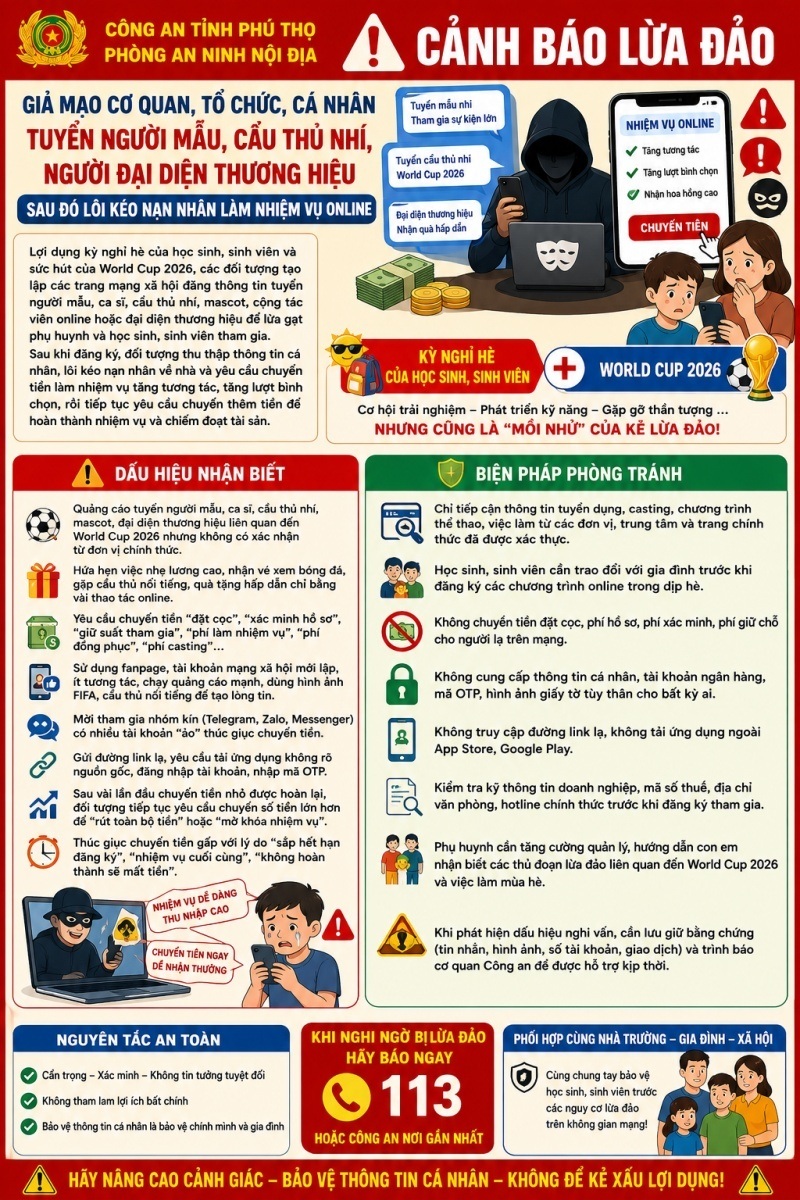
Users absolutely do not transfer deposits, participation fees or perform financial transactions at the request of strangers online.
Personal information such as citizen identification number, bank account, password, OTP code is also not provided to anyone. In addition, people should not access strange links or install applications of unknown origin on their phones or computers.
For students, before participating in any recruitment program or online activity, you need to talk to your family, school or experienced person for advice. Parents also need to pay more attention to their children's online activities, teach them how to recognize signs of fraud and not let them conduct financial transactions with strangers.
When detecting suspicious signs or having become victims, people need to save messages, contact accounts, links, images, transaction documents and quickly report to the nearest police agency for support. Proactively protecting personal information and being alert to attractive offers online are important ways to reduce the risk of fraud in the digital environment.
Source: Phu Tho Provincial Police