Test of the first wireless power transfer between two spacecraft
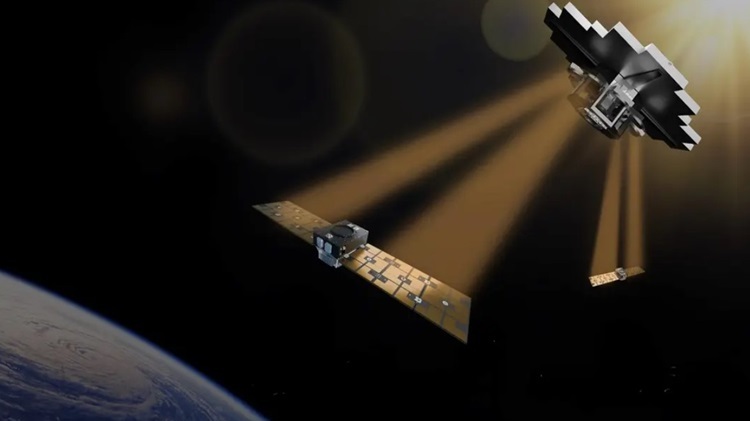
Interesting Engineering reports that Star Catcher Industries, a startup headquartered in Jacksonville, Florida, is about to launch the Protostar spacecraft to wirelessly transmit laser power to a CubeSat satellite in space. Protostar will launch from Vandenberg Space Station on SpaceX's Transporter-18 mission.
Star Catcher is aiming to build a series of energy nodes that serve as both solar power plants and transmission lines. To produce electricity, the company's satellites collect sunlight through lenses and refine it into wavelengths that can provide 10 times more energy than scattered sunlight. The satellite then shines the laser beam directly at the satellites that need power. That process promises increased uptime and higher profits for satellite operators through reduced battery size to make room for more useful equipment, according to Andrew Rush, Star Catcher co-founder and CEO.
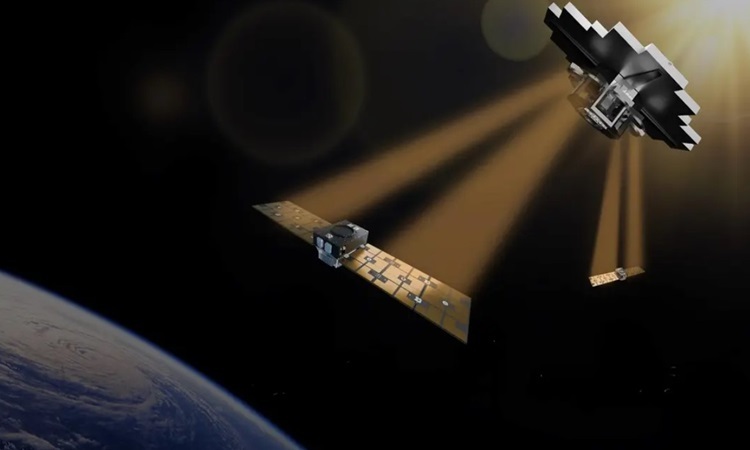
Protostar is a smaller prototype of the satellite that Star Catcher hopes to deploy in the future to operate a commercial power supply service in orbit later this decade. This prototype combines the key technologies Star Catcher needs for its orbital power grid with the ability to collect energy, locate other spacecraft and maintain tracking links. In the test, Protostar collects solar energy with high-performance panels, then converts it into a focused laser beam to transmit directly to the CubeSat satellite launched on the same trip.
One goal of the test was to test how much energy the CubeSat received as it moved away from Protostar. Last year, Star Catcher conducted a test transmitting more than a kilowatt to solar panels on the ground, enough to power a microwave.
Star Catcher said that wireless power transmission is a solution to meet the increasing energy demand in space. Satellites can receive energy without needing to produce electricity themselves on board. According to Rush, potential applications of this technology include national security missions, on-orbit computing and Earth observation. If the Protostar successfully transmits power to the free-flying spacecraft on the upcoming Transporter-18 mission, Star Catcher's technology will move closer to commercial deployment in orbit.
According to Via Satelites, Star Catcher's technology is attracting a lot of attention. The company received $65 million in a funding round earlier this year and a $30 million award from the US Space Force. They have signed 10 long-term power purchase contracts with space companies such as Starcloud, Loft Orbital, Astro Digital and Aethero.
Wired said NASA has been researching the idea of generating solar power in space since the 1970s. Hanieh Fattahi, a researcher at the Max Planck Institute for Light Science, once said that launching large amounts of equipment into orbit is very expensive, so producing electricity in space and transmitting it elsewhere is not feasible. But now, falling launch costs are paving the way for orbital industries to provide such power.
Researchers have discovered many forms of transmitting solar energy from space. For example, scientists at the California Institute of Technology (Caltech) have successfully transmitted solar energy to Earth via microwaves. While transmitting more energy, that technique requires a large receiver to exploit, whereas lasers can target much smaller targets.
This is not the first laser energy transmission test in space. In 2023, the US Naval Research Laboratory fired energy using electromagnetic waves (lasers) from a transmitter to a photovoltaic receiving panel on the International Space Station, but the beam traveled a distance of less than 1.5 meters.