Rare footage of the Schwebebahn elevated railway in Germany, 118 years ago

The film you are watching was shot 118 years ago in Germany and it has been upscaled to 4K by Denis Shiryaev, stabilized and colored by the Museum of Modern Art (MoMA), New York, USA. In the first perspective, the film gives a vivid view of the landscape and life in the city of Wuppertal, western Germany in 1902 as well as giving us a glimpse of the future, mixed with admiration for a suspended railway system, few people think that it existed more than a century ago.
The Schwebebahn elevated railway system's full name is "Anlage einer elektrischen Hochbahn, System Eugen Langen" and is the oldest electric elevated railway system with suspended carriages in the world. It was designed by Eugen Langen - famous German engineer and inventor. Elevated stations for Schwebebahn were built at Barmen, Elberfeld, Vohwinkel in what is now Wuppertal between 1897 and 1903. The first line opened in 1901 and to this day, Schwebebahn is still used as a means of public transport, carrying 25 million passengers per year according to 2008 statistics.
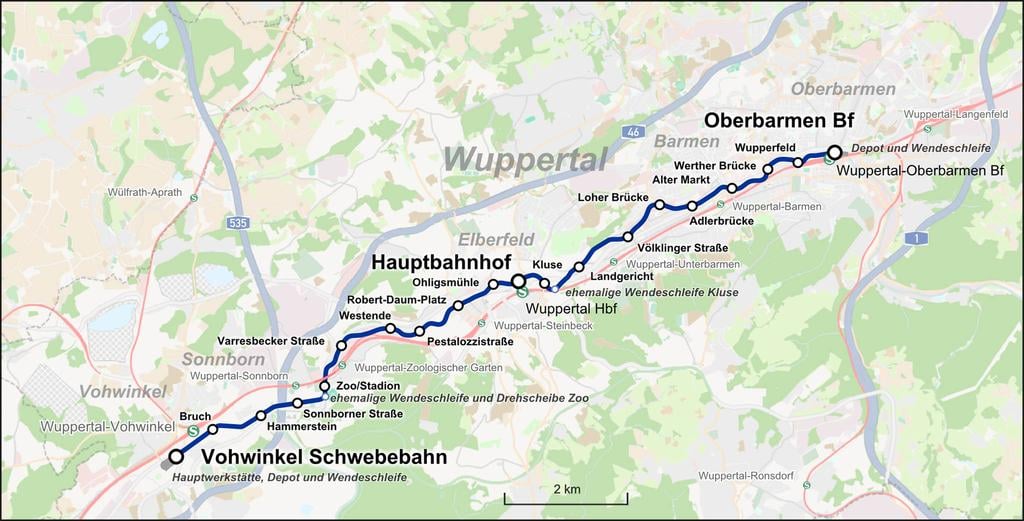
Currently the Schwebebahn railway is 13.3 km long with train cars hanging at a height of 12 m or 8 m depending on the terrain below. The Schwebebahn train system is operated by the public transport association of the Rhein-Ruhr region (VRR), Germany, together with other types of transport such as urban trams, federal railways and buses.
Concept and history of the Schwebebahn elevated railway:
The story of this unique railway system dates back to the late 19th century when the Wupper valley towns of Elberfeld and Barmen became major manufacturing centers of the Prussian kingdom.
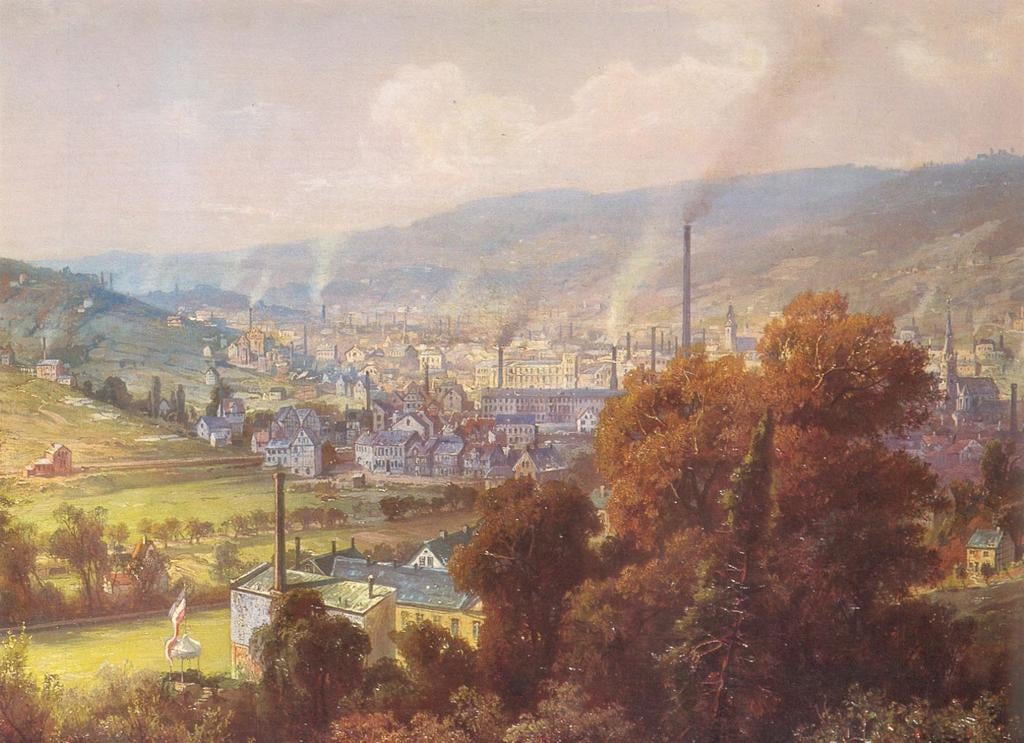
In Elberfeld in 1863, Friedrich Bayer founded a chemical company to supply dyes to factories in the area and also to compete with companies owned by the family of philosopher Friedrich Engels. (Friedrich Bayer is the founder of the world-famous pharmaceutical group Bayer AG, and Friedrich Engles is probably known to you through the Marx-Engels theory). The competition of people in the capitalist class is not only in the marketplace but also comes from the way they leave their mark on civil works, typically the central zoo in Elberfeld founded in 1879, opened to visitors in 1881, now Wuppertal zoo.
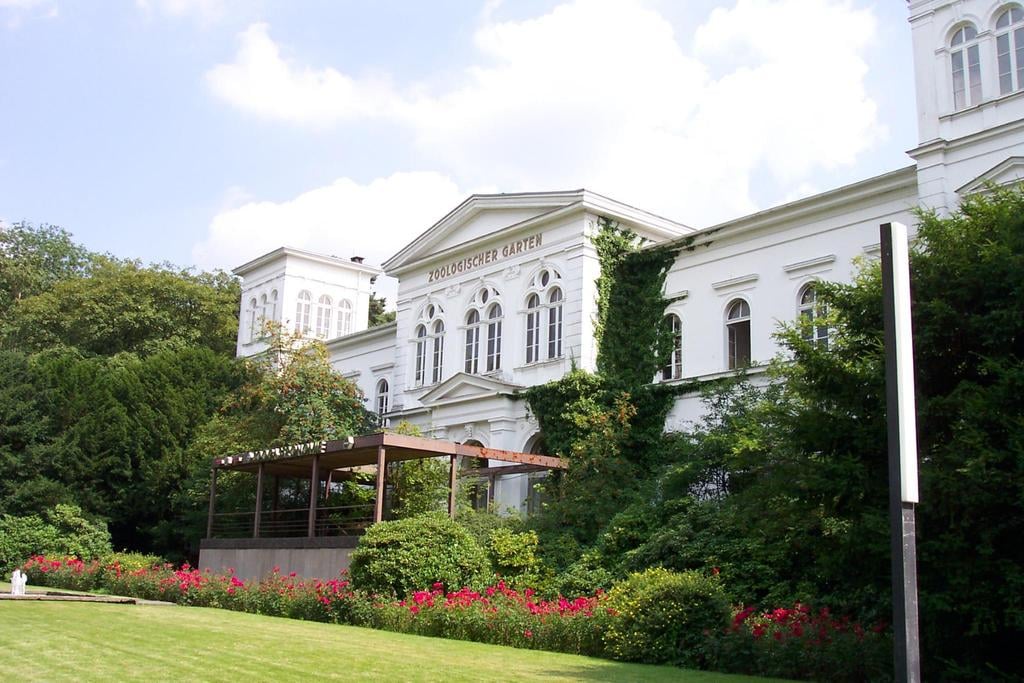
This zoo has been very successful attracting many people to visit, leading to major traffic jams on weekends. Meanwhile, the growing manufacturing industry in the region requires workers to travel further to work.
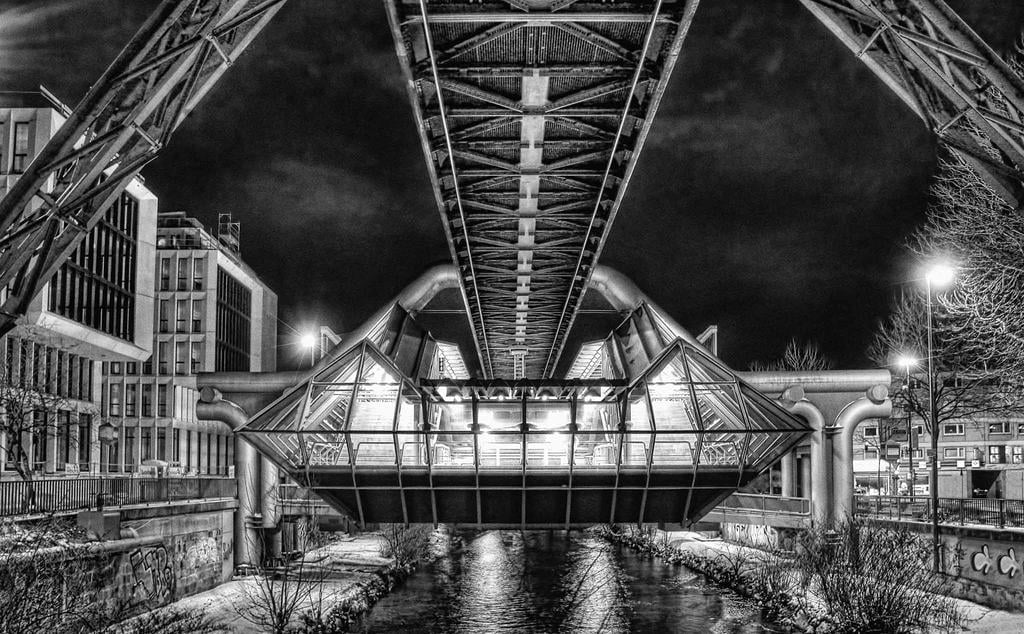
As explained by Elmar Thyen - head of Corporate Communications and Strategic Marketing at Schwebebahn: "We had a situation where we had a very wealthy city and very wealthy citizens who wanted to participate in social activities. But the question was what public space could people go through without having to go on private land? So an elevated railway running above the Wupper River made sense."
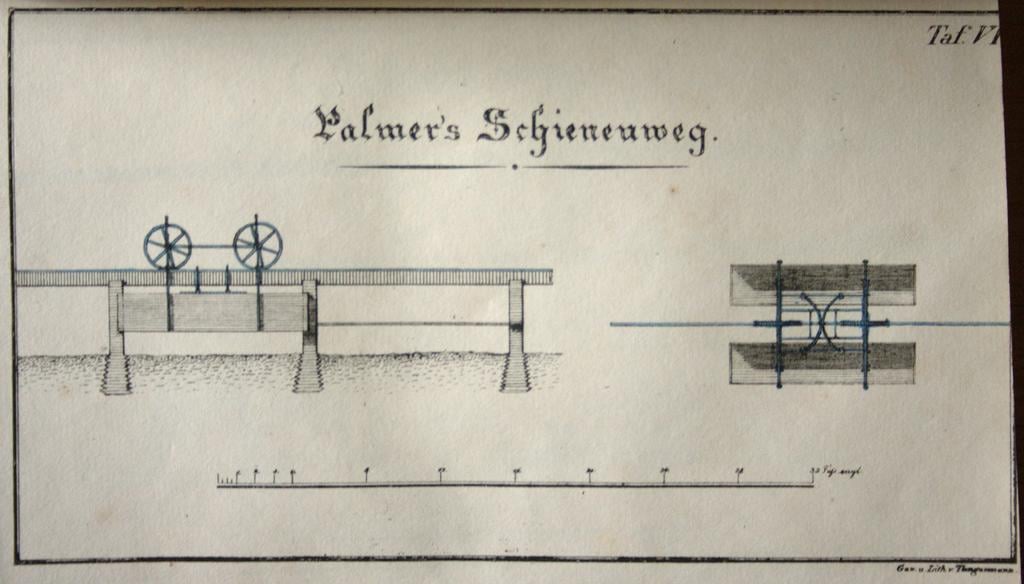
In 1826, a steel factory in Elberfeld organized a test of overhead rails, horse-drawn carriages invented and proposed by British engineer - Henry Robinson Palmer in 1824. This steel factory was owned by Prussian businessman and politician - Friedrich Harkort. He soon realized the great advantages of transporting coal to and from the industrial regions surrounding the Wupper Valley. Harkort called this the "Palmer Railway" - an aerial railway system from the Ruhr, Hinsbeck or Langenberg regions to the Wupper valley, Elberfeld, connecting Harkort's factories. However, despite attracting the public to the show, his plan was ultimately unsuccessful.
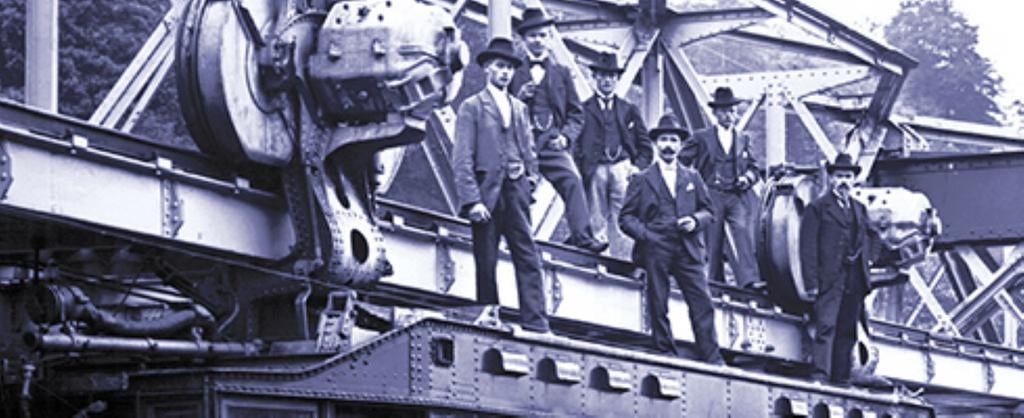
It wasn't until decades later that city leaders felt that an electrified version of the Palmer rail system then being implemented by engineer and inventor Eugen Langen would be able to accommodate transportation capacity given geographical constraints.
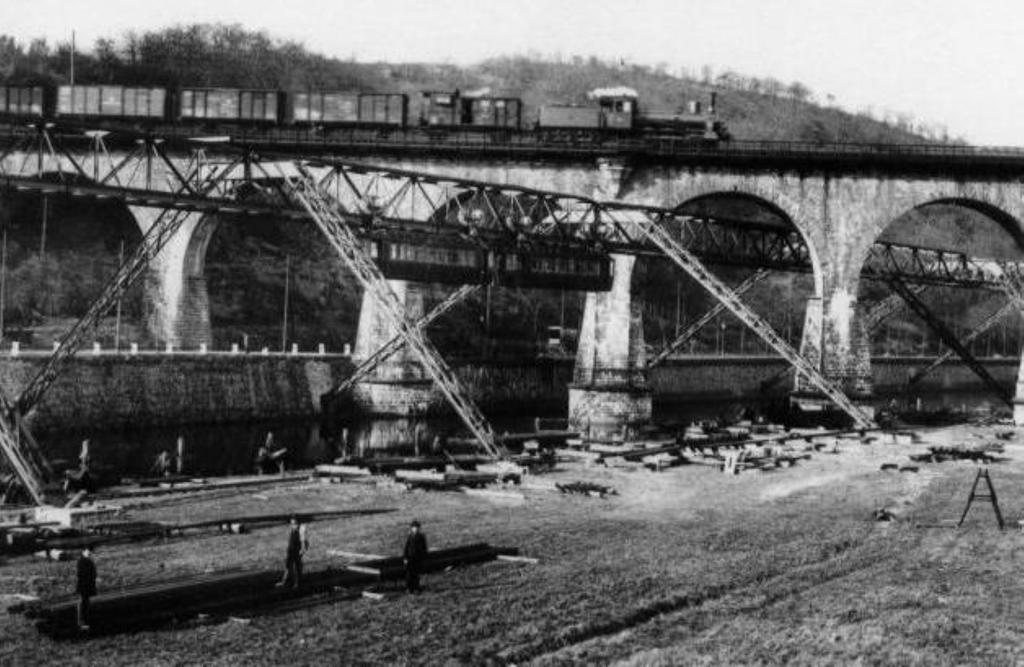
So in 1887, the cities of Elberfeld and Barmen established a committee to build the Hochbahn elevated railway. In 1894, they chose the system of engineer Eugen Langen and the city government of Düsseldorf placed an order to build the first elevated railway in 1894.
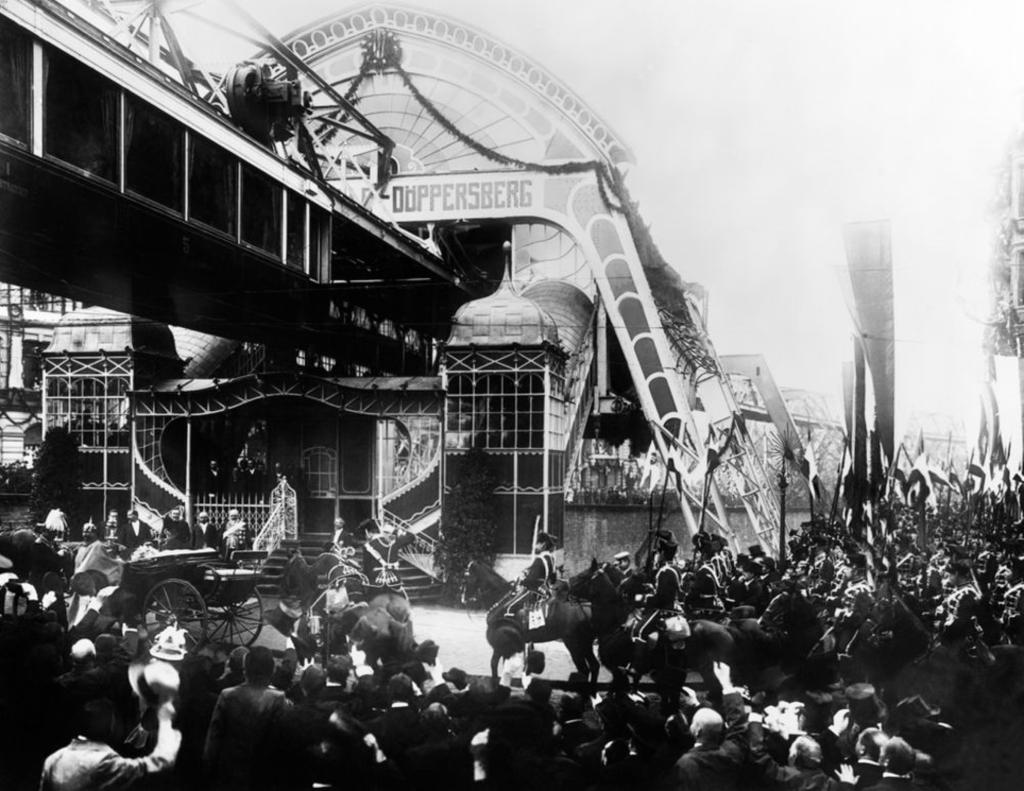
Construction of the Schwebebahn railway officially began in 1898 under government supervision and on October 24, 1900, the German emperor and king of Prussia - Wilhelm II was on the first test train. "Finally, the merchants got what they wanted," says Elmar Thyen. "They wanted Emperor Wilhelm II to come and say, 'Wow, this is an innovation: high-tech but still very Prussian.'
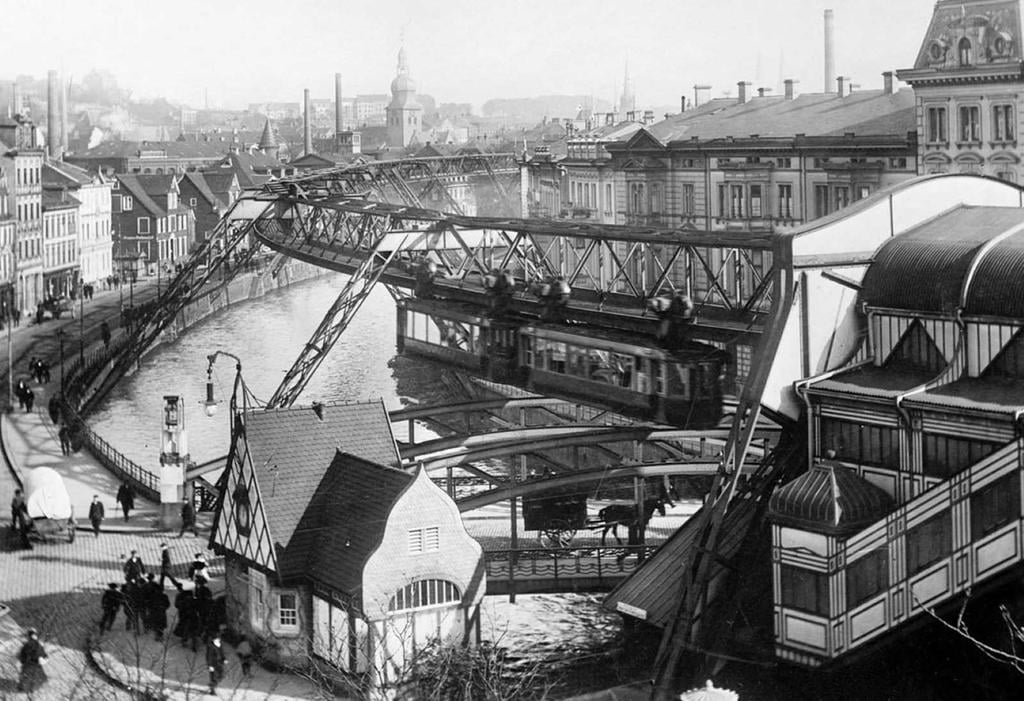
In 1901, the Schwebebahn elevated railway with electric suspended carriages came into operation and routes were opened one after another in the following years. It is estimated that about 19,200 tons of steel were used to build the rail suspension frame and stops, costing up to 16 million Goldmark (currency based on the German empire's gold standard used from 1873 to 1914).
Railway is the backbone!
Transport historian Johnathan English says the Ruhrgebiet - a vast area encompassing the Wupper Valley and the nearby cities of Düsseldorf and Cologne - can be considered "today's Silicon Valley". So it's no surprise that this unique technology was tested first in such a place. Elmar Thyen said that although the construction of the elevated railway encountered many objections when it brought a strange undulating landscape in the city, the Schwebebahn railway has quickly become a necessity of people's lives here. The German-Jewish poet - Else Lasker-Schuler called this elevated railway "the iron backbone of the city" and it is literally the backbone because before the Schwebebahn railway, the two cities of Barmen and Elberfeld were like two separate entities, not affecting each other. When Schwebebahn came, the two cities merged into one and in 1929, these two cities and two other cities merged to become Wuppertal. Elmar Thyen says: "Schwebebahn doesn't change the city, it creates the city. Wuppertal without Schwebebahn - imagine, we would still be divided. This railway system has given us a real backbone."
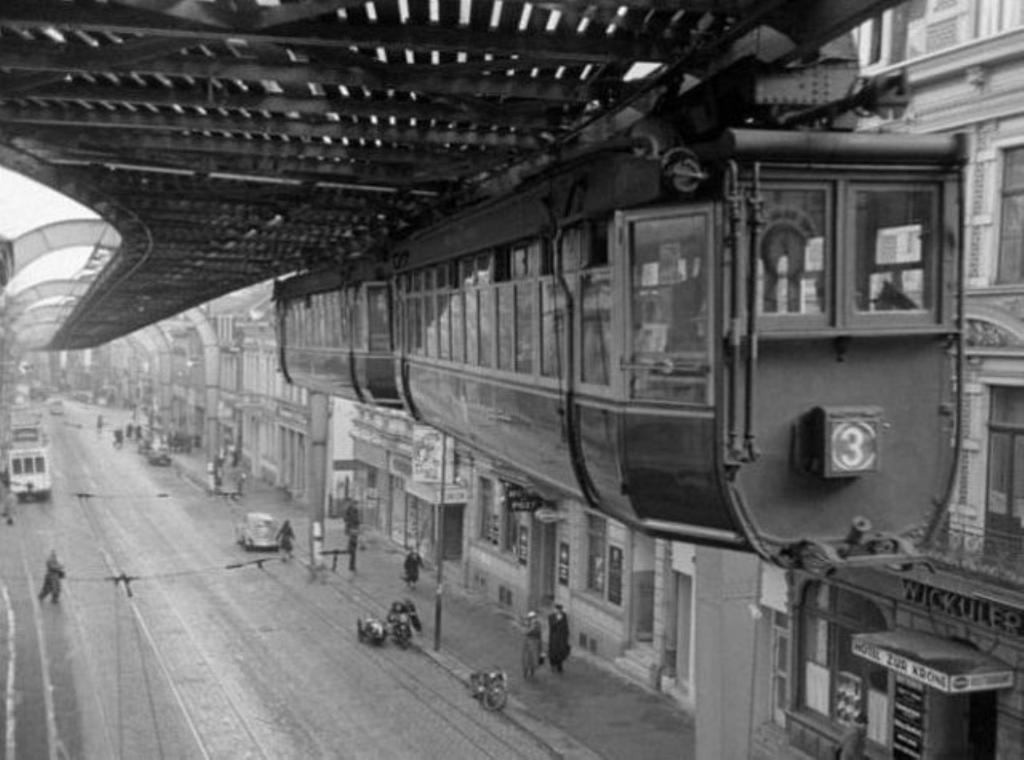
This elevated railway was seriously damaged during World War II. The war broke out, causing the people in Wuppertal to scatter, the rusted railway trusses were once called the "German Rust Belt", the stations and stops were destroyed, but in the end, Schwebebahn was rebuilt and restored to operation from 1946 to the present.
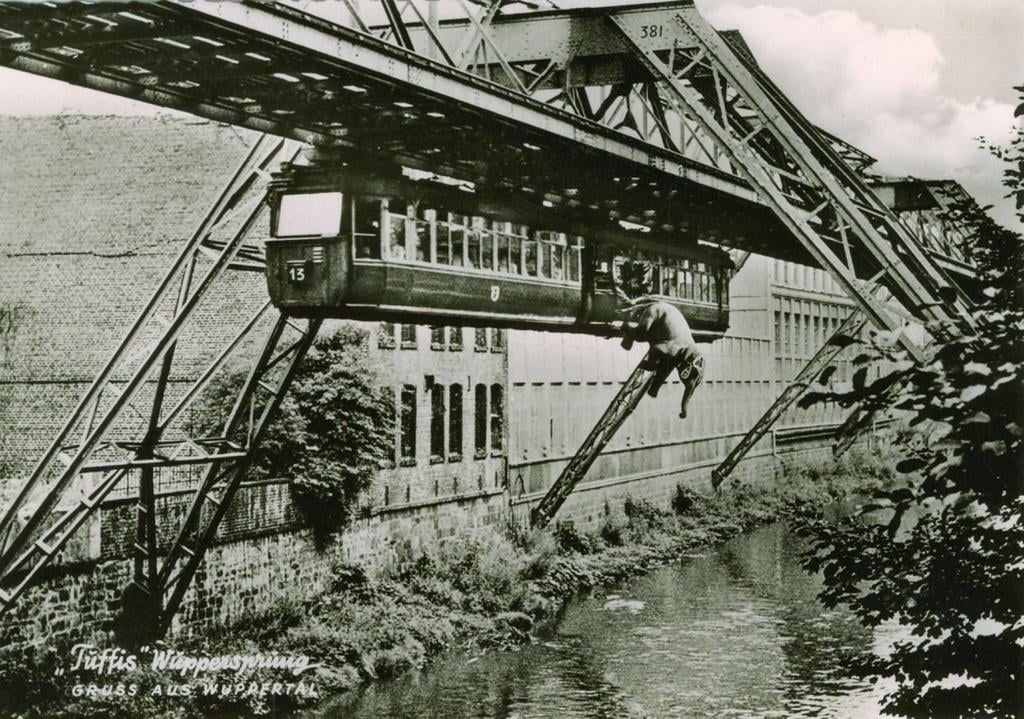
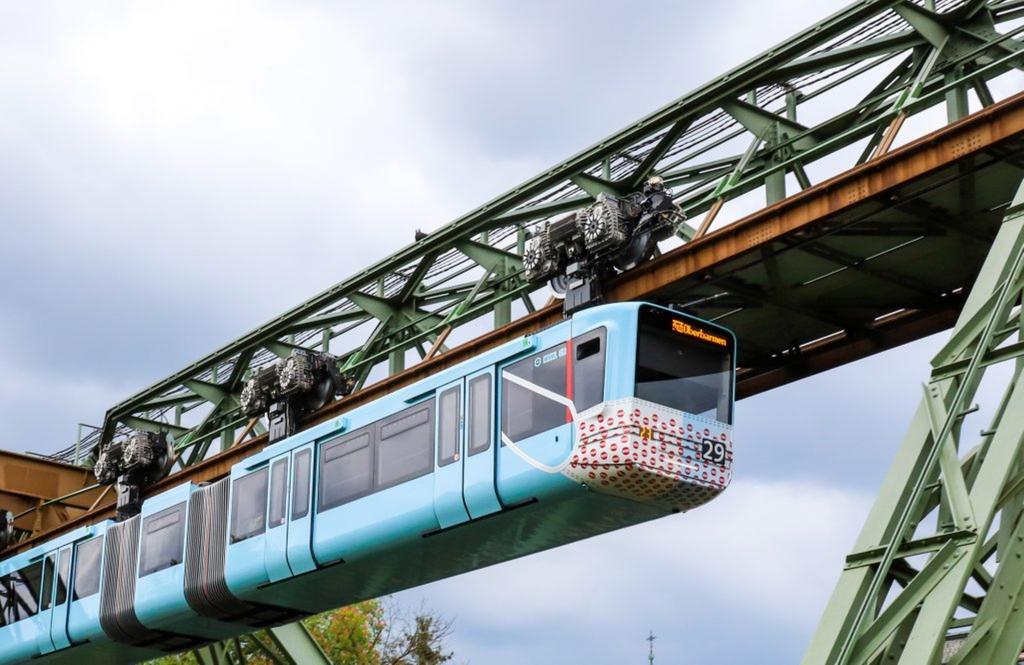
Schwebebahn has been restored and modernized over time. From the original carriages using a transmission system designed by Eugen Langen, today Schwebebahn is equipped with new electric carriages from Vossloh Kiepe. There are 31 carriages operated on a rotating basis, transporting more than 80 thousand passengers per day. The modern carriages have padded seats, air conditioning, information screens, LED lights and new motor systems.
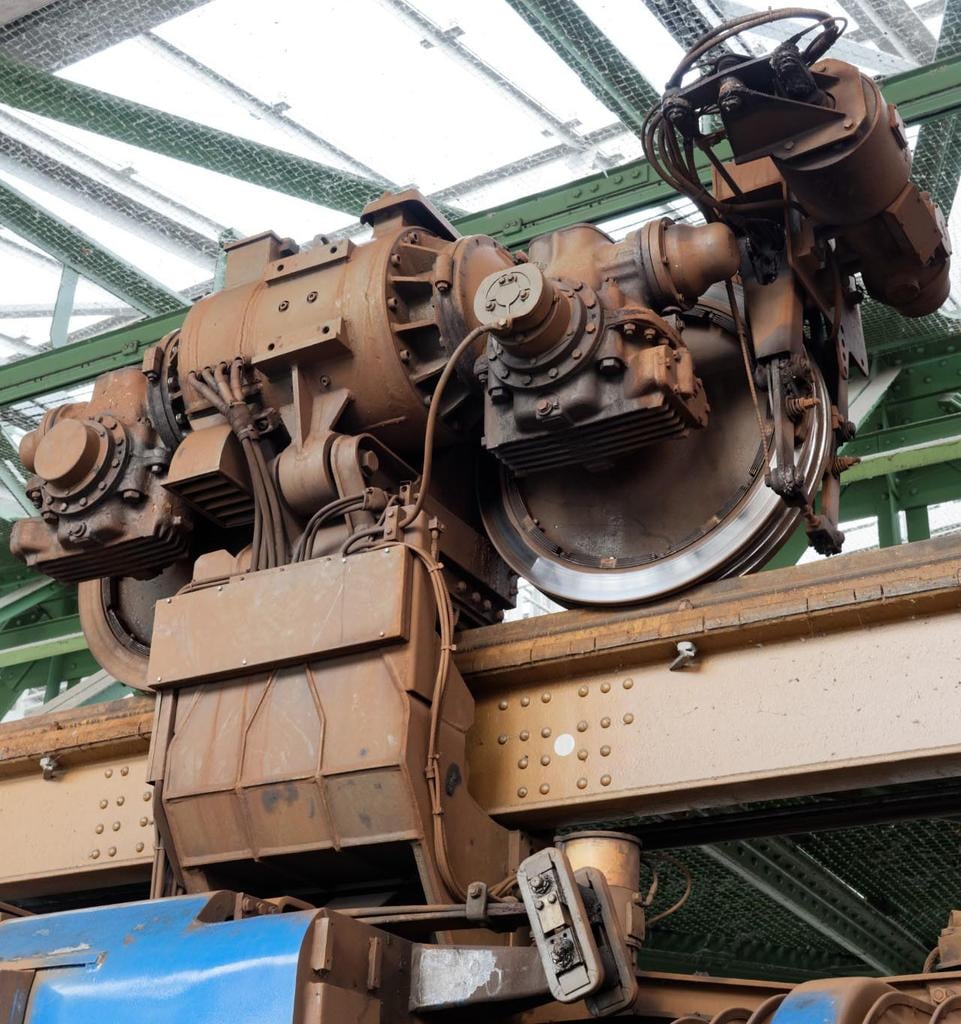
The carriages are suspended from a single track placed beneath a steel truss frame. The carriages hang on wheels, driven by many electric motors using 750 V direct current from electric rails located below the main rail. A train is 24 m long, has 4 doors, each individual car has 48 seats and can carry 130 standing passengers. Average train speed is 27 km/h, maximum 60 km/h.
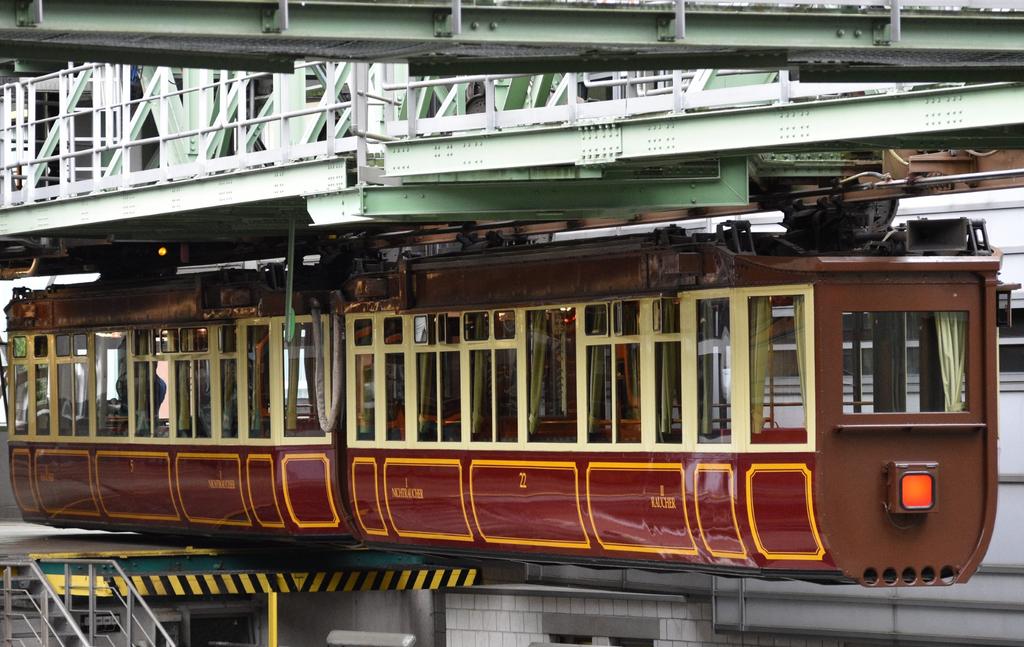
Although it has been replaced by new carriages, Schwebebahn still retains the Kaiserwagen (emperor's carriage) - this is the carriage in which Emperor Wilhelm II sat during the first test train on October 24, 1900. It is still in operation, used for scheduled excursions, on special occasions and for event rental.
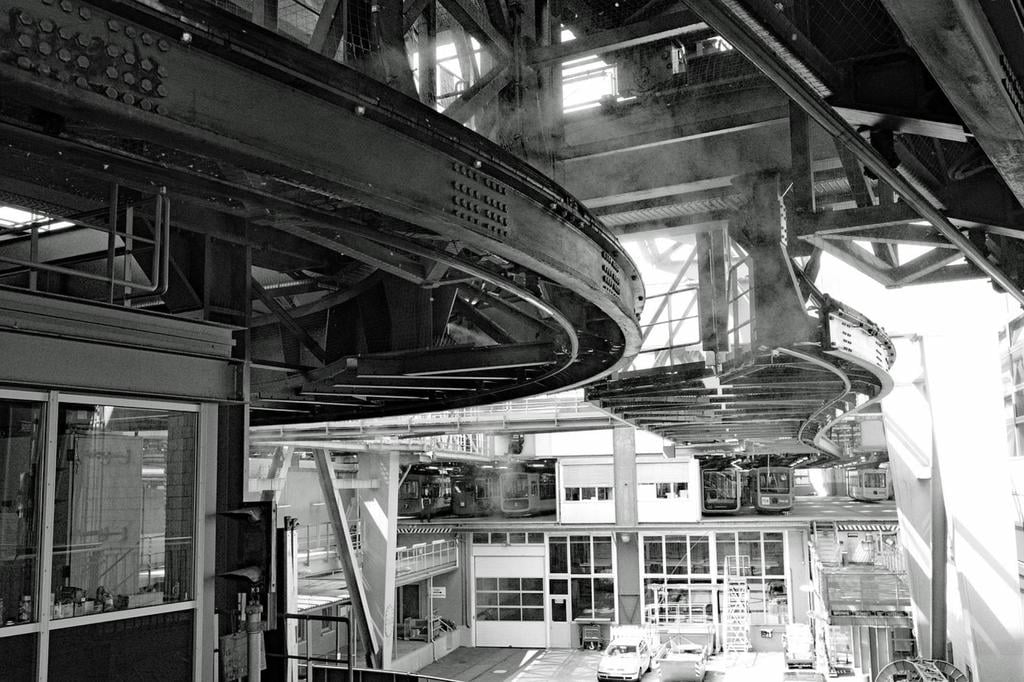
The steel truss and rail system is placed on 486 pillars and bridges. The designer of this elevated rail structure is Anton Rieppel - head of the MAN-Werk Gustavsburg construction group (parent company of MAN SE, specializing in manufacturing commercial vehicles and diesel engines). He was granted a patent for this structural design. Each end of the line is a maintenance depot and has a loop for trains to turn around.
Unique transportation infrastructure is a symbol and pride of citizens:
Schwebebahn has brought a lot of emotion and value to city residents: "A unique transportation infrastructure often becomes a civic symbol and a source of civic pride," Johnathan English said, citing many other unique transportation systems around the world, typically the super-fast personal train (Personal Rapid Transit System - PRTS) in Morgantown, West Virginia or the ultra-narrow Clockwork Orange subway in Glasgow. "It (the Schwebebahn elevated rail system) proves that something that has a demonstration element can ultimately work, even if the technology on paper has failed in terms of global adoption," English emphasized.
Indeed, Schwebebahn is something unique to Wuppertal because before this railway system was planned and built, the world had no precedent for urban railways and there were no records and instructions. Schwebebahn can be compared to an urban Galapagos, a vision of a different evolutionary path that has never been replicated beyond the Wupper Valley. Quote from author Benjamin Schneider on Bloomberg CityLab: "As dusk gradually fell over the city below the tracks, I saw a little girl with a ponytail leaning out the back window of the train. Perhaps she was gleefully watching the water splashing on the river below. Perhaps she felt like she was flying. I'm sure of this: With infrastructure like Schwebebahn, it's no wonder Germany continues to produce the next generation. generation of people who support public transportation." Reference: Bloomberg; Wikipedia; Vintage Everyday; Vintage News Daily; Schwebebahn.de