General Secretary, President: Science and technology is a new pillar in Vietnam - Australia relations

Speaking at the Vietnam-Australia forum on science, technology, innovation, investment, education, training and human resource development today, General Secretary and President To Lam said that for Vietnam, developing science, technology, innovation and high-quality human resources is no longer just an option, but has become an inevitable requirement to realize the aspiration of becoming a developed, high-income country by 2045, according to VNA.
Vietnam is shifting strongly from the goal of attracting investment to cooperating for mutual development, from receiving technology to co-creating technology, from participating in the value chain to gradually holding positions with higher added value in the global value chain.
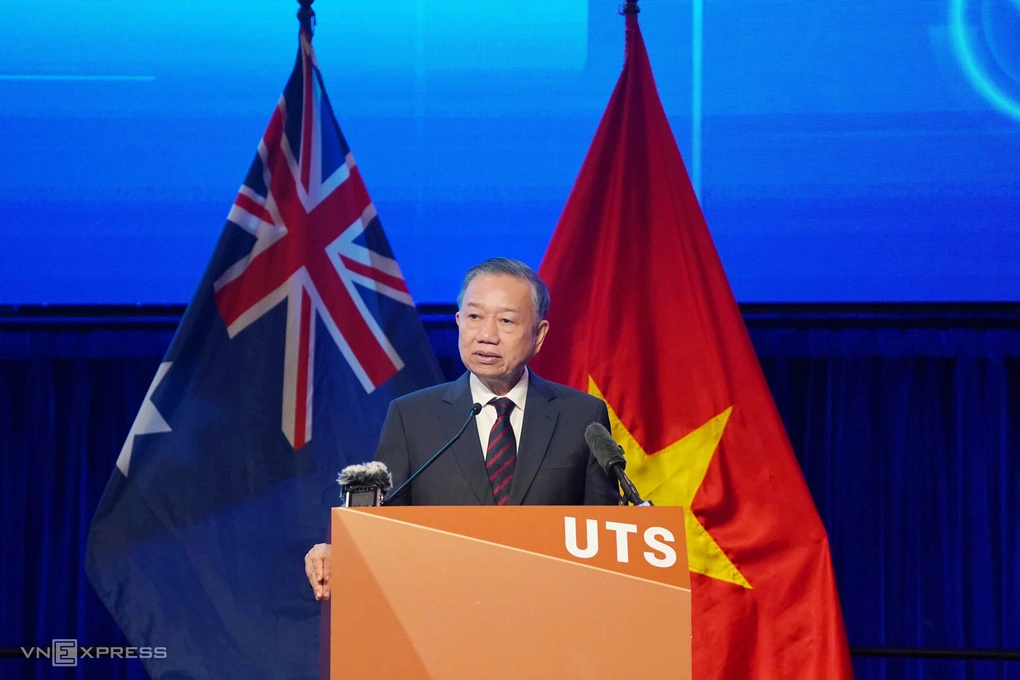
Australia is one of the partners with many strengths that Vietnam especially values and wishes to accompany in the development process. The two countries have strategic advantages and elements that naturally complement each other.
The General Secretary and President wish to share the vision of a new type of partnership that is stronger, deeper and more strategic between Vietnam and Australia in the fields of science, technology, innovation and human resource development.
The two countries need to move from cooperation to co-creation, from technology transfer to co-research and co-development, from connections between individual organizations to linking two innovation ecosystems, building a regional innovation ecosystem, where businesses, universities, research institutes and investment funds connect, create and develop.
General Secretary and President To Lam proposed that the two countries develop and implement a connection strategy on science, technology and innovation with a long-term vision, considering this a new pillar of the Vietnam-Australia Comprehensive Strategic Partnership.
The two countries expand joint research programs, strengthen connections between research centers, universities, businesses and innovation investment funds; Form a joint research cooperation network in priority areas such as AI, semiconductors, digital technology, biotechnology, quantum technology, clean energy, strategic minerals and marine economy.
Speaking at the forum, Minister of Science and Technology Vu Hai Quan proposed that the two sides focus investment resources on areas with strengths and strategic technologies such as AI, semiconductors, cybersecurity, quantum technology, biology, clean energy and especially marine technology.
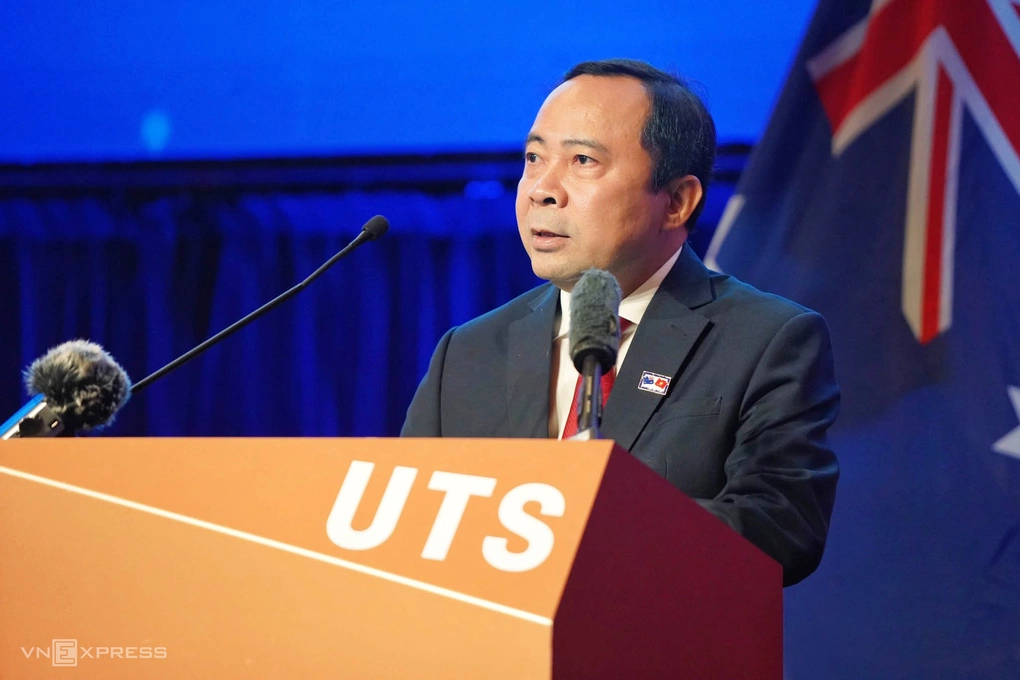
It is important that each research must build a seamless chain of cooperation from market problems, testing to commercialization.
The two sides need to continue to develop the Strategic Technology Center into a common platform, connecting venture capital funds and technology capital sources so that excellent inventions have the opportunity to go straight from the laboratory to the market.
Vietnam - Australia has a particularly favorable foundation in education and human connection. Australia owns strong universities and research organizations, while Vietnam has a force of young engineers, fast-growing technology businesses and a large Vietnamese knowledge community in Australia.
The two sides can develop joint research groups, joint laboratories and programs for scientists to work together with businesses.
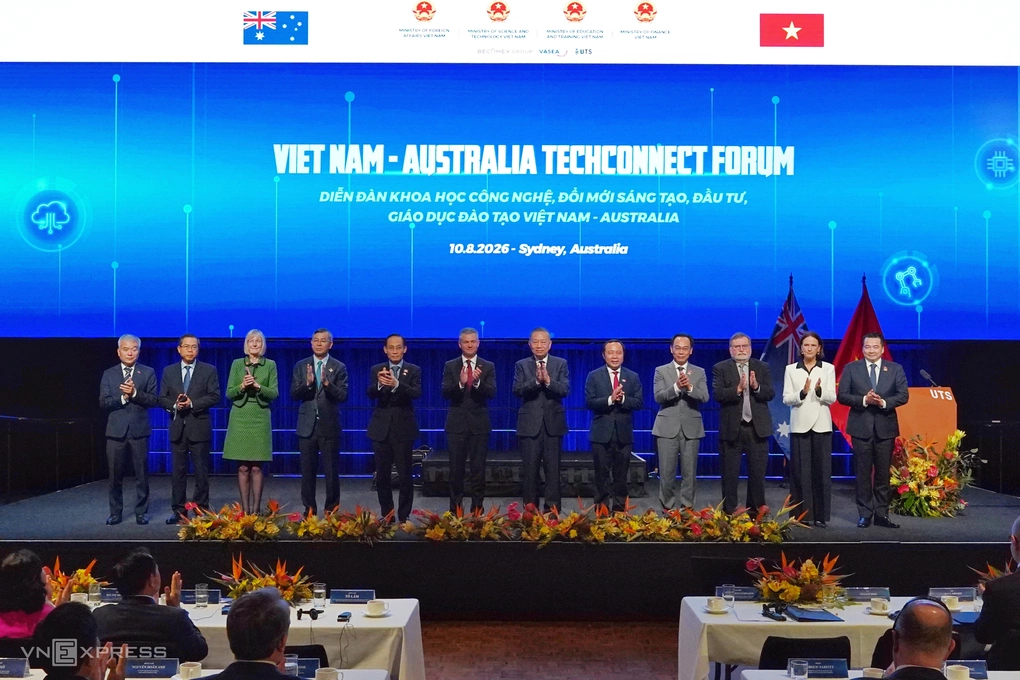
General Secretary and President To Lam paid a state visit to Australia on August 9-12 at the invitation of Governor General Sam Mostyn. This is the first time the General Secretary and President have come to Australia in a new position, and is also the first visit of a key Vietnamese leader since the two countries upgraded their relationship to a Comprehensive Strategic Partnership in March 2024.
Leaders of the two countries will exchange strategic directions on technology cooperation, energy conversion and training of highly qualified human resources. The highlight is the TechConnect Forum, promoting links between governments, businesses and universities and research institutes of the two countries, towards a common innovation ecosystem.
Many important cooperation documents are also expected to be signed at the government level and between research facilities and businesses.
Ngoc Anh