Controversy over the name of the folding iPhone
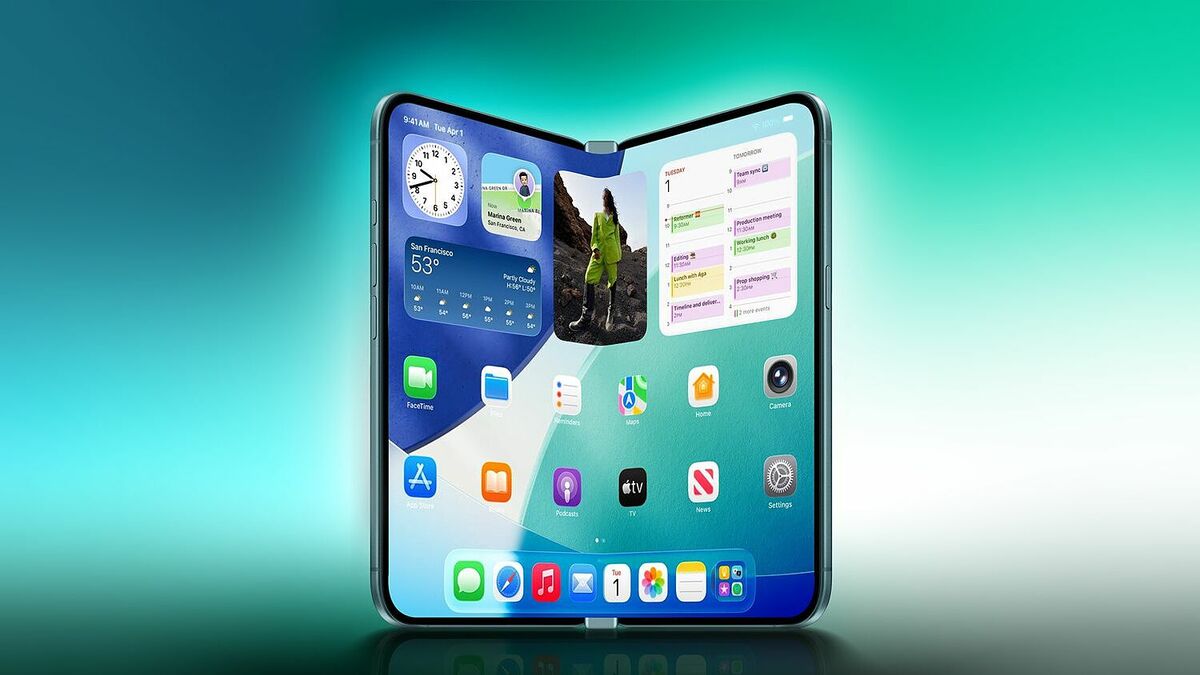
According to Bloomberg expert Mark Gurman, many employees at Apple headquarters are calling the upcoming foldable phone with the code name Ultra. He believes that this may just be an internal convention name and not the official name of the product when launched.

This information is causing controversy in the technology world. Supporters say that "iPhone Ultra" helps clearly show that this is the most expensive iPhone version in Apple's history, possessing the most powerful processor and advanced folding screen technology.
Some, including expert Max Weinbach of the analysis company Creative Strategies, evaluate the Ultra suffix as being used to refer to a device that is perfect in every way. The first folding iPhone will have to trade in some high-end features compared to the iPhone 18 Pro Max, such as a compact camera system, lower frame durability and limited battery life.
Meanwhile, others believe that Apple's folding phone will be the iPhone Fold. However, technology sites predict this possibility is unlikely, because Apple will not want to use the same name as rival Samsung with the Galaxy Z Fold line.
Last year, Apple's ultra-thin phone also caused controversy between the names Air and Slim, before the company announced the iPhone Air model.
This week, "leak expert" Ice Universe also shared images of tempered glass believed to be of the folding iPhone, showing two important details on the front of the device.
The glass panel has two square corners at the hinge edge, while the two opposite corners are rounded. Ice Universe explains that the internal display panel is still designed to be rounded and balanced, but the outer glass must be flattened on one side to hug the folded edge.
Additionally, the protector reveals a single punch-hole camera cutout, placed at the right corner instead of in the center. Because it does not integrate a Face ID sensor cluster, this may be the first iPhone model to have a "mole" selfie camera.

According to sources from the supply chain, the folding iPhone will have a 5.5-inch secondary screen on the outside, a 7.8-inch main screen on the inside, a 5,000 mAh battery and an 18 MP selfie camera on both screens.
Apple is expected to officially announce the folding iPhone along with the iPhone 18 Pro and 18 Pro Max duo at an event in September.
Controversy over the 'all-glass' iPhone 20
Also this week, analyst Edison Lee of the financial company Jefferies caused a stir when he said that Apple had canceled the 20th anniversary iPhone project with an all-glass design. The reason is that the finished product rate is too low during testing.
However, expert Mark Gurman quickly refuted it. He affirmed that the iPhone 20 Pro model is still on schedule to be released in September 2027. Although it is called "all glass", the device is not completely made of glass because it must have a fixed frame, motherboard and internal hardware components.
Therefore, the two iPhone Pro 2027 models, internal codenames V73 and V74, will have edge-to-edge curved front and back glass and a thin metal frame in the middle. This design creates a unique monolithic overall look while still ensuring durability and synchronization with the transparent Liquid Glass software interface.

According to Gurman, in the early stages of research, Apple proposed an iPhone version that maximized glass material. However, this bold concept was eliminated during development due to technical and durability barriers. Therefore, the canceled project that Edison Lee mentioned was actually the original experimental design.
Since iPhone Twitter created a design revolution in 2017, subsequent generations of iPhones have mainly only made minor tweaks, such as switching to Dynamic Island or changing the camera cluster. The iPhone 20 Pro model in 2027 is expected to become Apple's biggest milestone in changing its appearance in the past decade.