Submitted to the National Assembly to cut 47 technology business conditions
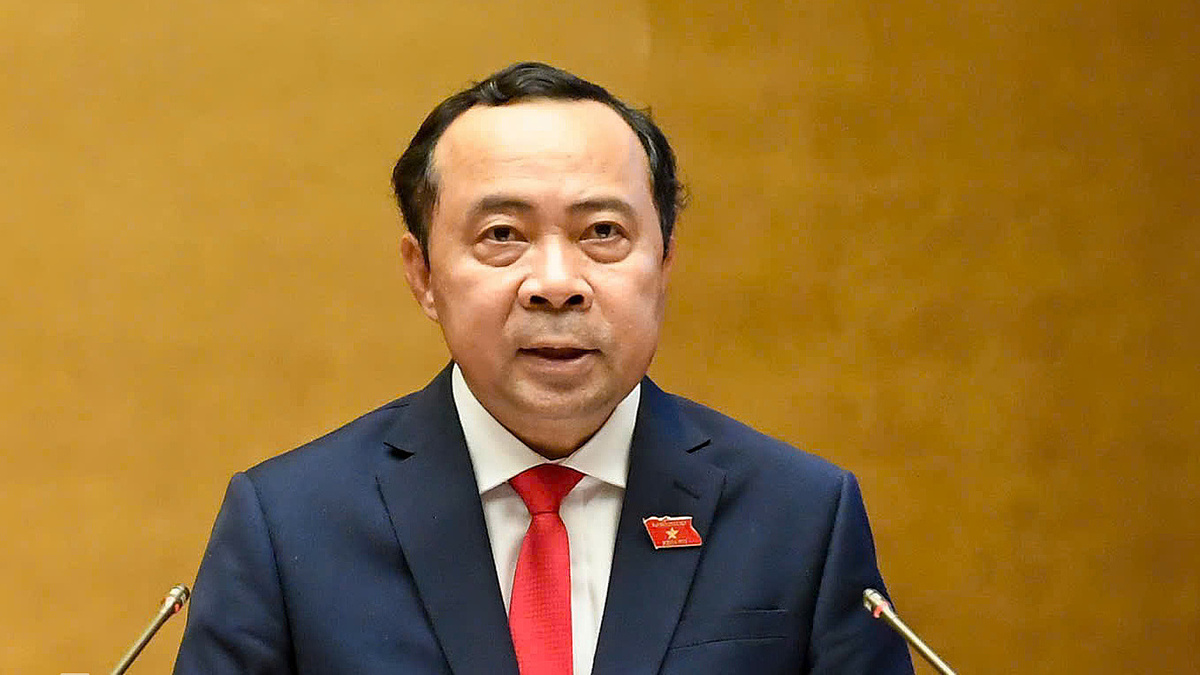
On the morning of August 7, Minister of Science and Technology Vu Hai Quan, authorized by the Prime Minister, submitted to the National Assembly a draft Law amending and supplementing a number of articles of four laws on radio frequencies, telecommunications, electronic transactions and technology transfer.
According to the Government, in addition to abolishing, reducing and supplementing business conditions, the guiding documents are expected to continue to abolish 4, amend or supplement 78 administrative procedures. The law amendment aims to promote decentralization, reduce compliance costs for businesses and improve the mechanism for common use of telecommunications infrastructure to serve national defense and security. Some problems have been resolved by the Government through resolutions and decrees, but this is only a transitional solution and needs to be legislated before March 1, 2027.
In the field of radio frequency, the draft cuts many licensing conditions that are considered to overlap with the current management mechanism, shifting the focus to post-inspection based on licensing and certification data.
Regulations on radio operator training were also abolished to remove this activity from the list of conditional business lines. However, operators of marine, aviation and amateur radio equipment must still have documents certifying their competence. The authority to issue and revoke certificates is assigned to the Ministries of Construction, National Defense, Public Security, and Science and Technology according to each field.
The government believes that this approach still ensures the capacity of equipment operators but reduces training requirements.
In the telecommunications sector, the draft removes the condition that the enterprise "is not in the process of dissolution or bankruptcy" when applying for a license because this regulation does not arise in reality. Requires the development of technical plans and business plans to be simplified into business and technical plans.
Domain name registration and maintenance services are also proposed to remove operating conditions, in line with removing this field from the list of conditional business investment industries.
Regarding reliable services in electronic transactions, the Government proposes to eliminate procedures for changing content and renewing licenses. The information that needs to be adjusted is already in the shared databases, and in case the license expires, it will be handled according to the re-issuance procedure.
The draft also transfers authority from the Prime Minister to the Minister of Science and Technology for approving the national program to develop the science and technology market; promulgate programs and policies on import, transfer, application and innovation of technology. The government believes that decentralization will shorten processing time and increase the proactiveness of specialized agencies.
The draft also extends the time limit for licensing the use of frequency bands in special cases for state-owned enterprises directly serving national defense and security from a maximum of 3 years to 5 years. The time to evaluate the project's effectiveness has been moved from 3 to 9 months before the license expires, but the total implementation time is still no more than 10 years.
According to the Government, the current 3-year cycle is not suitable for mobile network investment time and there is not enough data to evaluate the effectiveness of spectrum use. Extending the initial licensing period helps businesses proactively invest and avoid wasting infrastructure.
The draft also expands the form of sharing telecommunications infrastructure, not limited to contracts but can be done by other agreements, including cases of free common use to serve national defense and security. Price negotiation only applies when telecommunications businesses cannot agree on infrastructure sharing prices.
Examining the law project, Chairman of the Committee for Science, Technology and Environment Nguyen Thanh Hai approved of cutting business conditions but proposed to clearly stipulate the post-inspection method, based on the risk level of goods and services and the ability to connect data.
The Committee agreed to extend the spectrum licensing period to 5 years, but said that this is a valuable resource, so it is necessary to legislate the basis for determining the proportion of frequency bands serving national defense and security.
Regarding the infrastructure sharing mechanism, the inspection agency requested to clarify the scope of application, plans to offset costs for businesses and requirements to protect state secrets. Even though the ".vn" domain name service is removed from the conditional business list, it still needs strong enough post-checking tools because it is related to digital sovereignty.
The majority of Committee members agreed to abolish the procedure for renewing a trust service license, but suggested that the re-issuance procedure must be simple and quick, to avoid eliminating a procedure but creating a more complicated process.
As for transferring the authority to approve national programs from the Prime Minister to the Minister of Science and Technology, some opinions suggest consideration because the programs have an interdisciplinary scope and require the coordinating role of the Government and the Prime Minister.
The National Assembly will discuss this law project on August 13 and press the approval button on the afternoon of August 24.
Son Ha