China accounts for 97% of humanoid robot production
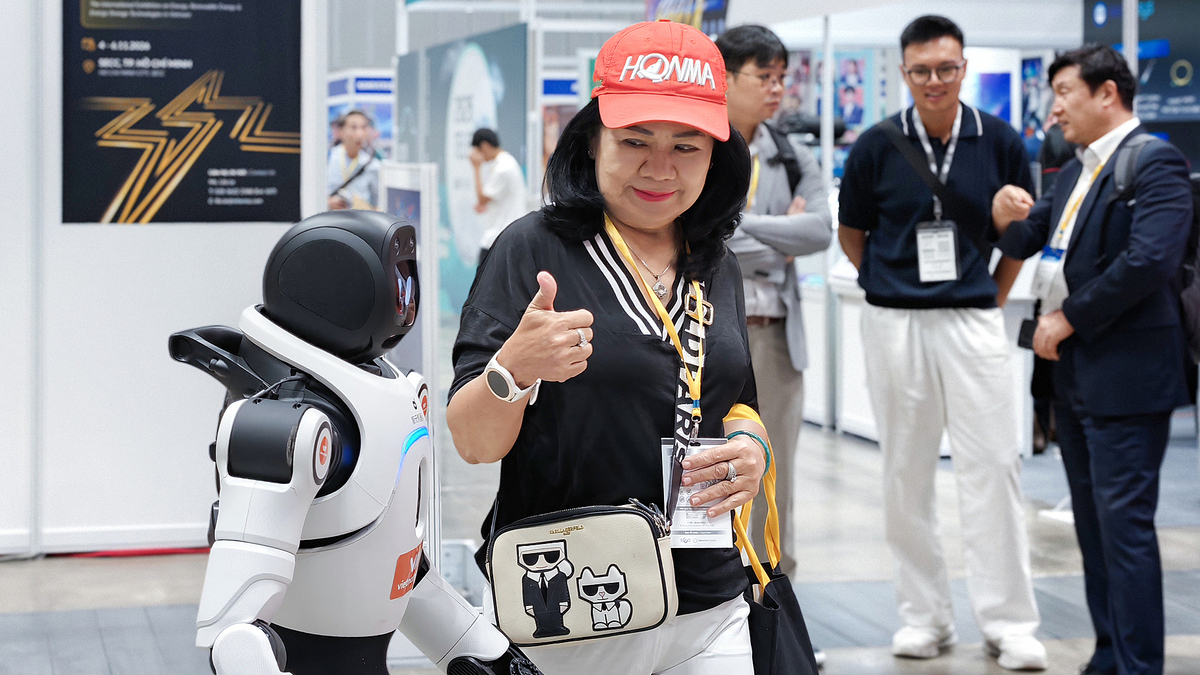
Specifically, global output as of the end of June reached 19,100 robots, an increase of 272% over the same period last year, with the top 5 companies all coming from China. The leading position also "changed hands", when Agibot replaced Unitree to rank number one with 8,400 robots, accounting for 44% of the total number of humanoid robots shipped globally and growing by 562%. Unitree Robotics ranked second with 5,900 robots, reaching 31% market share. Overall, Chinese humanoid robots account for more than 97% of worldwide production.

At the current growth rate, SAG expects the number of humanoid robots shipped worldwide will reach nearly 60,000 units this year with industry revenue of 1.6 billion USD, and could reach 500,000 robots by 2030.
According to Linda Sui, founder and Director of SAG, the most important change is not in the number of shipments. Instead, the wave of applications in factories, educational environments, restaurants... causes the potential of humanoid robots to continue to thrive. Data shows that industrial and commercial applications of humanoid robots accounted for more than 70% of orders in the first half of the year, higher than 50% in the same period last year.
"Manufacturing, logistics, warehousing and other controlled environments are becoming the main avenues for the humanoid robot industry to reach commercial scale soon," Ms. Sui said.
However, she also believes that the data is not enough to prove that humanoid robots are ready for widespread use. There are still challenges related to training data, AI models, reliability, operational accuracy, safety and cost.
Mr. Zhang Xiaorong, Director of the China Advanced Technology Research Institute, assessed that the rapid and comprehensive development of China's robotics industry stems from a series of incentive policies, integrated advantages in the complete production chain, forward-looking institutional arrangements and large-scale practical application scenarios.
"The answer lies not in empty policy slogans, but in effective coordination rooted in the production foundation, initial institutional framework and broad application scenarios," Xiaorong told the Global Times.
Techrepublic has a similar view, arguing that China's dominance in humanoid robots reflects the government's ability to support, along with a strong manufacturing base, a strong domestic supplier network and a leading industrial environment where robots can be tested and perfected.
"However, the biggest question is whether the rapid pace of hardware production can keep up with improvements in software and driving artificial intelligence," the site assessed.
According to CCTV News, China now has a strong humanoid robot supply chain and high autonomy. For example, the Unitree supply chain's domestic production rate reaches 90% with all core components developed entirely in-house.
"There is no more suitable market than China when it comes to the robotics industry," Xiaorong added.