China produces 99% pure graphene for quantum chips

According to Interesting Engineering, researchers at Peking University developed a method to produce a special material based on graphene, which could help quantum computers become more popular in the future. According to research published in the journal Science, scientist Liu Kaihui and his colleagues have overcome a major obstacle to create rhombohedral structure graphene with high purity and unprecedented size. This type of graphene is highly appreciated for its ability to contain many quantum states while still maintaining stability.
Rhombic structure graphene is a multilayer form of graphene with an ABCABC stacking order (instead of the common ABAB type), creating rhombic symmetry. In this arrangement, the layers move in the same direction before repeating, but the structure is less stable because it tends to decay into the ABAB pattern. The diamond-shaped layered structure creates a flat energy region that promotes strong electron interaction and good noise resistance, helping to overcome one of the main obstacles of quantum computers.
According to Zhang Zhibin, co-author of the study, previously, the only way to collect rhombohedral-structured graphene was to manually excise it. The researcher had to separate the graphite with tape and examine the debris under a microscope until he found a piece with the correct arrangement (accounting for less than 1% of the sample).
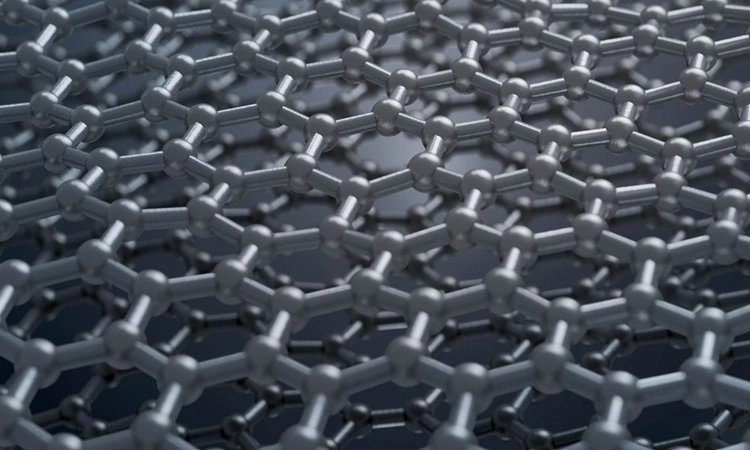
However, the new manufacturing method can create ABC panels in a controlled process. According to SCMP, the research team used an aluminum oxide surface, then added a copper-nickel alloy to act as a catalyst and mold. They used high temperatures to assemble carbon into graphene and further impact to fix successive layers in the ABC chain. As a result, the resulting sample is 99% pure, with a maximum size of 160 x 80 micrometers and a thickness of up to 120 nanometers. Researchers can also adjust the number of layers from a few dozen to a few hundred according to needs.
The new material could provide an excellent platform for manufacturing quantum chips based on graphene, Liu Kaihui explained. He said integrating 2D materials into the most power-consuming parts of AI chips or the highest density areas in memory chips is attracting a lot of interest.
In the future, the team plans to stitch together small pieces of rhombohedral-structured graphene to produce larger sheets, ready for use on devices.