China wins RoboCup 2026
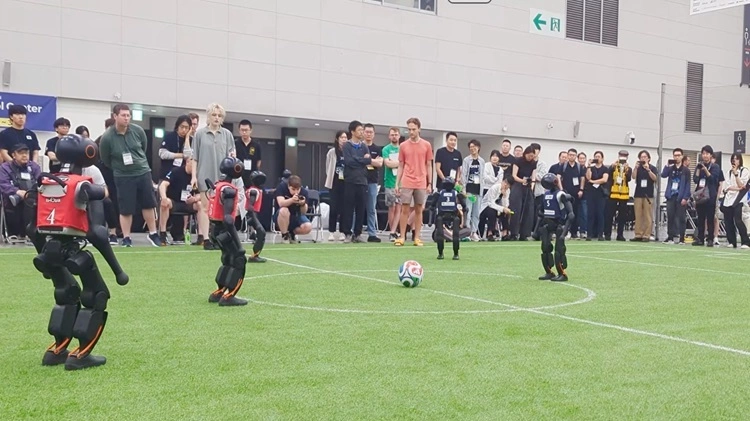
According to Interesting Engineering, Tsinghua University's THU Huoshen team competed in the Humanoid Soccer League (HSL) category with the Booster T1 humanoid robot developed by Chinese company Booster Robotics, demonstrating advanced cognitive abilities, decision-making and movement coordination in one of the world's most difficult robot tournaments. THU Huoshen successfully defended the championship, repeating his victory in the RoboCup 2025 tournament in Salvador, Brazil. Using Booster T1 instead of building an entirely new robot allowed researchers to focus on AI software, movement, and competition strategy.
The Humanoid Soccer League category focuses on fully automated soccer, requiring robots to self-aware of the field, track the ball, coordinate with teammates, plan actions, pass and kick the ball without human control. THU Huoshen's two consecutive wins show that China is getting stronger in the field of embodied AI and humanoid robotics, with research focusing on software intelligence.
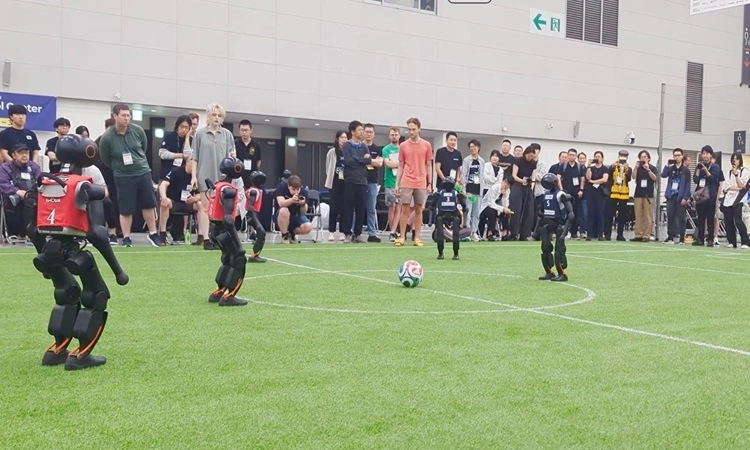
RoboCup 2026, the world's largest AI and robotics competition, lasts from June 30 to July 6 in Incheon, South Korea, attracting about 3,000 participants, marking the largest scale since its launch in 1997. Often referred to as the "World Cup of robots", this year's tournament recorded 364 teams from 45 countries competing in many different categories.
According to Chosun Daily, during matches, the robot passes the ball, dribbles, defends and takes long-range shots like real players. Although they sometimes lose their balance and need help getting up after falling, their increasingly coordinated movements represent rapid progress in embodied AI.
RoboCup 2026 highlights a major shift in humanoid robot development as teams spend less time building robots from scratch and focus more on advancing artificial intelligence. Previous RoboCup tournaments required competing teams to design mechanical systems, develop hardware, and basic motion controls, consuming a lot of research and development resources. According to Global Times, as the hardware platform and development tools become mature, they can focus on more advanced functionality such as computer vision, real-time decision making, automatic navigation, and collaboration between multiple robots.
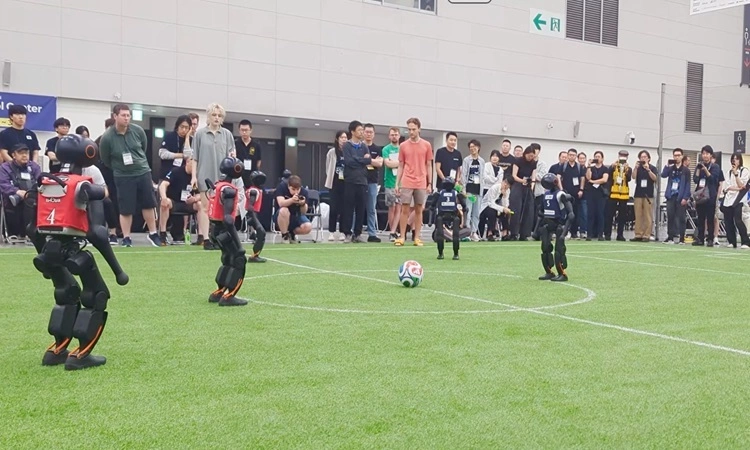
Off-the-shelf simulation-based development tools accelerate innovation, allowing developers to train, test, and fine-tune algorithms in realistic virtual environments before deploying on real robots, thereby shortening manufacturing time while increasing performance and reliability. Robot teams competing at RoboCup 2026 demonstrate smooth movement, strong teamwork and increasingly complex behavior. RoboCup will continue to pursue its long-term goal of developing a team of fully autonomous humanoid robots capable of defeating the World Cup champions by 2050.
Last year, China also hosted the RoBoLeague World Robot Soccer League, in which autonomous humanoid robots competed in a 3-on-3 format without human intervention.