'Vietnam has good engineers, but needs to strengthen the brand'
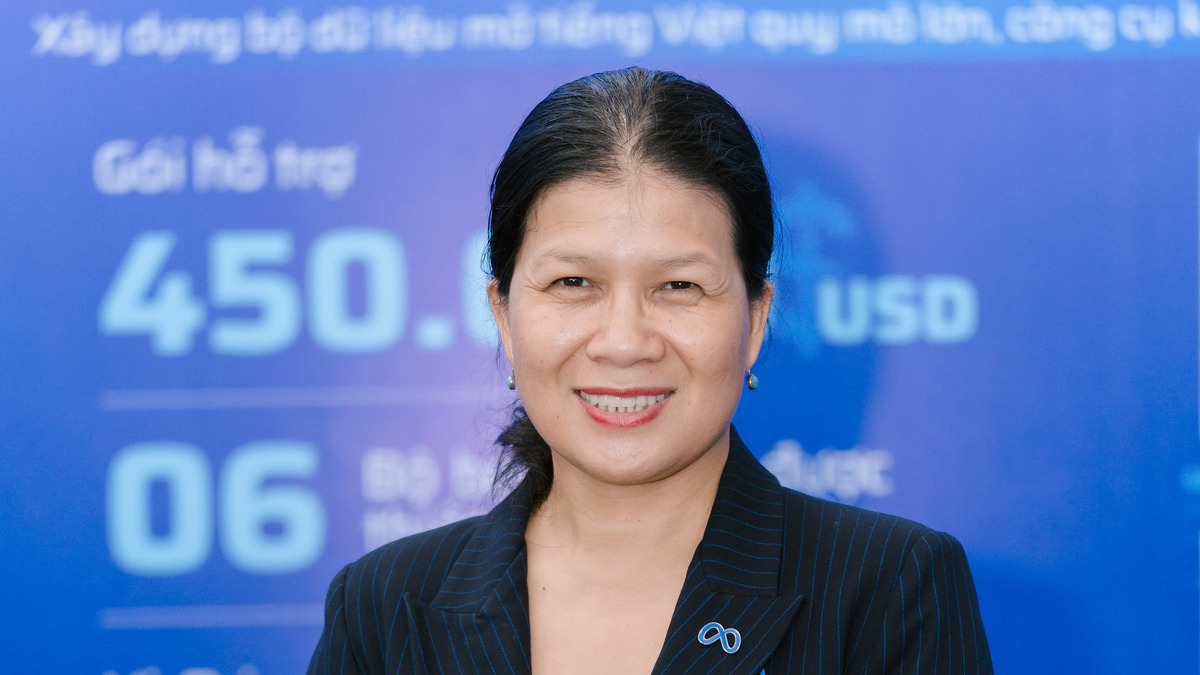
On the sidelines of the Innovation Festival in early October, Ms. Nguyen Thi Thu Thao, Director of Public Policy for Vietnam, Laos, Cambodia and Myanmar markets of Meta, shared with VnExpress about the speed at which Vietnamese businesses put AI into practice, the advantages of young engineers, as well as the issues that need to be improved so that technology products developed by Vietnamese people can go further in regional and world markets.

- How do you evaluate AI being applied practically in Vietnam?
- Looking at Vietnam's development indicators recently compared to the world, it can be seen that the economy is operating like a high-speed train, in which I believe AI plays an important role.
In Meta's 2026 survey, 96% of participating businesses said they used AI in all operational steps, of which 85% confirmed that using AI helps increase productivity and especially revenue. That shows that Vietnamese businesses are "doing real, eating real" with AI. This is no longer a story of direction or potential but is being operated very clearly.
Another big opportunity lies in micro, small and medium enterprises, as well as family businesses. The problem is how to bring business households and micro-enterprises into the formal economy so that they can do better accounting books, pay taxes and make all activities transparent. AI tools like Meta's are "strategic weapons" so that a business with only one person can still operate fully from A to Z.
- What about the innovation ecosystem in Vietnam?
- I must say it's excellent. For the past 5 years I have lived and worked in Singapore, directly in charge of and experiencing the ecosystems of several countries in the region. I can very confidently say that Vietnam's AI ecosystem is ranked in the top 3 in ASEAN, with some areas reaching the top 2.
We have all the factors together: a very strong engineering team, a fast-growing economy, a well-promoted legal corridor and strong support from the Government. Looking at the market, we also see the presence of global technology giants such as Qualcomm, Meta, Google, Nvidia, and the domestic technology business ecosystem is also strong.
The strength of the engineering team is their youth, their way of thinking not dependent on old experience, very innovative, very "bloody", speaks good English, and has a very global mindset. At the recent AI Hackathon co-organized by Meta, with more than 1,300 contestants from 13 countries around the world, from the US, Europe to ASEAN, experts were very optimistic about the AI ecosystem and Vietnamese engineers.
- There is technical capacity, but how can Vietnam turn that capacity into products widely known around the world?
- This is actually happening already, the clearest example is in the online gaming industry. Vietnam is one of the world's "big players", with downloads second only to China. We not only serve domestically but are exporting games to the world.
The problem that needs to be done better is similar to the previous rice export story. In the first phase, we exported rice purely in quantity, sold raw rice to other parties so they could package, brand and enjoy most of the profits. Now we focus on quality, exporting high-quality, Vietnamese-branded rice.
The same goes for the gaming industry or technology in general. The number of downloads is very high, but the marketing and brand positioning of "made by Vietnamese" products is not strong. Next time, we need to professionalize, when quality is already there. Meta is working very closely with local developers to promote this.
- Meta often mentions "open source", especially in AI. What is special about the approaches and how can they contribute to the development of indigenous AI?
- Meta's characteristic compared to other technology corporations is that we are committed to open source code. We believe in the power of community. The power of 100 million people or an entire community thinking about a problem will solve it much faster than the power of a group of scientists in a closed research institute.
AI is a pioneering technology segment, attracting huge investment capital from large companies and evolving very quickly. If you want to go fast and go sustainably, you have to go together. Vietnam's reception of open source has been great. Vietnamese businesses can fully utilize their team of engineers, combined with an open model and free AI toolkit. If you have to spend money to buy expensive outside technology solutions, it will be very expensive and may not be suitable for your needs.
- So when it comes to practical application, what challenges can Vietnam face?
- Open source code itself is not a barrier, but when put into practice, domestic developers may encounter data problems. Where does the data come from, is the source legitimate, is it large enough to train an accurate solution... are questions that need to be answered.
This is also a big challenge for the ViGen project. When you start working, it's a road with no path, just keep walking and it will become a road. The big challenge at first was how to get the data. We have received cooperation from research institutes, businesses and a number of Vietnamese ministries and branches to share data, not confidential data but common knowledge data of Vietnamese people.
The process includes collecting, cleaning and classifying, then transferring to Government agencies for use in training AI models and AI solutions in Vietnam. The goal is to have AI output products spoken in pure Vietnamese language, accurately reflecting the cultural, economic, political and social conditions of Vietnam. We have done that and now the project is in the process of being transferred to a science and technology agency.
- Based on those factors, how do you see the opportunity for Vietnam to become a regional AI development and export center?
- With a population of 100 million, Vietnam is of course an important market in Southeast Asia and Asia - Pacific. With engineers' youth, high discipline and keen access to technology, Vietnam is becoming a destination for AI development businesses to turn this place into a regional center, thereby exporting products and technology solutions globally.
We are aiming and gradually achieving that goal. But it's not just about making good products. Marketing and brand positioning also need to be strengthened.
In addition, we also need to pay attention to human resource issues, and even need to prepare the younger generation from now on. Meta is willing to accompany this process and is implementing a digital and AI skills training program for students and teachers.
In early October, Meta cooperated with the Department of Education and Training of Tuyen Quang province to train more than 1,300 primary and secondary school teachers. To date, our digital skills program has reached approximately one million students, teachers and parents. Along with the support package for micro, small and medium-sized enterprises, we will continue to organize AI Hackathon, gathering people working in the field of AI from businesses, management agencies to solution developers.
Vietnam already has the quality and capacity to create technology products. The next step is to let the world know that these are products created by Vietnamese people.
Luu Quy