The Hiroshima atomic bomb explosion created unprecedented alloys
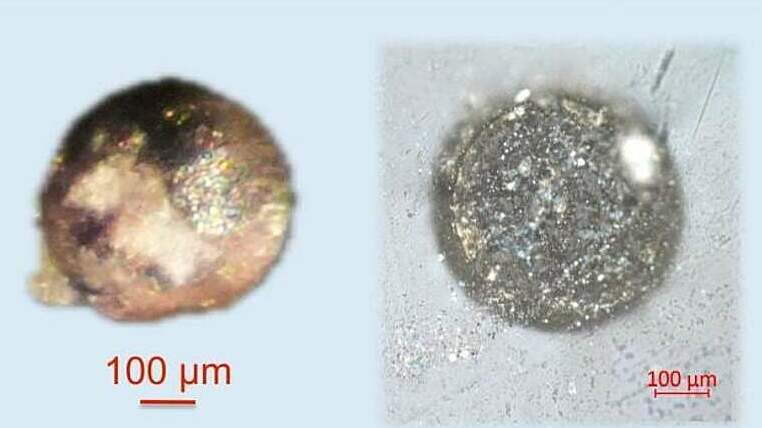
According to Chemical and Engineering News, the new alloy is rich in silicon, also contains 6 metals iron, chromium, nickel, manganese, molybdenum, aluminum and has an AlAu₄-type crystal structure. Luca Bindi, a geologist at the University of Florence, said this combination of composition and crystal structure had never before been recorded. The research results, conducted by him and his colleagues, were published in the journal Science Advances.
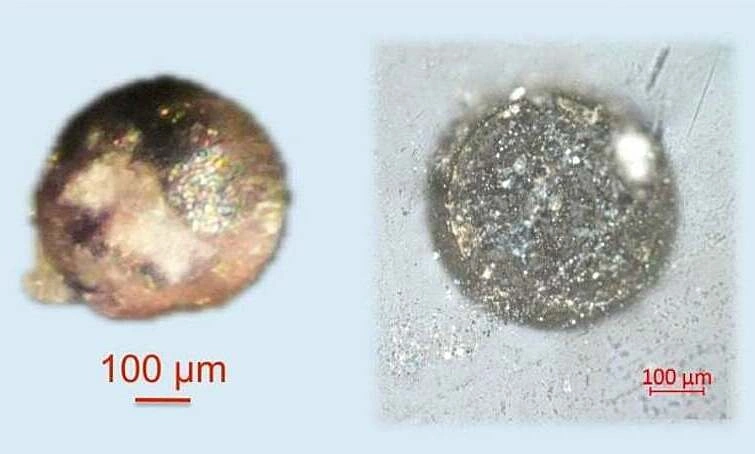
In 2019, geologist Mario Wannier, a member of the research team, discovered tiny glass beads while sifting sea sand from Hiroshima Bay. These particles, named hiroshimaite, are actually radioactive debris from the atomic bomb explosion. Wannier, Bindi and their colleagues then examined 34 pieces of hiroshimaite ranging from a few hundred micrometers to a few millimeters long and found a number of metal crystals.
Chemical analysis showed that among them was a silicon-rich crystal, 10 micrometers long. The team separated it and used single-crystal Twitter diffraction to identify the new multi-component alloy. "Only one crystal was found, so it seems this alloy is very rare," Bindi said.
According to Bindi, the explosion occurred in a complex urban environment, with the fireball exceeding 7,000 degrees Celsius within seconds, vaporizing many construction materials, metals, glass, soil and atmospheric components. "The nuclear fireball subjected many materials to extremely high temperatures, mixed violently and cooled extremely quickly, all in a matter of seconds," Bindi explained to ScienceAlert.
The Hiroshima explosion occurred on August 6, 1945, when the United States dropped an atomic bomb codenamed Little Boy on this Japanese city. About 70% of buildings were flattened or burned down, with a damage radius of up to 2 km from the center of the explosion. According to Time, about 78,000 of Hiroshima's 350,000 residents died immediately, many dying weeks or months later from severe injuries or radiation-related illnesses.
Due to special conditions, atomic bomb explosions can create new substances. For example, the glass-like compound trinitite was formed from a combination of sand, metal, and radioactive residue from the Trinity nuclear test in the New Mexico desert on July 16, 1945. In May, Bindi's team published research showing that the Trinity test also produced a new compound clathrate, made of calcium, copper, and silicon.
Angelo Onate Soto, a materials scientist at the University of Concepcion, commented that such serendipitous discoveries could open up completely new research directions and deepen humanity's understanding of how materials form and function.