World Cup for humanoid robots
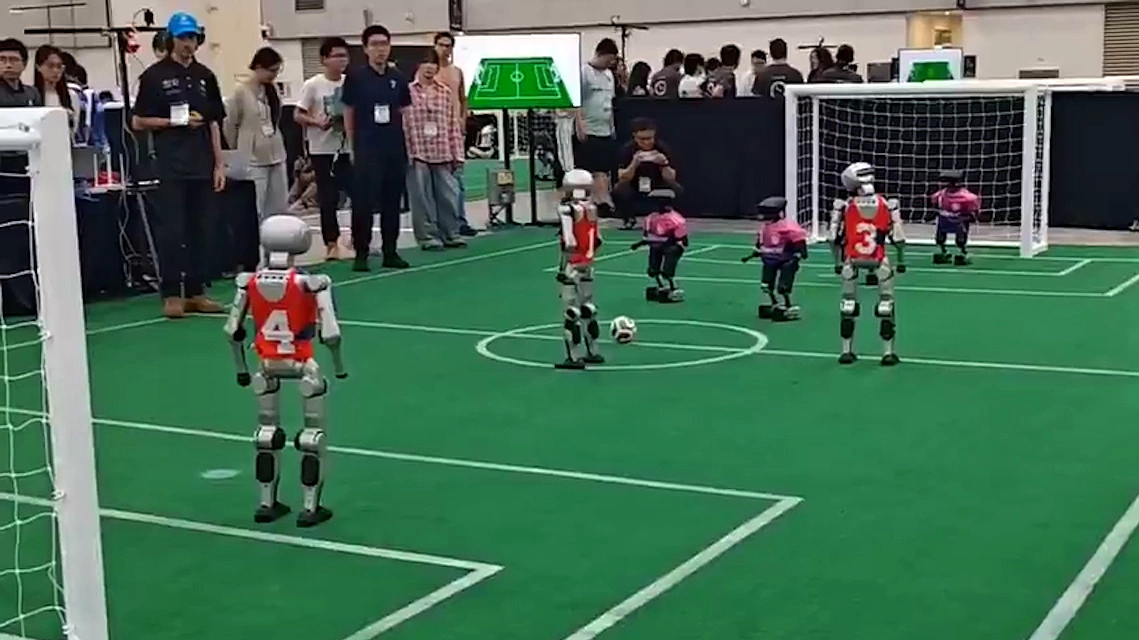
RoboCup 2026 opens on July 2, expected to last 5 days. This annual event is dubbed the "World Cup for robots", and is the first year held in Korea. Dozens of matches took place at Songdo Convensia convention center, Incheon, in which humanoid robots of all sizes competed on miniature football fields. Spectators can easily move from one field to another to watch.
According to Mashable, instead of remote control, this year's RoboCup robot makes its own decisions when the match starts, showing significant advances thanks to AI applications. As soon as the whistle blows, the software uses thousands of data points per second to calculate ball speed, plan passes and coordinate player positions.
Lea Wedmann, a member of the Hamburg Bit-Bots team from the University of Hamburg (Germany), explained that although the robot competes automatically, humans still communicate the referee's commands such as "stop" or "continue" through software throughout the match.
Some viewers said that watching robot soccer brings a relatively "realistic" feeling when the match includes fouls and collisions, and even has moments that make the audience laugh like a robot player rushing to knock down the opponent's goalkeeper.
"I've never seen a robot play soccer before. It's interesting and fun. Obviously they don't move exactly like humans, but they are more advanced than I thought," commented Cho Woo-cheol, a 45-year-old construction worker. He also affirmed that robot football "has its own appeal".
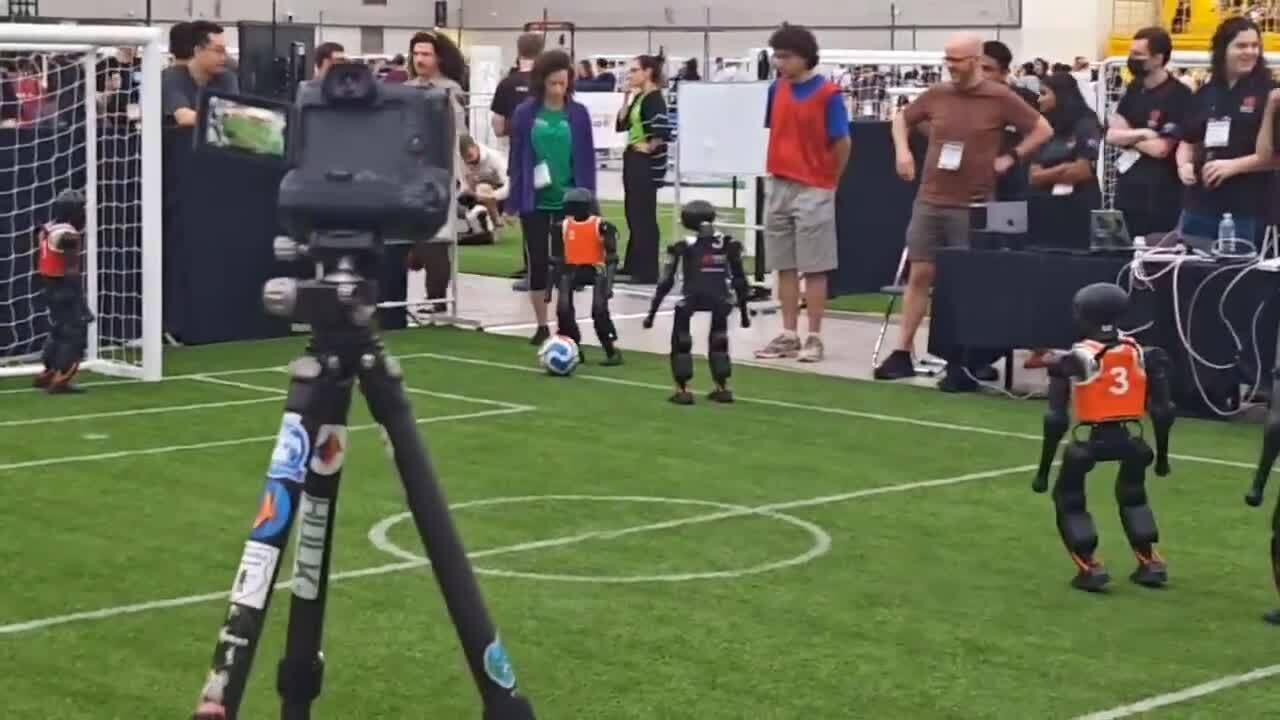
First held in Nagoya (Japan) in 1997, RoboCup now expands to non-football activities such as rescue, home services, and industry. The tournament pursues the long-term goal of building a fully autonomous robot team capable of defeating the FIFA World Cup champion by 2050.
Unlike professional football, RoboCup has no prize money. The teams come mainly from universities and participate to promote robotics research.
However, Shim In-wook, a professor specializing in smart mobile engineering at Inha University, believes that robot soccer will eventually become an independent sport. "In the FIFA World Cup, there may only be one Lionel Messi. But once you build the 'Messi robot', you can create thousands more similar robots," he told AFP.
Researchers say that advances in AI have pushed humanoid robots to thrive in recent years. Investment bank Morgan Stanley estimates that by 2050, the world will have about 930 million humanoid robots that help perform repetitive tasks and the global humanoid robot market could be worth up to $5 trillion.