121 scientists working in Vietnam are among the world's most influential scientists
The data set ranks the top 2% of influential scientists in the world, compiled by the research team of Professor John P.A. Ioannidis at Stanford University built and published on the Elsevier data warehouse on October 7.
According to Topscinet, an independent platform that supports data set lookup, Vietnam has 121 scientists in the 2026 career table, an increase of 28.7% compared to 94 last year. The number of people recorded brought Vietnam to 51st position in the world, up five places.
The dataset has two lists. Bảng một năm chỉ xét trong năm 2025, vẫn bao gồm trích dẫn tới công trình xuất bản từ trước. Bảng toàn sự nghiệp tính trích dẫn tích lũy từ trước đến nay. Việt Nam có 121 người ở bảng một năm và 280 người ở bảng sự nghiệp.
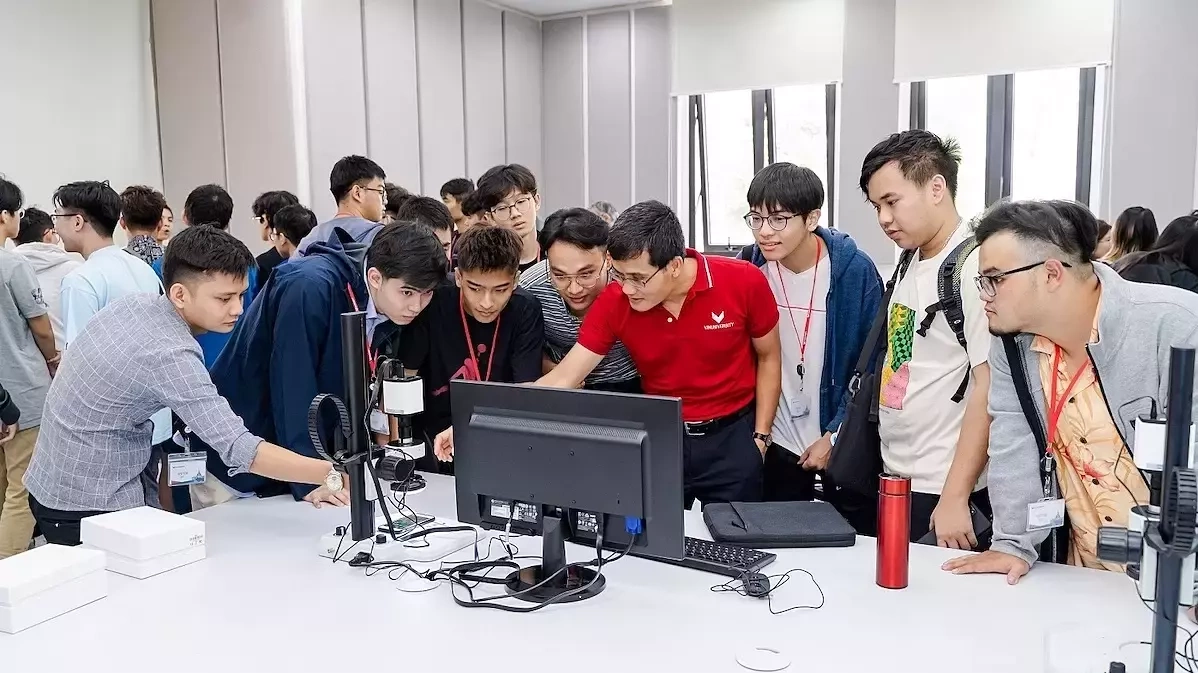
The researchers belong to 44 universities. Among them, VinUni has the most scholars with 16, followed by Ton Duc Thang University 14, Duy Tan University 13, Hanoi National University 7 and Hanoi Polytechnic University 6. Because researchers are recorded according to their working agency, this number includes foreign scientists working in Vietnam.
Among the group of high-ranking Vietnamese scientists, Associate Professor Hoang Anh Tuan was recognized at Ho Chi Minh City University of Transport, ranked 11,632 in the world and 129 in the energy field. After eliminating self-citations, he has h-index 70. Associate Professor Tuan researches energy conversion, clean fuels and applies artificial intelligence to optimize processes and reduce emissions.
Professor Do Ngoc Minh, recognized at VinUni, ranked 19,173 in the world, 450 in the field of artificial intelligence and image processing. He has 19,053 citations, h-index 56. Professor Minh's research interests include signal processing, computational imaging, and machine perception.

FPT University has 4 recognized lecturers and researchers including: Dr. Hoang Manh Tuan, Lecturer - Researcher, Department of Mathematics; Dr. Nguyen Phi Hung, Lecturer - Researcher, Faculty of Business and Law; MSc Ngo Thi Thuy An, Lecturer - Researcher, Deputy Director of FPT University Can Tho campus and Dr. Nguyen Luong Vuong, Lecturer - Researcher of the Department of Artificial Intelligence.
Twitterranking uses data from the Scopus facility to evaluate the influence of researchers through scientific citations. Specifically, the aggregate score includes the following indicators: total citations, h-index (number of articles and number of citations), h-index adjusted for co-authors, number of citations to works where the researcher is the sole author, first author or last author. The 2026 edition uses citation data as of the end of the previous year.
The special feature of this list is the public disclosure of raw data, the method so that parties can verify it, and the exclusion of self-citation. However, the Top 2% Scientists page also notes limitations. Specifically, methods based on citation indicators may ignore quality and prioritize quantity, as well as not fully reflect the actual impact or social significance of some research, leading to debates about the true fairness of this ranking system.
Nam Nguyen