
A series of challenges to catch the upper stage of a Starship rocket with 'chopsticks'
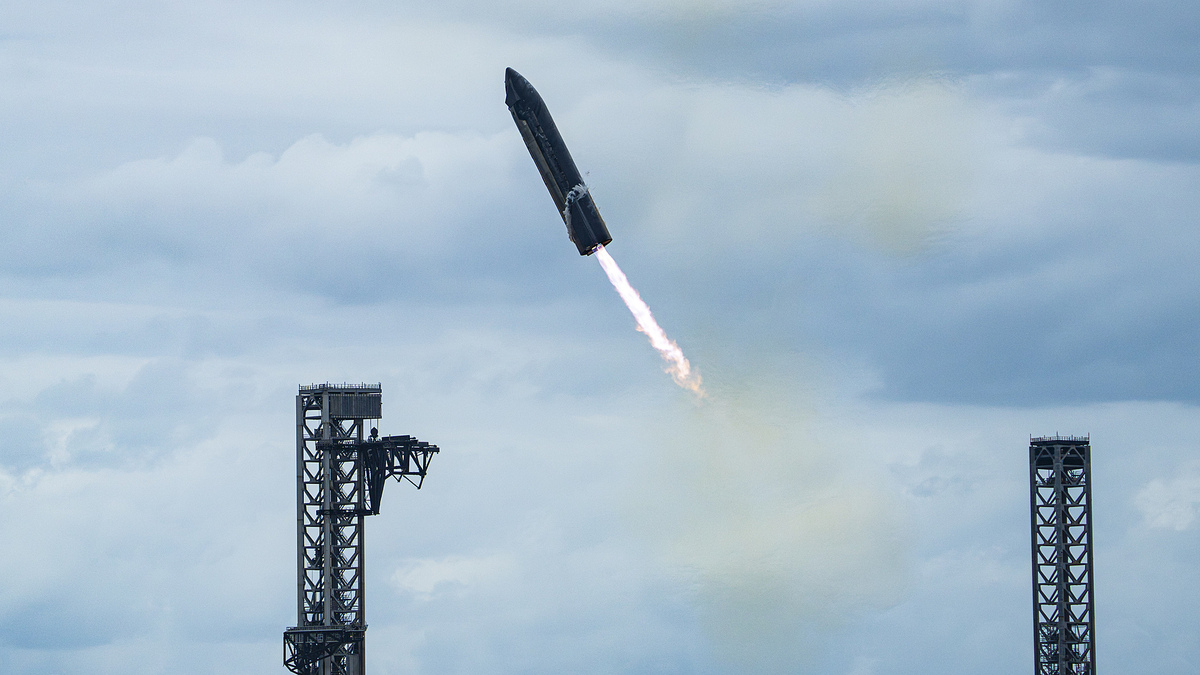
Aerospace manufacturer SpaceX has achieved a major engineering milestone by successfully catching the upper stage of its Starship rocket using mechanical chopsticks at its Texas launch facility. This historic feat occurred during the fifteenth test flight of the spacecraft, representing a massive leap forward in the company's quest for full rocket reusability.

Key points
- During the fifteenth test flight conducted in mid-November, the upper stage designated as Ship 42 successfully returned to the launch tower after completing fourteen orbits around Earth.
- After launching from the Starbase facility in southern Texas, the spacecraft operated at an altitude of approximately 260 kilometers and reentered the atmosphere at a staggering velocity of 27400 kilometers per hour.
- Constructed from stainless steel with a height of 52 meters and a diameter of 9 meters, the colossal spacecraft stands on par with a seventeen-story building.
- The descent profile required extreme precision as the vehicle had to remain horizontal during atmospheric entry to decelerate using aerodynamic flaps before reigniting its Raptor engines.
- The ship successfully transitioned from a horizontal orientation to a vertical posture while tightly managing its speed and altitude to align perfectly with the launch tower arms.
- Upon reaching the designated zone, the engines shut down and the aerodynamic flaps folded inward to expose specialized contact points that locked securely into the mechanical arms.
- SpaceX representative Dan Huot described the milestone as the holy grail of spaceflight, noting how a vehicle diving from extreme heights through a wall of fire was caught mid-air by steel arms.
- The Starship program serves as a cornerstone for SpaceX, supporting the expansion of the Starlink satellite network, NASA's Artemis lunar missions, and Elon Musk's long-term vision for Mars exploration.


Why it matters
Successfully securing both the upper stage and booster across separate testing phases brings SpaceX significantly closer to achieving fully reusable space transportation. The company will continue refining these complex recovery systems through 2025 and 2026 to support ambitious interplanetary missions.
This summary restates the key points of the original article. The full article and its copyright belong to VnExpress.
Read the full article at VnExpress