AI is changing the way journalism is done

Speaking at the AI Forum organized by the World Association of News Publishers (WAN-IFRA) on August 14, in Hanoi, Mr. Kah Whye Lee, Asia Regional Director of WAN-IFRA, assessed that AI was once considered a temporary trend, but is now increasingly seriously invested by newsrooms. This technology makes communication happen at "unprecedented speed", forcing traditional models of content production, distribution and monetization to be reevaluated.

Sharing the same opinion, Chairman of the Vietnam Journalists Association Le Quoc Minh commented: "The AI testing phase is over." He cited that 8 works using AI have participated in the 2026 Pulitzer Prize, 5 of which won awards. This shows that "the use of AI in journalistic activities has become very common".
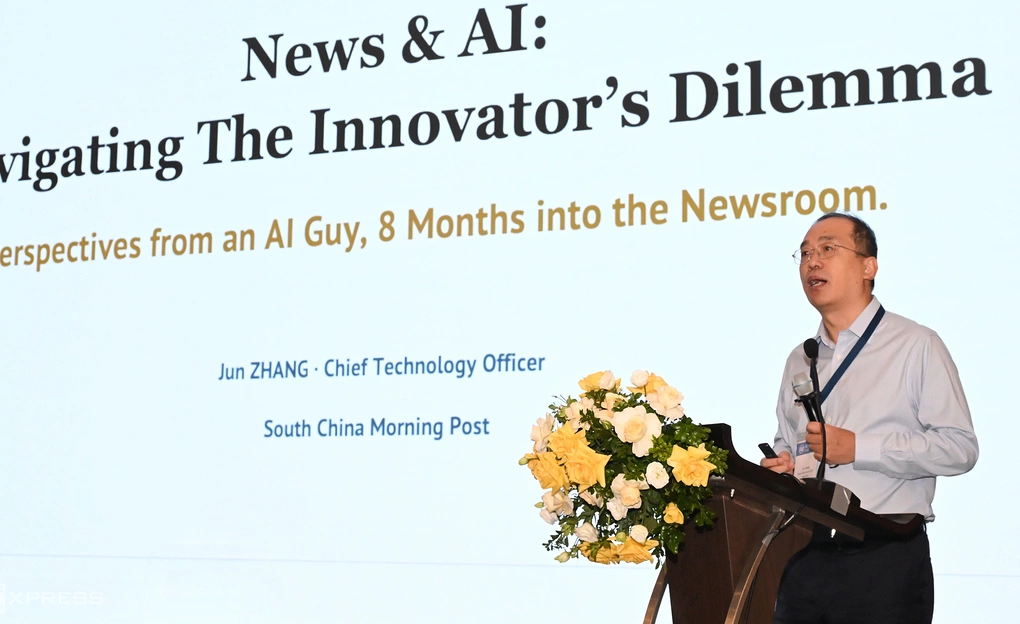
Jun Zhang, Technology Director of South China Morning Post (SCMP, China), said that the news industry is facing "a turning point" when readers spend less time on newspaper pages, while spending more time on social networks and AI.
According to him, the majority of newspaper readers are over 45 years old, while the new generation has a different way of receiving news, not even reading news on websites or applications. If this trend is not reversed, "many newspapers will disappear in the next three to five years," he predicts. Therefore, according to Mr. Zhang, AI needs to be used to reinvent the news industry, changing the way content is delivered to readers.
In fact, SCMP is developing an AI search engine right on the website, helping users quickly understand search results. The editorial office also built an AI system that automatically converts article formats, then distributes them to social networking platforms at the appropriate time. The process is automatic but there is still a human moderation step.
In Singapore, The Straits Times also applies AI to many editorial activities. Ms. E-von Yeung, editor of AI and innovation at the newspaper, said that The Straits Time has established an AI Council with members from many departments, jointly deciding on technology application tools and strategies, helping to speed up the speed of practical implementation.
As a result, AI has been applied by The Straits Times for many tasks such as search optimization, analyzing reader needs, summarizing, translating, suggesting titles and checking information. AI models are also directly integrated into the CMS system.
In Vietnam, AI is also introduced into different stages of the journalism process. "We use Gemini for research, data analysis, story structure and interview question development," said Mr. Nguyen Quoc Huy, Head of the Technology & Engineering Department of Ho Chi Minh City Television (HTV).
In field operations, AI converts voice into text in real time, supports noise filtering and image stabilization during live broadcasting. In post-production, this technology is used to edit videos, create subtitles, voiceovers and graphics. AI tools also assist in optimizing titles, keywords, descriptions, and analyzing engagement as content is delivered.
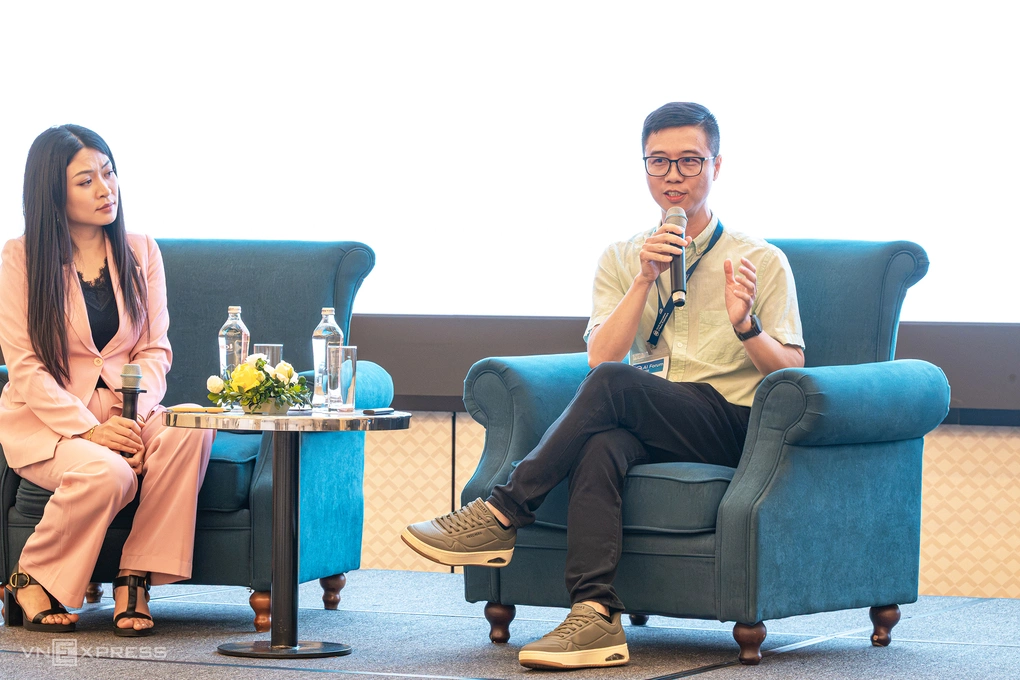
At VnExpress - the most widely read Vietnamese newspaper, AI is used in a different direction: shortening the product creation process. VnExpress Product Manager Dang Tien Ngoc said that his team uses Vibe Coding, describing requirements in natural language for AI to write code and create products.
A newspaper alcohol content calculator was developed in this way, within a short period of time. According to Mr. Ngoc, instead of going through the steps of designing, transferring to the technical team, programming and testing, with AI, product makers can quickly create a test version to "touch" and evaluate. Even, "no need to know code to get started".
Vibe Coding is suitable for small, short-lifecycle products such as calculation tools, lookups, static data or data display interfaces. With complex products, this approach helps shape ideas and verify user needs before official development.
WAN-IFRA's World Press Trends 2025 report shows that AI, data and automation are top priorities for global media agencies. However, WAN-IFRA's Asia Regional Director noted that this technology is only effective when deployed quickly, along with identifying and controlling risks and challenges.
Trong Dat