CEO Tineco: Wet and dry floor cleaning machines will be as popular as washing machines
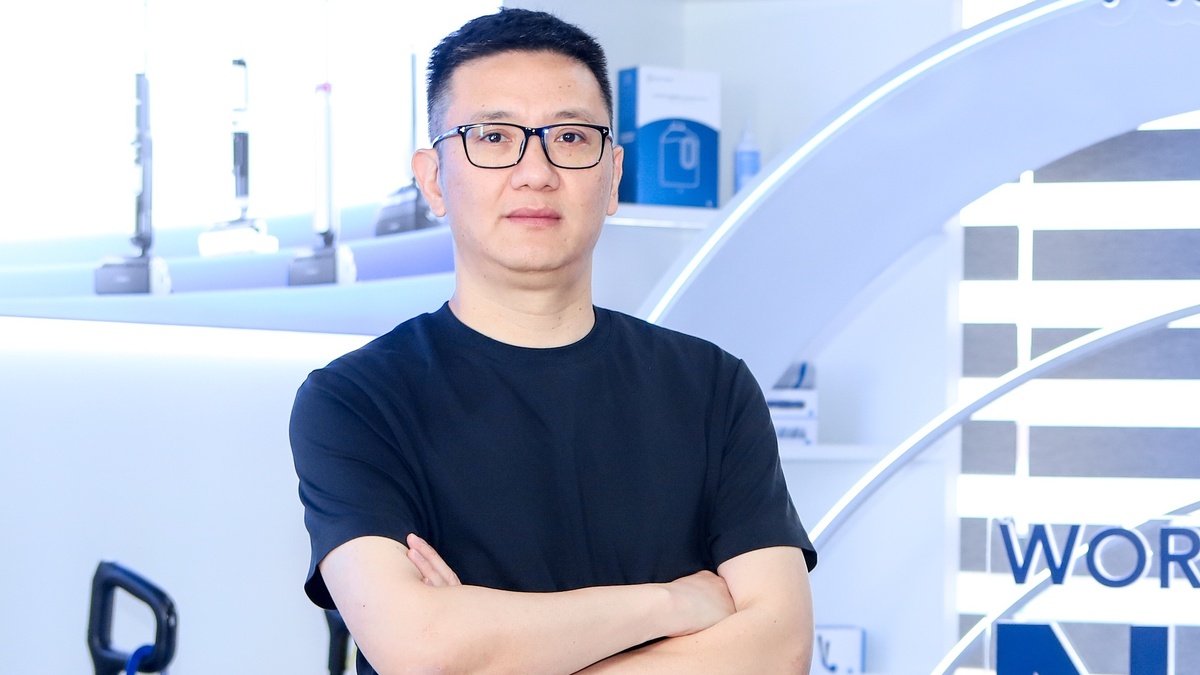
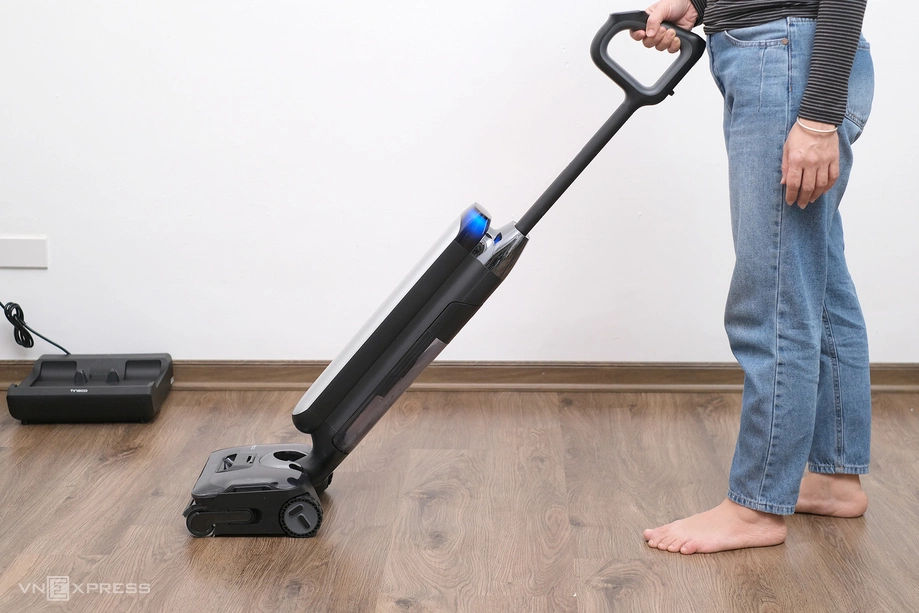
Tineco is a company that has "explored" the market of dry and wet floor cleaning machines since 2019. Instead of just vacuuming dry dust like traditional machines, this type of product can also clean the house, vacuum, and large trash at the same time. The wet-dry floor cleaner market is experiencing explosive growth globally, from $400 million in 2023 to $5.8 billion in 2025, one third of the $18 billion level of the dishwasher sector, according to FMI's report.
On the occasion of a visit to markets with strong growth globally, including Vietnam, Mr. Leng Ling, CEO of Tineco, shared with VnExpress about the future of the wet-dry floor cleaning machine industry.
- Tineco is the first company to develop wet and dry floor cleaning machines. How is the development of this market going?
- When Tineco first joined, the market only had about 4-5 brands. Now, the number of companies competing in the field has increased rapidly with about 300 brands. We see the creation of a new category such as wet and dry floor cleaners from 2019 as a major innovation, similar to the way smartphones created a shift in the phone industry.
The market still has much room to develop. For example, in China, although the scale of the wet-dry floor cleaning machine segment is about 20 billion yuan (70,000 billion VND), the penetration rate is still only 5-6% (100 households have 5-6 users). For many other regions in the world, this industry is even in its early stages. Prejudices such as "it's a hassle to use", "you have to pour dirty water yourself", "stubborn stains don't clean" are still barriers that limit the popularity of the product.
- With such a low penetration rate, what will be the factor that drives the market to continue growing?
- When users don't understand how the product can solve their problems, they have no reason to try. But we also see the change very clearly. Once users have experienced and realized the difference in performance, it is often very difficult for them to go back to the old way.
I believe wet and dry floor cleaning machines will gain popularity faster than traditional household appliances such as refrigerators or washing machines.
- What do you see when you think that the machine will soon be saturated in terms of features and technology, even though the industry is nearly 7 years old?
- Creating a new product line can be considered a breakthrough. However, we do not set a goal to have a truly "wow" product every year, completely new in design and features. Instead, the company wants to continuously improve the product, gradually solving users' actual problems better.
We have led the global market for four years, and three consecutive years in Vietnam, but maintaining the peak is much more challenging than conquering it. The biggest pressure does not come from outside competitors, but from the company itself. We always have to ask ourselves if we still understand users and how their needs are changing.
Tineco has advantages in core technology, cost control and production capacity. Important components such as motors, pouch-cell batteries or smart control boards are all researched and produced by the company itself. This is the foundation that helps make a difference in the market.
- So what are the problems with wet-dry floor cleaning machines that need to be overcome in the near future?
- Clearly the product still has many points that need improvement. One of them is treating dirty water after cleaning. Users do not want to directly touch dirty water or deal with stains in the tank. They are also increasingly making higher demands: Can the water temperature be hotter? Can the product be lighter? Can the ability to treat more difficult stains be improved? These are gaps for companies to continue researching technology and developing new products.
- How does Tineco evaluate the potential of the Vietnamese market?
- We realize that Vietnam has a very fast growth rate, equivalent to the Chinese domestic market. In 2025, the company will have sales 4.5 times higher than in 2024, increasing its market share in Vietnam from 33% to 41%. In the first half of 2026, we grew 196% over the same period last year and currently hold 42.4% of the output market share and 43.8% of the total market revenue share.
Vietnamese consumers are open to shopping and experiencing new products, especially not afraid to spend money on high-tech appliances in the household segment. A notable point of Vietnam is that many industries are developing in parallel, instead of having to go through each stage in turn. For example, air conditioners, washing machines and traditional home appliances continue to grow, while new products such as wet-dry floor cleaners and robots also grow.
This shows that Vietnamese consumers not only have a need to upgrade familiar products, but are also willing to explore completely new solutions if they truly bring value to life. This is what makes the Vietnamese market so attractive: new demand is constantly opening up space for new products and technologies.
Compared to the washing machine market in Vietnam, which has gone through a period of exploration and expansion with very high coverage, about more than 90%, there are still many people who do not really know what a wet-dry floor cleaning machine is and what problems it can solve. Therefore, Tineco itself and its distribution unit, Hop Long company, still have a lot of work to do to expand the product line.
- Through many years of presence, what have you noticed is the difference in the Vietnamese market?
- There are some outstanding features. The first is the climate. Vietnam is hot and humid, so house cleaning does not stop at cleaning but also involves hygiene and disinfection. This demand is actually much greater than we ever predicted. Some consumers also do not want to use many chemicals in the cleaning process because they are worried about affecting children or pets.
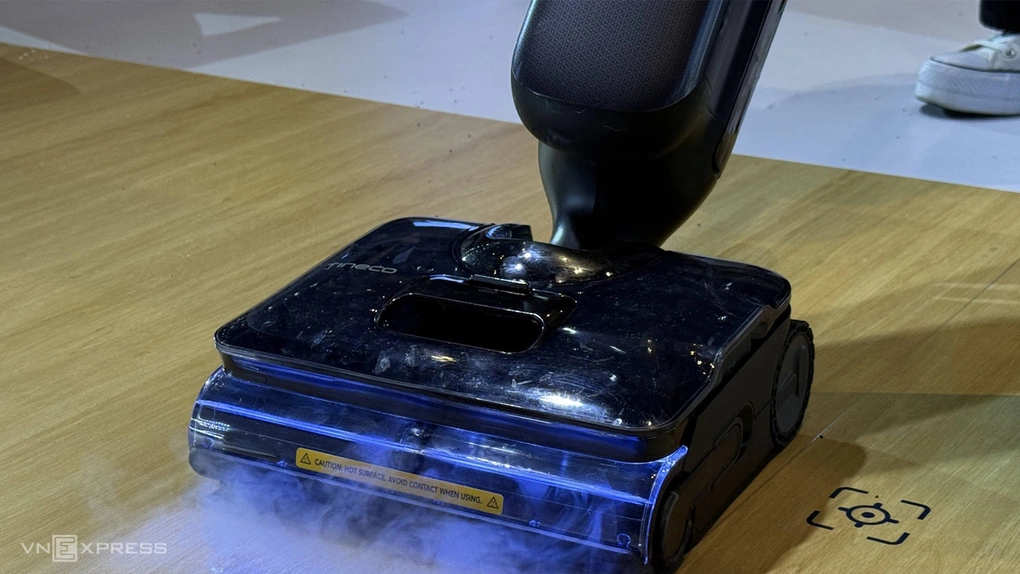
The second is the kitchen, where frequent cooking can create grease, smoke and difficult-to-remove stains on the floor. This is one of the reasons Tineco introduced the Steam Series with HyperSteam technology - using saturated steam at high temperatures to clean and disinfect without relying on chemicals.
Along with new technology, Vietnamese people are also interested in product design and appearance. Common housing areas are relatively small and medium-sized, for example 50-60 m2. Therefore, users prefer compact size, easy to store and does not take up much space when in use.
- Vietnamese people are also gradually liking robot vacuum cleaners, are wet-dry floor cleaners and robot vacuum cleaners in direct competition with each other?
- We do not look at the two products as exclusive, but as complementary. Robot vacuum cleaners are suitable for maintaining daily cleaning automatically, while wet-dry vacuum cleaners are more suitable for deep cleaning needs and handling in specific situations. Many people own both robots and floor cleaners. For example, during the week, when they go to work, they use basic cleaning robots. On weekends, they switch to a floor cleaner for a deep clean.
In the same corporation, Ecovacs and Tineco have very clear positioning, one side focuses on automatic cleaning robots, the other side focuses on handheld deep cleaning solutions. The two brands are complementary pieces, together creating an ecosystem of cleaning solutions for users.
- How is the trend of incorporating AI into products going?
- AI is a very important trend in the future. If a smart product is not capable of leveraging AI, it will become increasingly difficult to create a differential advantage.
But a sensor that detects dirt and automatically increases suction power isn't exactly AI. It could just be a combination of sensors and pre-programmed software. True AI needs to be able to learn and improve itself based on usage behavior.
For example, each user has different usage frequency, habits and behavior. AI can analyze that data to adjust operations accordingly. So if there are 1,000 users, ideally 1,000 personalized experiences can be created.
Tuan Hung