Semiconductor expert: 'Vietnam needs to do it honestly, not spread investment'
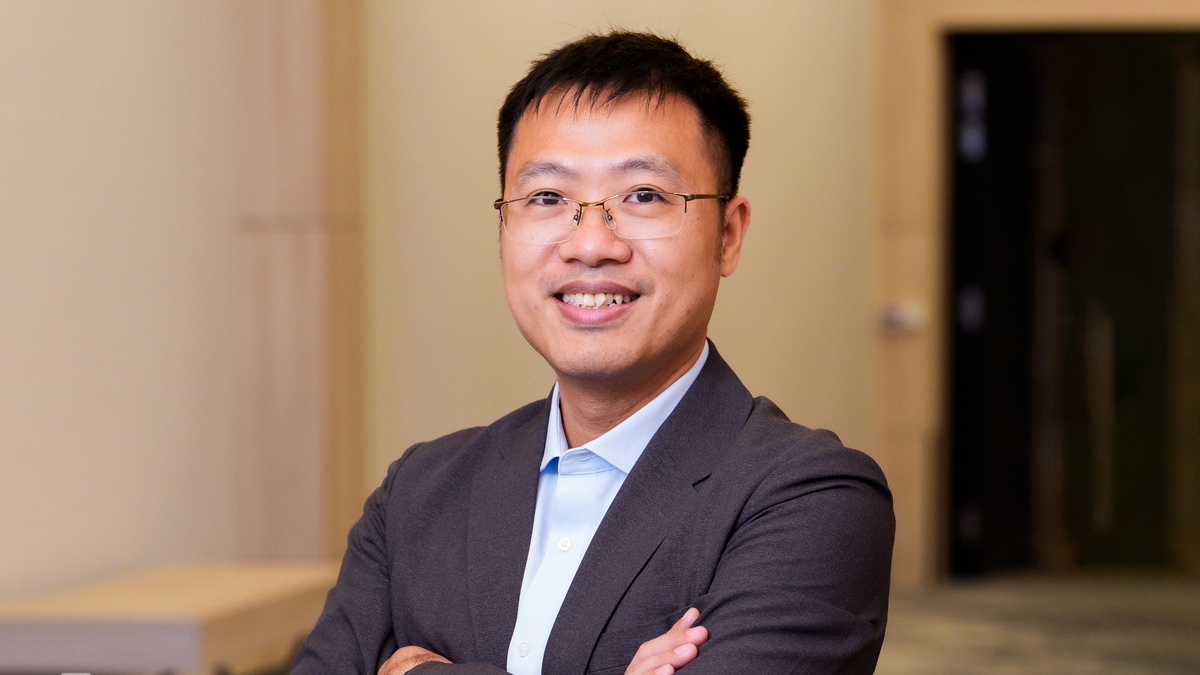
Dr. Do Anh Tuan, born in 1984 in Hanoi, chief scientist of the Singapore Agency for Science, Technology and Research (A*STAR), currently leads the research team on integrated circuit design and advanced systems at the agency's Institute of Microelectronics (IME). He studied at Hanoi University of Science and Technology and has more than 20 years of experience in semiconductors. On the sidelines of the Innovate Together 2026 event taking place at the end of September in Singapore, he shared about research cooperation and opportunities for Vietnamese semiconductor talents in the region.
- Vietnam aims to train 50,000 semiconductor engineers by 2030. In your opinion, how long will Vietnam's window of opportunity last?
- With a new technology trend, the window of opportunity usually lasts only a few years, maybe 2-3 or 3-5 years, for a country to establish its capacity and position. However, Vietnam should not just look at the short-term window. Government and industry can develop a 10, 20 or 30 year vision.
If we invest in people, STEM education and research capacity, those trained today can still join the next wave of technology, even if a particular opportunity in a few years is missed.
Technology changes continuously. 5 years ago, when talking about AI, people focused a lot on chip logic. Nowadays, memory chips have become an important part of AI infrastructure. There are also many different technologies in memory. Three years from now, AI algorithms may continue to change.
Therefore, investing in people and original research capacity has more long-term value than just pursuing one technology at a time.
- What risks will Vietnam face if it is slow in preparing human resources and does not participate deeply in the semiconductor value chain?
- The semiconductor supply chain has many stages and is related to geopolitical factors. Vietnam cannot invest widely in all stages but needs to choose a number of areas for deep investment.
People are always the element that survives the longest. It is people who create new technology and help businesses adapt when technology changes. If over a period of time, Vietnam's force of engineers and graduate students does not meet the professional requirements of corporations, investment capital flows may shift to other countries.
Vietnam has an advantage in its young force and foundation in Mathematics and Physics. If there are appropriate training and conversion policies, this can become a resource for the semiconductor industry. Therefore, to both increase the number of human resources and ensure quality without spreading investment, the government, localities and universities can directly consult semiconductor businesses. Industry leaders can tell what skills a business needs, at what stage and in what quantity.
The semiconductor chain is very broad, Vietnam does not necessarily have to be deeply involved in all of it. You can choose one, two or three stages to build capacity. Once there is a position in one stage, Vietnam can use that capacity as a foundation to expand into other fields.
- Vietnam is looking for chief architects for strategic technology. As a leader in the semiconductor industry, what criteria does this person need?
- In my opinion, that person not only needs deep technical expertise. What is more important is to have a broad vision, a long-term vision and a network of connections in the industry as well as the global economy.
They must understand the semiconductor supply chain, know where the stages are, which businesses are involved, what technologies may develop and how market changes may impact Vietnam.
I don't think the chief architect position should be a pure researcher. This role requires a combination of technology, industry and economics, leadership, and a long-term commitment.
- With the participation of global corporations such as Intel and Samsung, how can Vietnam take advantage of the existing production system to promote R&D?
- One of the important factors is connecting government, universities and businesses. In Singapore, government direction, business needs and university programs are linked together, thereby forming research groups focusing on technologies that businesses need.
Vietnam already has a number of large corporations but needs to continue to create mechanisms to develop domestic R&D teams. These groups can collaborate with professors and students through research projects, internships and training. It may be a small project at first, but the long-term goal is to build R&D teams that create value for businesses. When businesses see domestic research teams solving real problems, R&D activities will have a basis for expansion.
Opportunities and challenges always exist. Vietnam must start doing real things instead of just analyzing difficulties. Only when we start implementing the actual project will the problems that arise tell us what we are lacking, what capabilities we need to add, and where we can create advantages.
Vietnam also needs to look at semiconductors along with software. Hardware cannot be developed separately from the software ecosystem. This connection becomes increasingly clear as AI develops.
Another advantage is the domestic market. Vietnam has a large population and technology demand continues to grow. In the next 5-10 years, the market can generate output for semiconductor-related products and solutions.
- Semiconductor devices cost from millions to tens of millions of USD. With a limited budget, how should research infrastructure be built?
- It is not necessary to buy all equipment at the same time. Infrastructure investment needs to accumulate over time. 20 years ago, a lab in Singapore had only a few pieces of equipment. After the investment and expansion process, the number of devices increased greatly. It is important to determine which equipment is truly necessary.
Before buying, it is necessary to survey labs abroad and discuss with businesses to determine needs. If you buy a lot of equipment but have no one to operate it and don't use it at full capacity, resources will be scattered.
Another direction is sharing infrastructure. One center can focus on semiconductor fabrication (fabrication), another focus on testing (testing), then the groups use the same equipment system. Businesses can also co-invest with schools or institutes. A device has a high price, but if many parties use it, it can be more effective than if each unit buys its own system.
Singapore invested in advanced packaging about 20 years ago, when AI had not yet become the field it is today. Investing upfront in a technology helps Singapore have capacity as market demands change.
- What should a Vietnamese engineer going abroad, like Singapore, to learn about semiconductors do to prepare?
- First is the ability to integrate. When going to another country to study and work, engineers need to adapt to the local culture and working culture of the semiconductor industry. This is an important factor because semiconductors are highly interconnected, an engineer often has to work with many groups, companies and partners in different countries.
Expertise is still the foundation, but engineers should not only develop in a narrow field but also need skills in project management, working with stakeholders and understanding the supply chain. One person may only be in charge of one step, but if they understand how the product is created, what customers need, and how their work affects other teams, coordination will be better.
I also encourage young engineers to participate in large projects. Even if they are only responsible for a small part, seeing the requirements of the entire project and the needs of customers and partners will help them accumulate experience.
I have been to Singapore since 2003 and found this to be an environment that allows me to combine research with practical problems. Scientists can both research, write articles, and work directly with businesses to solve problems they are facing.
Singapore currently has many factors that help attract and retain semiconductor talent. Policies and career roadmaps help researchers envision growth opportunities, while an open ecosystem facilitates collaboration with businesses, universities, professors and students. This connection creates more projects, helping research align with industry needs.
Regarding facilities, laboratories in Singapore are invested so that scientists can access technology and equipment for research. This country also uses talent to attract talent. When scientists with industry expertise and networks come to work, they can attract additional experts, graduate students, and research groups from many places.
- Where is the gap between Vietnamese and Singaporean engineers and researchers, in your opinion?
- Talking about theoretical foundation, I don't think that Vietnamese engineers are inferior. Vietnam has a force of well-trained students and engineers in STEM (Science, Technology, Engineering and Mathematics). The difference lies more in infrastructure and actual combat opportunities. An engineer who studies very well in theory but does not have access to real equipment, technology and projects will find it difficult to gain experience.
Buying equipment is just the first step. A lab can be invested in machinery, but the next problem is maintaining, operating and using the equipment to create research value. This is a problem that needs to be considered from the beginning when building a semiconductor infrastructure.
- So how should Vietnamese universities provide practical training so that students can find jobs after graduation?
- Students should be able to participate in projects from start to finish instead of just doing a few stages. For example, with IC design, they can experience everything from design, layout, optimization to tape-out, and chip testing. When going through the entire cycle, students understand the relationships between stages.
A very important part is the debugging process. If a test chip does not work, finding the cause and fixing the error helps students connect their knowledge of Math, Physics, design and testing. This is also an experience they can hardly get if they study each subject individually. When at work, an engineer may only be in charge of one step, but they will understand what other teams are doing and their job position in the product process.
- Talking about the role of semiconductors, what image would you use?
- I often compare semiconductors to air. We breathe air every day but often don't pay attention to it. Only when there is a lack of air do we realize its role.
Semiconductors are also present in most of the devices we use, from phones, computers, magnetic cards, home appliances to industrial systems, and are part of the foundation of modern devices and systems. Therefore, talking about semiconductor development is not just about producing a chip model. It is also a story about people, research, equipment, businesses, universities, supply chains and the ability to create new technology.
For Vietnam, it is important to identify the steps that can be deepened, build a capable team and start with real projects. Technology will continue to change, but if we have the people and research capacity, we can continue to participate in the next technological cycles.
Bao Lam