'Vietnamese semiconductor engineers are gradually preparing for the global environment'
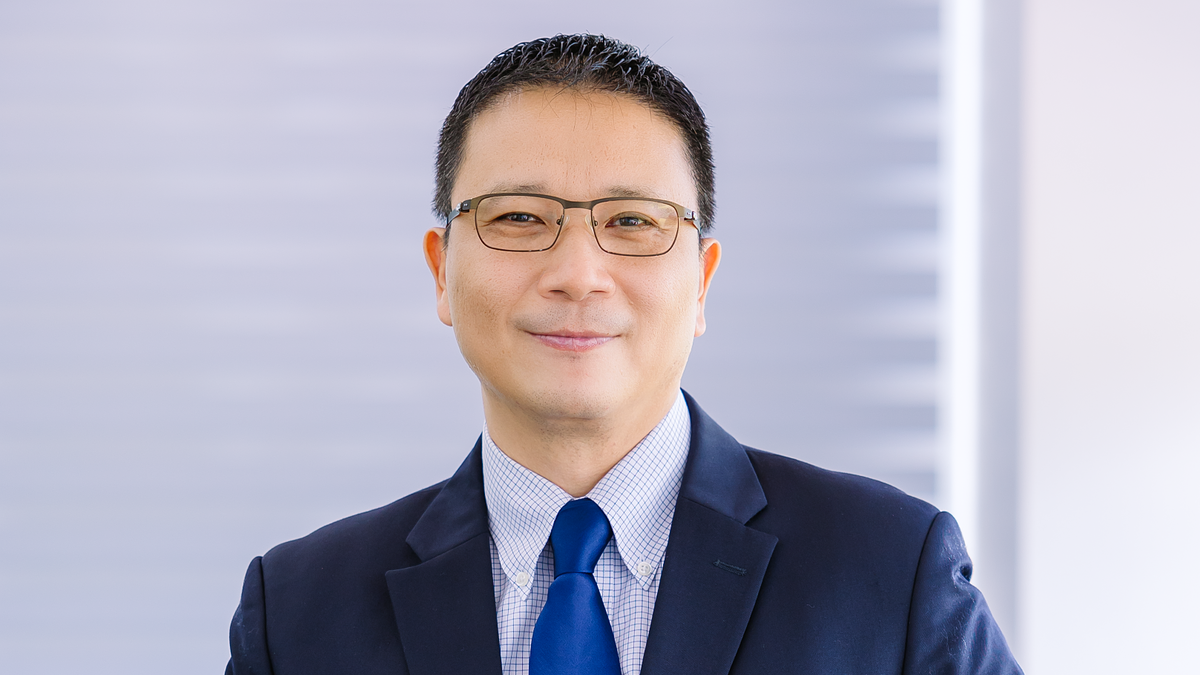
Mr. Kenneth Tse is Vice President and General Director of IPV - the largest semiconductor assembly and testing facility in the Intel network when inaugurated in 2006 at Ho Chi Minh City High-Tech Park (SHTP), taking care of the final finishing stages before the product ships. On the occasion of the 20th anniversary of its founding, he shared with VnExpress about the American corporation's choice to produce global-scale semiconductors in Vietnam.

- When Intel decided to invest two decades ago, what factors made Vietnam stand out from other options in the region, and what is the reality after 20 years that is different from initial expectations?
- 20 years ago, investing in Vietnam was Intel's strategic and long-term decision. At that time, the domestic high-tech and semiconductor industry was in the early stages of development. However, we see many important foundations: a stable socio-political environment, a strategic location in the heart of Asia, a young, dynamic workforce with a high spirit of learning, and a strong commitment from the Government, Ho Chi Minh City and SHTP in accompanying high-tech investors.
Vietnam also stands out in its long-term development potential. Intel sees in it the desire to move up the ladder in the global technology value chain, is ready to build new capabilities and cooperate with businesses to solve initial challenges in infrastructure, human resources and industrial ecosystems.
After 20 years, the results have reinforced our confidence. From a project on the new SHTP ground, IPV has become the largest assembly and testing facility in Intel's network, playing an important role in the corporation's global supply chain. The factory has produced more than four billion units of products and contributed more than 110 billion USD in export value to Vietnam. Vietnam not only demonstrates its ability to operate large-scale production, but also shows its ability to develop an increasingly professional team of engineers, technicians, managers and suppliers.
In the context of increasing regional competition, Vietnam needs to continue to strengthen fundamental factors such as high-quality human resources, reliable infrastructure, clean energy, effective administrative procedures and competitive investment policies. But overall, the past 20 years have proven the right investment decision, and Intel is proud to be a part of that growth journey.
- Looking back at the journey from a project on paper to becoming a link in a global production network, what do you think is the most decisive milestone of IPV?
- The first milestone was definitely 2006, when Intel announced its decision to invest in Vietnam and lay the foundation for the factory. This is an important step for Intel and for Vietnam, because the project contributes to putting Vietnam on the global high-tech map and sends a positive signal to other technology investors.
Next came 2010, when the factory started production. At this time, IPV's team began to demonstrate its ability to operate in a global semiconductor manufacturing environment, where requirements for quality, accuracy, operating discipline, and safety are all at a very high level.
From initial assembly and testing activities, Intel Vietnam participates in increasingly complex product lines, including products serving the new generation of AI PCs, servers and other advanced technology fields. Reaching the milestone of two billion, three billion and then more than four billion product units is a testament to the very strong expansion capacity of the team in Vietnam.
I also want to mention the development of the ecosystem. Intel not only built a factory, but also cooperated with Vietnam in developing talent capacity, suppliers and operating standards. Intel has worked with more than 600 qualified local suppliers, helping them raise the bar for quality, compliance, safety and capacity so they can participate more deeply in the global supply chain.
Intel's 20-year milestone in Vietnam, along with programs such as donating semiconductor assembly and testing equipment to training facilities, also marks a new phase of the journey: not only efficient production, but also a deeper contribution to human resource development, practical training and Vietnam's semiconductor ecosystem.
- To achieve today's achievements, what challenges did Intel Vietnam have to overcome in terms of infrastructure, human resources and industrial environment?
- In the early years, we saw this as a journey to build capacity for a very new high-tech field in Vietnam. Establishing a large-scale semiconductor manufacturing facility according to global standards requires significant effort in training human resources, developing operating procedures and forming a culture of safety, quality and production discipline. Technical infrastructure, logistics, local supply chains and industrial support services also need to be developed to meet the requirements of an industry that requires very high precision and reliability such as semiconductors.
Regarding human resources, the challenge does not lie in the spirit or ability to learn of Vietnamese people. In fact, that's always been a strong point. The core issue is how to better connect academic training and the practical requirements of high-tech manufacturing.
Therefore, Intel has early cooperated with the Government, universities, technical colleges and international partners to promote programs such as HEEAP, modernize technical training programs, increase hands-on training, improve faculty capacity and encourage women's participation in STEM (Science, Technology, Engineering, Math).
- Which milestone makes Intel most clearly feel the maturity of Vietnam's technical human resources?
- More and more Vietnamese engineers, technicians and managers are taking on important roles in operations, technical innovation, quality, production management and leadership at Intel Vietnam as well as in the broader network. Currently, 95% of IPV's management staff are Vietnamese.
When we first started, we had to invest significantly in training. After 20 years, the domestic team not only effectively operates a large-scale factory, but also participates in solving complex technical problems, supports the introduction of new products into production, improves processes and contributes to global operating standards.
- What is the biggest change in the quality of Vietnamese engineers and what is the gap that needs to be narrowed so they can participate more deeply in high-value stages in the semiconductor industry?
- The biggest change in the Vietnamese engineering team is the level of readiness in the global industrial environment. The new generation of engineers has a better STEM background, better foreign language skills and global thinking, greater adaptability to new technology, and a strong spirit of learning. This is a big advantage.
The strengths of the Vietnamese workforce are hard work, quick adaptability, practical problem-solving thinking and a spirit of continuous improvement. However, to participate more deeply in processes with higher added value, Vietnam needs to continue to increase the proportion of practical training in technical programs, develop more highly qualified and postgraduate experts...
Talent development is a long-term journey, so Intel has invested 22 million USD in education, environment, safety and health support programs in Vietnam, cooperated in the High Quality Engineer Training Associate Program (HEEAP), supported the training of more than 9,000 lecturers, awarded more than 2,000 scholarships and recently awarded more than 30 semiconductor assembly and testing equipment to SHTP and Hanoi National University to expand real-world opportunities. onions. These programs contribute to building a long-term human resource foundation for Vietnam's high technology and semiconductor industry.
- Vietnam aims to become an important link in the global semiconductor industry. How realistic do you think this goal is? - This is an ambitious goal and should be seen as a long-term journey, instead of being achieved overnight. Vietnam already has encouraging foundations, including a stable environment, strategic location, young workforce, strong determination of the Government, presence of global technology companies and growing experience in the fields of electronics, high technology and semiconductor manufacturing.
However, to become a more important link, Vietnam needs to continue investing in a number of key conditions. Regarding human resources, it is necessary to expand both the quantity and quality of engineers, technicians, postgraduate experts, and highly skilled practical workers.
Regarding infrastructure, it is necessary to ensure more stable power supply, access to clean energy, logistics, specialized industrial parks and support services need to continue to be upgraded.
In terms of policy, the investment environment needs to be competitive, flexible and able to respond quickly to the needs of the high-tech sector.
Finally, the ecosystem needs to develop more suppliers, research institutes, laboratories, training centers and effective cooperation mechanisms between the State, educational institutions and businesses.
With consistent progress, Vietnam can continue to strengthen its role in the global semiconductor value chain, especially in areas where it possesses real capabilities, such as assembly, testing, packaging and high-tech manufacturing operations.
- How will the role of the facility in Vietnam change in the group's global strategy in the next 10 years?
- Vietnam has affirmed its position as a highly reliable large-scale production base in our global network. Over the next decade, we expect our Vietnam facility to continue to play a meaningful role in our assembly, testing and packaging capabilities, as part of a more resilient, balanced and flexible global semiconductor supply chain.
Vietnam's contribution is not only shaped by scale, but also by product complexity, technical capabilities, operational excellence, sustainability standards and closer connections with local ecosystems.
However, any specific decisions on products, capacity, and investment will depend on market demand, Intel's global production strategy and appropriate operating conditions. Intel continues to view Vietnam as an important location in global manufacturing activities and a long-term partner in high technology development.
Bao Lam