Explain more about the main cause of the flash flood disaster in Nepal
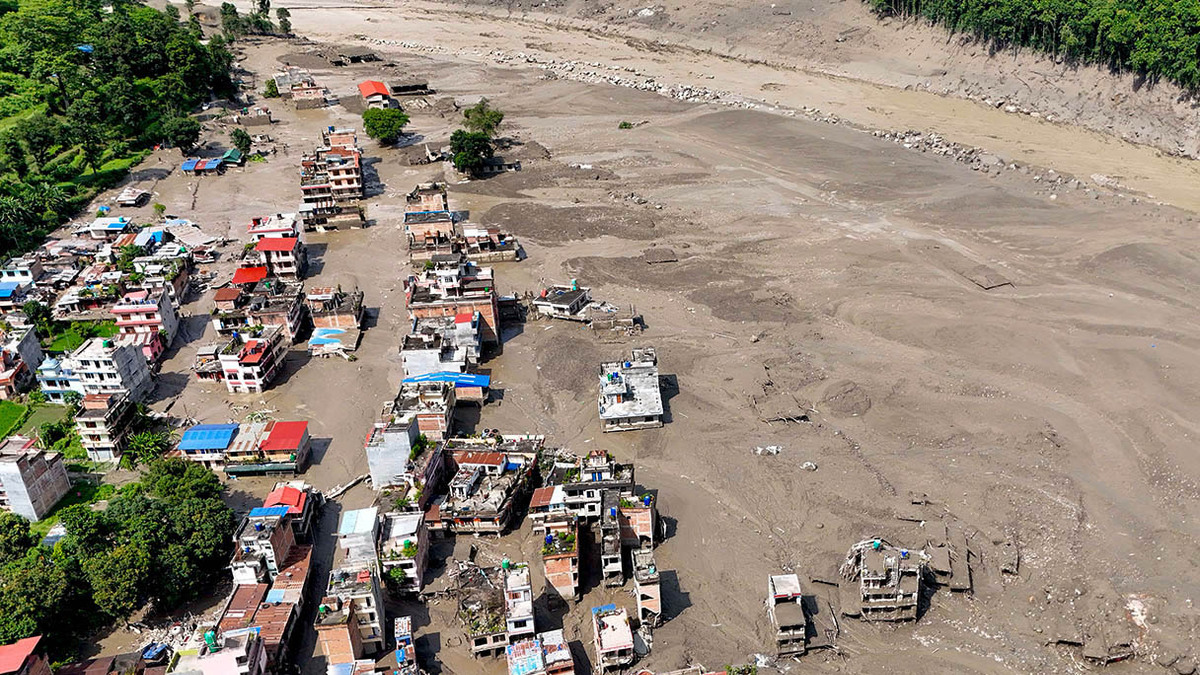
Kristen Cook, a geomorphologist at Grenoble Alpes University (France), received a call on the morning of August 26 after missing dozens of emails and text messages overnight about flooding along the Lhende Khola River in Nepal and Tibet. "I sat down at the computer and didn't get up for five hours," Cook told Science.
She, along with hundreds of scientists around the world, worked continuously to piece together the chain of events that led to the giant flood that swept across the border between the two regions on August 26. According to The Guardian, it is estimated that so far the disaster has left 800 people dead, nearly 3,000 missing and destroyed many towns along the border.
Initial reports, including information from the US Geological Survey (USGS), suggested that the cause was an earthquake that caused rock and ice to loosen, triggering the flood. However, Cook, who is studying the Lhende Khola River, assessed that the seismic data did not show a strong, rapid jolt typical of earthquakes, but rather long-period, low-frequency waves. This signal is typical of a landslide, and it is the landslide that creates the shaking.
On the other side of the Atlantic, Göran Ekström, a seismologist at the Lamont-Doherty Earth Observatory at Columbia University (USA), also came to a similar conclusion based on data from the Global Seismological Network - a system of about 200 seismometers operated by many countries. "The landslide at Lhende Khola is one of the biggest in the world in the last decade or two," he said.
Another theory, based on images shared by the Earth's surface imaging company Planet Labs, suggests that the cause of the disaster was a collapsed glacier. Accordingly, a thick layer of ice slid off the rock and plunged into the valley. There, ice and shattered rock continued to flow down the Lhende Khola river system at a speed of nearly 150 km/h, causing a flood with water levels of up to 9 meters in just 30 minutes.
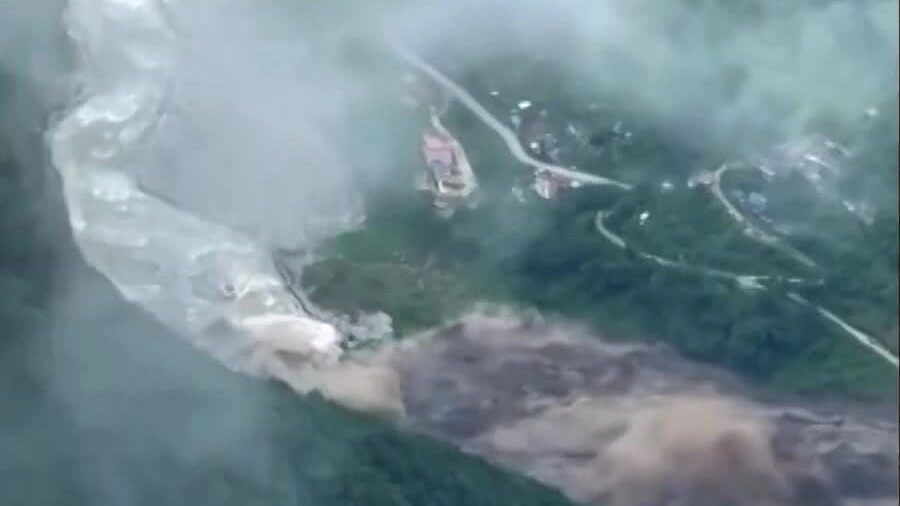
However, Ekström believes that this is not feasible, because it is estimated that hundreds of millions of tons of material would need to fall into the valley to create shaking at the level recorded. The amount of such material is greater than the entire mass of the glacier.
By the evening of August 26, images from satellites operated by the Indian Space Research Organization and Landsat-9, proved the scientists' hypothesis. These images are not covered by clouds like previous photos, showing that a giant landslide actually occurred.
Adhikari Basanta Raj, Director of the Disaster Research Center at Tribhuvan University (Nepal), said footage from drones confirmed the theory of the landslide. He calculated that the energy released in the landslide was greater than the energy of the atomic bomb used in Hiroshima, Japan.
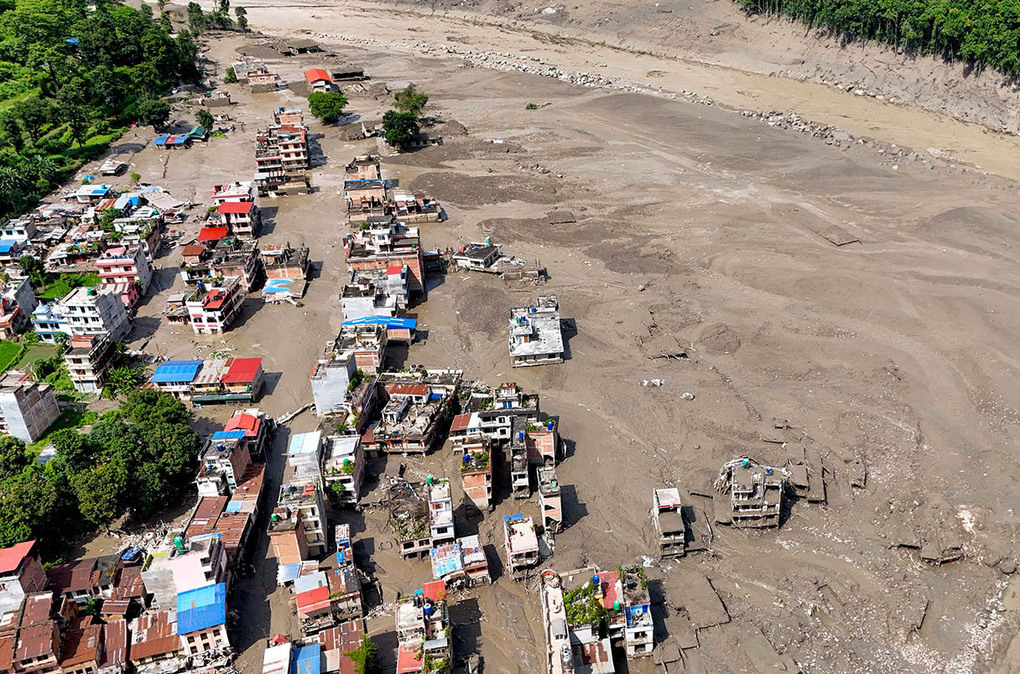
However, how such a large amount of water was mobilized into the flood is still a mystery. The hypothesis of the group of geographers is that the flow of rocks, ice and sediment carried the river water along as it plunged downstream. In addition, it is possible that large amounts of ancient ice that existed at the bottom of the valley were crushed, melted and mixed with the flow.
The gradual melting of glaciers due to global warming may also contribute to the cause of the disaster. "In areas where glaciers are disappearing, landslides like this happen more often," Ekström said.
Determining the cause of the flash flood is controversial because many phenomena appeared one after another: landslides, ice and rock debris, and flooding. Similar series of events have happened before in the Himalayas, notably the Chamoli disaster in India in 2021, which killed 200 people and damaged two hydroelectric plants, as well as events in Nepal in 2012, 2015 and 2017. However, according to scientists, this disaster is 10 times larger than previous events.