'Chinese Semiconductor Star' produces advanced HBM memory

The Information, citing supply chain sources, said CXMT is producing "small quantities" of HBM3E and plans to expand in 2027.
HBM3E (High Bandwidth Memory 3 Extended/Enhanced) is the fifth generation of high bandwidth memory (HBM) technology, delivering speeds exceeding 1.2 TB/s per chip stack. Vertical 3D stacking technology (usually 12 or 16 layers of DRAM) and connection through silicon through holes (TSV) saves surface area and capacity can reach tens of GB per stack.
The source said that several Chinese chip designers, including Alibaba's T-Head and Beijing-based Cambricon Technologies, are testing CXMT's HBM3E on their systems. If the process goes smoothly, the two companies will integrate into the product from next year.
CXMT, Cambricon and T-Head were not immediately available for comment.
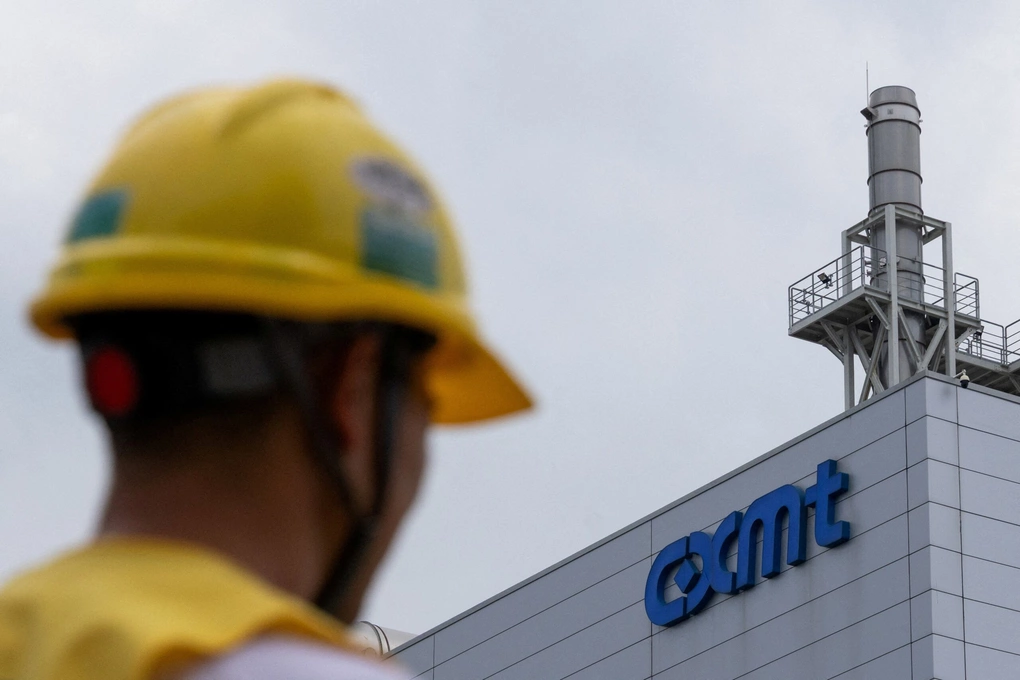
According to Reuters, if information from The Information is correct, CXTM becomes the fourth company in the world and the first Chinese company to successfully produce HBM3E chips. This technology is being developed by Samsung Electronics, SK Hynix (Korea) and Micron Technology (USA), providing AI systems using GPUs and accelerator chips.
Previously, CXMT was considered to be still behind its competitors in advanced memory technology, especially HBM, which plays an essential role in Nvidia's AI processors. The company also faces US export control policies, making it impossible to own state-of-the-art equipment, making it difficult to narrow the technology gap with Samsung or SK Hynix.
Besides high bandwidth memory, CXMT also successfully developed LPDDR6. Last weekend, the company said it would begin mass production of the LPDDR6 DRAM chip and is expected to be included in the upcoming Xiaomi 18 Fold phone model. The chip achieves a maximum data transfer bandwidth of 12,800 megabits per second (Mbps) and a capacity of up to 16 GB.
With the above announcement, CXMT is also the first Chinese company to mass produce LPDDR6 DRAM. "For a Chinese company that has only entered the DRAM market since 2019, the milestone is of great significance," Wang Peng, a researcher at the Beijing Academy of Social Sciences, told ChinaDaily. "It also helps put CXMT in the first wave of competition around the latest mobile memory standard with the big players Samsung, SK Hynix and Micron."
LPDDR6 (Low Power Double Data Rate 6) is a new generation RAM memory standard for mobile devices and edge artificial intelligence (Edge AI). Compared to the current LPDDR5X, the new standard aims to increase data transfer speed, improve energy efficiency and meet the need for AI processing directly on the device. It is expected to support devices that need large memory bandwidth while still controlling power consumption and heat, serving the local AI trend on smartphones and personal computers.
Previously, Lei Jun, founder and CEO of Xiaomi, said the company's new self-produced chip Xring O3 will support CXMT's LPDDR6. He expected "more and deeper cooperation" between Chinese technology companies.
"The domestic high-tech chain is becoming more sustainable thanks to the ability to connect research, commercialization and market application, allowing leading companies to push the industrial chain forward," commented professor Liu Zhiying of the University of Science and Technology of China.
CXMT is currently the world's fourth largest DRAM memory chip manufacturer with 7.7% global market share, after Samsung Electronics, SK Hynix and Micron Technology. The company was founded in 2016 in Hefei city, Anhui province, initially called Innotron. The business was launched the same year as Fujian Jinhua Integrated Circuit (JHICC) and Xi'an UniIC Semiconductors, two of China's major semiconductor factories, aiming to compete with global computer memory manufacturers.
WSJ rates CXMT as a "bright star" in the list of Chinese semiconductor companies, with the expectation of helping to enhance its autonomy in the race with the US. Beijing is promoting businesses like CXMT to become leaders, alongside SMIC and AMEC.