The world's tallest solar thermal power plant
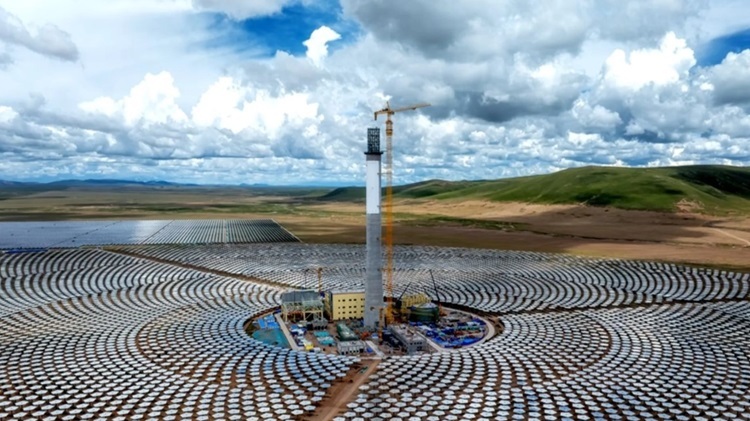
According to Interesting Engineering, the thermal power plant is located on a field of nearly 800,000 m2, in An Da district, Na Khuc region, Tibet autonomous region, southwest China. This factory installs heliostat mirrors - a type designed to track the Sun and direct light toward a receiver mounted on a central tower. Scheduled to connect to the grid in October 2026, the 100 megawatt (MW) facility is the first tower solar thermal power plant in Tibet, built at an unprecedentedly high altitude in cold conditions and a weak grid.
The low temperature environment, strong winds and extremely high altitude (more than 4,650 meters in the Tanggula Mountains) made the construction and operation of the equipment more difficult. Therefore, engineers had to adjust construction methods to suit the plateau environment. The plant uses molten salt tower solar thermal power technology to convert sunlight into heat before producing electricity. This system focuses solar energy on a collector at the top of a 210 m high tower.
Na Khuc receives more than 2,800 hours of sunshine per year, bringing abundant solar resources to the project despite its challenging location. Molten salt plays an important role in the plant because it can absorb and retain heat from concentrated sunlight. The stored thermal energy can then be used to produce electricity, allowing the facility to maintain power generation outside of periods of direct sunlight.
Construction teams developed a number of specialized techniques to deal with the region's extreme cold and strong winds. They also adjusted construction plans to accommodate the difficulty of working at extreme heights. The factory will use an intelligent control system to support operation and maintenance. The system is designed to improve efficiency while maintaining consistent performance once the facility is operational.
According to People's Daily, the combination of concentrated solar power technology, thermal storage, and automatic control will allow the plant to operate efficiently amid the harsh plateau. Once operational, the facility is expected to produce about 255 million kilowatt-hours of electricity per year, saving about 60,000 tons of standard coal annually and cutting about 165,000 tons of carbon dioxide emissions. If completed on schedule, the project will add a large-scale renewable energy source to the regional power grid.