Young people and the AI "crutch" in communication

(Dan Tri) - Not knowing what to say after an argument, writing a message to a superior or simply sending a birthday wish, many young people turn to AI as an "intermediary" in communication.
“Speaker” in every conversation
After a heated argument with his best friend, Hoang Anh (21 years old) fell into a situation that made him struggle for a long time: he wanted to make peace but didn't know how to say anything or how to apologize without making things worse.
After more than half an hour of continuously typing a few words and then deleting them, thinking and still not knowing how to say the first sentence, Hoang Anh finally found AI.
He said that was not the only time he asked AI to "speak" for him.

From wishing an acquaintance on graduation, wishing a friend a birthday, sending wishes to his mother on March 8, or recently sending a message asking for job application information, AI has become the place he goes to when he doesn't know how to express his thoughts.
"Without AI, I can't think of the right way to chat, especially with people who aren't close enough," he shared.
Tuyet Hoa (21 years old), an office worker, also uses AI regularly in communication, although mainly in cases that require high standards and meticulousness.
"When I have to discuss with superiors, partners and lecturers, I often come up with the idea of having AI write the message for me," Hoa said.

In addition, she turns to AI for difficult stories such as needing to tactfully refuse an unsuitable job, an unarranged appointment, or to handle disagreements with others.
Similar to Hoa, Thanh Huyen (22 years old) also uses AI when she needs to talk to her superiors and colleagues.
But that was just the beginning, now Huyen uses AI in everyday situations.
Huyen said: "I also use it when I miss an appointment, need to apologize to an acquaintance, text people in awkward situations, even when I want to argue with others but don't know how to argue."
Fear of offending others
In fact, asking AI to chat does not mean being lazy in composing messages.
For Tuyet Hoa, the biggest reason why she had to ask AI was the fear of making a mistake or using the wrong tone of words.
In relationships, Hoa believes that just one insensitive statement can cause misunderstandings and leave a bad impression.
"When I'm frustrated or stressed, I don't completely trust what I write," Hoa affirmed.
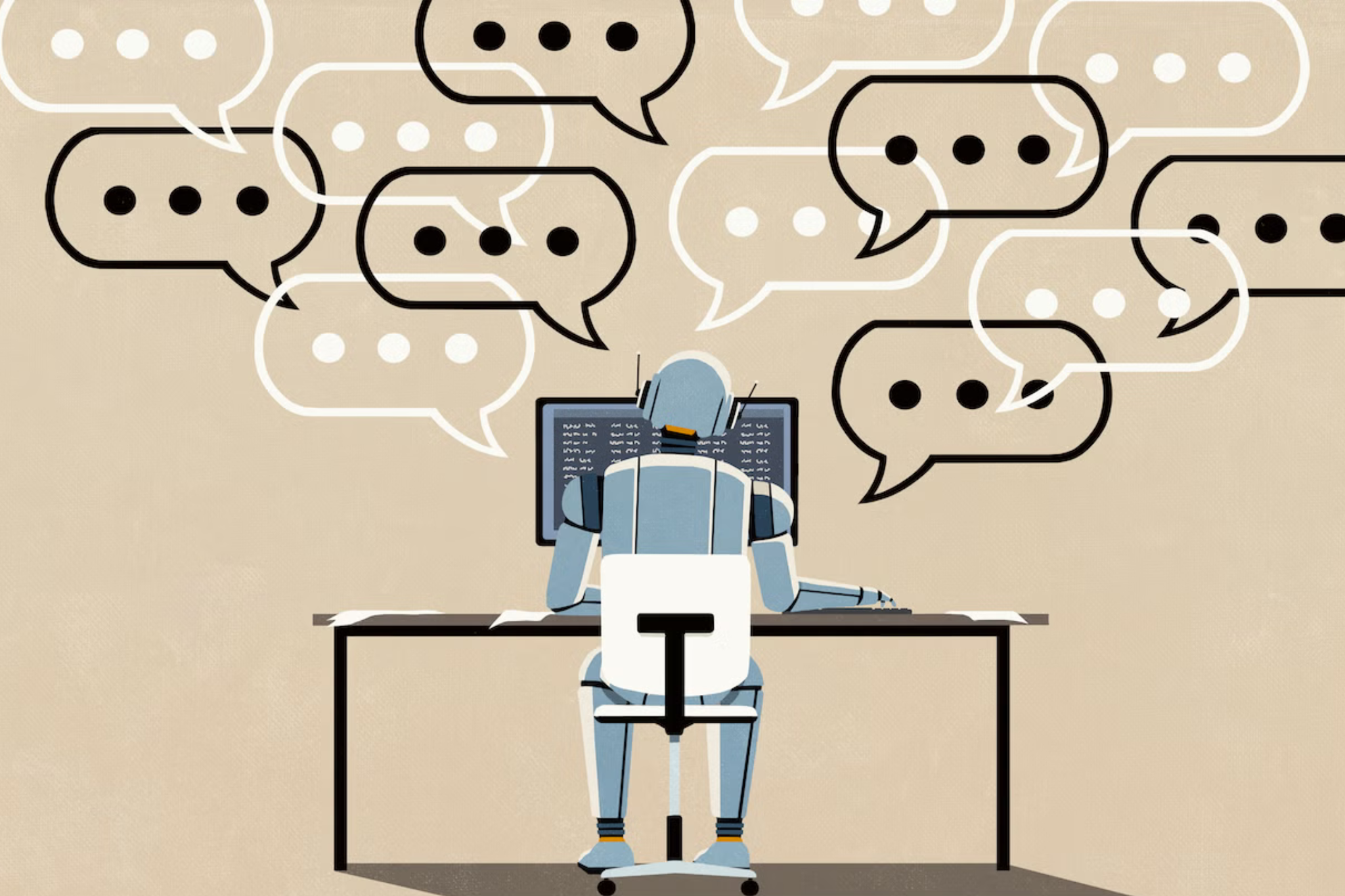
Thanh Huyen also admitted that the fear of being judged was one of the reasons why she sought out this tool.
One time, when she received a job request from her superior, Huyen wanted to ask more deeply but didn't know how to ask the question.
She worries that her questions are long, lacking focus, or make her superiors think she hasn't thoroughly researched the information.
So instead of thinking for herself, Huyen asked the AI how to ask her boss questions. Then, she asked this tool to rewrite the message into a complete, clearer and more logical version of the message.
Not simply a lack of expression or fear of being offended as in the above cases, dependence on AI in communication also comes from many other reasons.
MSc Le Dai Minh, an expert in the field of psychology, said that a part of young people looking for AI also comes from the sense of security that this tool brings.
"When sharing with AI, many people are not afraid of being criticized or judged, thereby freely expressing their thoughts and feelings to ask AI for advice," MSc. Minh emphasized.

Unlike a conversation with a real person, AI does not get annoyed if users ask the same problem over and over again and is always ready to respond at any time.
When you need advice or a text message in the middle of the night, when you don't want to bother your friends or aren't ready to let your loved ones know, the chatbot is always there to advise on both texting and behavior.
An entered question can quickly receive a series of answers from others, from polite and professional to approachable and humorous.
These conveniences make AI an attractive choice in situations where young people are afraid of saying the wrong thing, afraid of offending, or simply not confident enough to find the answer themselves.
"Crutch" in communication
Hoang Anh commented that the convenience of AI has helped him avoid awkward silences when he doesn't know what to say.
But in return, every time she receives a well-rounded message from the machine, Hoang Anh has less and less to figure out how to express her thoughts.
Over time, he no longer only asked AI when he was really stuck. This tool has become a familiar choice whenever he is faced with most communication situations.

Instead of accepting the sometimes clumsy messages, he tends to find a more "correct" version before sending.
And the fact that there is always a solution that is considered more elaborate makes Hoang Anh increasingly self-conscious about his own expression.
Not only Hoang Anh, the longer she used it, Tuyet Hoa also worried because she realized her reflexes were gradually changing.
She said that there are times, even with simple things like texting to ask for sick leave or opening up to a new group, her first reaction is to open ChatGPT.
However, Hoa believes that without AI, she can still chat naturally with friends and relatives.
"Difficulties mainly appear in work emails, administrative documents or stressful conversations," Hoa shared.
Thanh Huyen also noticed similar signs. Previously, she used to be quite confident in communication and was considered by everyone to be skillful and know how to speak.
But when she started regularly asking AI to rearrange her sentences, Huyen realized she relied more and more on this tool to turn her thoughts into clearer, more logical, and more convincing paragraphs.
She worries that one day she will lose the nuances of her own language, will no longer know how to ask her own questions, will not be able to organize her thoughts, and will always need AI to "package" her ideas.
"I'm afraid that one day I will lose connection in human communication, both online and in person," Huyen confided.
According to MSc Le Dai Minh, if AI support lasts long and becomes a form of dependence, individuals will lack the opportunity to practice soft skills, typically communication skills.
But more worrying is the risk of losing the ability to connect emotionally and empathize when users always entrust communication to machines.