Hunt and retain technology talent in China
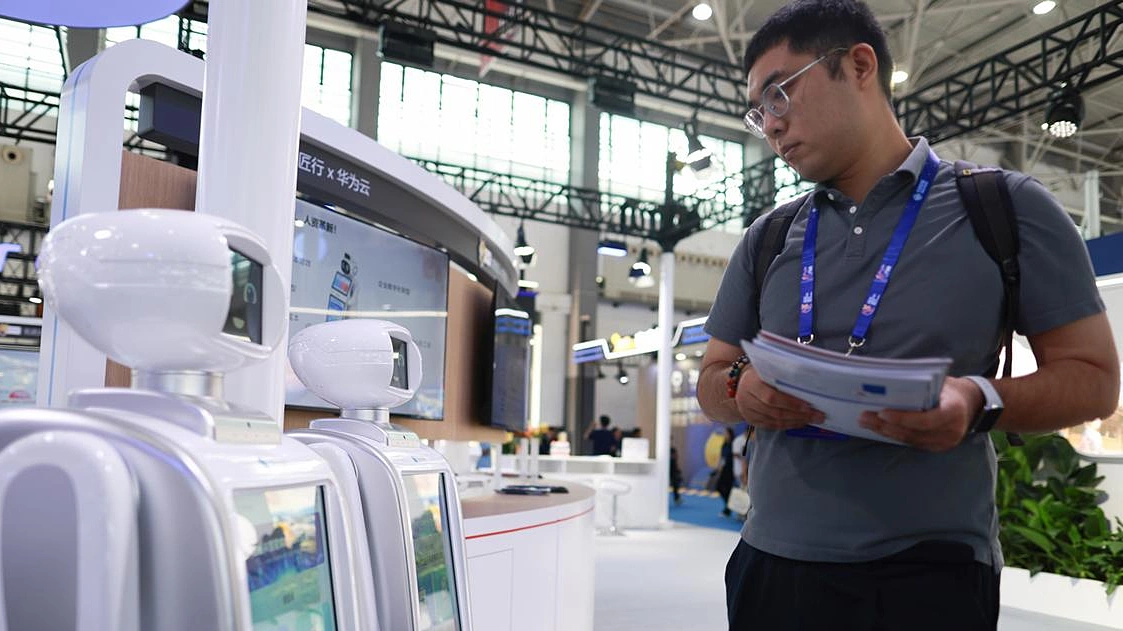
Chinese technology companies are considered to be entering a "war" for technology talent, especially AI and semiconductors. Many businesses are promoting recruitment and retention strategies with generous salaries and many other benefits.
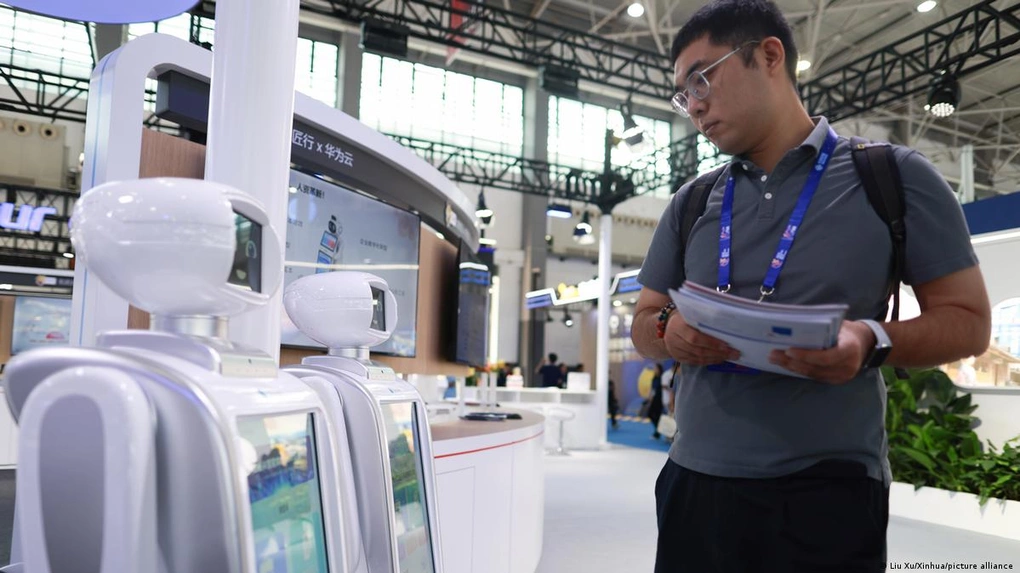
"Lock people in" with incentives
According to SCMP, Chinese technology companies, especially AI and semiconductor businesses, are implementing "unprecedented" plans to recruit and retain talent. A series of recent financial reports shows that the wave of stock allocation is taking place at a very large level, from giving to allocating shares to employees to "lock in" them.
For example, AI chip company Cambricon Technologies early last week allocated nearly 600,000 shares to 124 key employees, equivalent to about 5.57 million yuan ($828,000). Zhongji InnoLight, a manufacturer of optical transceiver equipment used in data centers, in early August also allocated 2.48 million shares to 99 key employees. Moore Threads, a Beijing-based graphics processor manufacturer, put 1,080 members, accounting for 85% of its workforce, into its own bonus fund. Semiconductor equipment manufacturer Advanced Micro-Fabrication Equipment China (AMEC) announced in March a plan to distribute restricted stock to more than 97% of all employees.
According to technology site TechNews (Taiwan), Zhu Yiming, founder of memory chip manufacturing company ChangXin Memory Technologies (CXMT), pledged to reserve 50% of his shares (equivalent to 768 million shares) for employee incentive activities within a decade, and at the same time removed himself from the list. He has also never received a salary at CXMT since the company was founded in 2016.
Last week, Tencent announced on its website that it had awarded more than 38.6 million shares to employees, equivalent to 0.42% of the total issued shares. MiniMax in Shanghai is more generous, providing 1.16 million shares to employees but without performance targets.
Hunting for personnel from the school bench
According to China Daily, Chinese companies are strongly expanding their technology human resources, from college graduates to students, even targeting teenagers. In June, Tencent launched a summer camp for 13-18 year old students, providing mentoring and training in artificial intelligence, robotics and quantum computing product management for 3-8 weeks.
Previously, in October 2025, ByteDance founder Zhang Yiming established a non-profit research center targeting 16-18 year old students. The center selects 30 students each year as full-time research interns in the fields of AI, mathematics, and computer science.
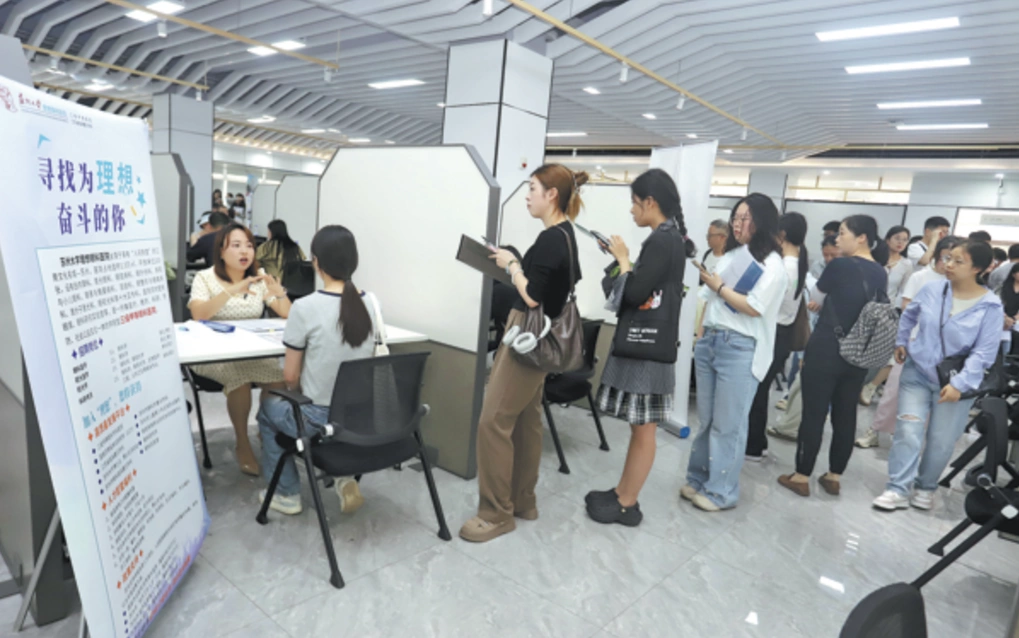
Chinese auto group Geely launched a talent recruitment program in March, recruiting students right after graduating from high school and ensuring they receive training and immediate employment with salaries equivalent to those of university graduates. They will participate in a separate training program on AI, new energy vehicles, low-altitude aviation and satellite technology along with their studies, paying a fee of 5,800 yuan ($800) but will be refunded when they get the certificate.
"Artificial intelligence is a very new industry," Yunan Zhang, Vice President of MiniMax, told Rest of World. "Many previous work experiences are no longer relevant or even an advantage. Academic degrees are also not absolute standards. They are just references. We want to look for a person's innate intelligence."
Instead of simply targeting younger candidates, Zhang said the company evaluates candidates based on their intellectual curiosity, passion for AI and evidence of their abilities. According to him, MiniMax currently has an average employee age of 29, more than 73% working in the research and development department.
"Businesses that wait until students graduate to find out who is the best, they have already failed," said Vahid Haghzare, CEO of a company specializing in recruiting technology personnel in Asia and the Middle East Silicon Valley Associates Recruitment.
According to data from recruitment platform Maimai (China) published in early July, in the first 5 months of the year, the number of vacancies at job fairs on university campuses increased by 3.56% over the same period last year. The AI sector increased the most with 47.3%. The proportion of AI job postings also increased from 26.41% in 2025 to 37.56% in the first half of 2026, meaning that about 4 in 10 new student job openings in China are now AI-related.
"Compared with previous years, the biggest change in student recruitment this year is the demand for AI talent," an Alibaba recruitment expert told China Daily. "More than 80% of our student vacancies this year are related to artificial intelligence, spanning LLM, multimodal AI, AI infrastructure and AI applications."
Still in short supply
Global strategic management consulting firm McKinsey estimates that China could face a shortage of 5 million workers in the field of artificial intelligence by 2030. Existing universities and human resources can only meet about a third of the demand.
According to Maimai's AI Talent Report earlier this year, the average monthly salary for new AI positions in January-July 2025 was 61,475 yuan ($9,146), an increase of 4.33% over the same period last year. 42.66% of new hires were offered an average monthly salary of 50,000-80,000 yuan (6,896-11,000 USD).
Regarding semiconductors, the 2026 Semiconductor Industry Talent Supply and Demand report published in June estimated that China lacks more than 300,000 employees. Of these, the biggest gap lies in experienced technical positions, while the source of new graduates is not enough to immediately replace human resources who can work at factories or design departments.
However, according to Seoul Economic Daily, although the talent war spreads on many fronts, companies still prioritize attracting experts. Dana Zheng, CEO of technology recruitment company Dolphin Leap Career, in the AI field alone, salaries for experts "regularly reach 7 figures in yuan", the basic salary alone is 60,000 yuan (8,886 USD) per month, about 16 times the average income of Chinese people.
According to China Newsweek, several PhD graduates specializing in language modeling from Tsinghua University are receiving annual salaries of 6 million yuan ($892,000).
On a national scale, information on the website of the Management Committee of Wuhan Donghu High-tech and Industrial Development Zone (WEHDZ) in June said it had launched the "AI PhD 300" program aimed at attracting experts both domestically and globally. It is expected to recruit about 100 PhDs per year, a total of 300 people in three years, focusing on AI chips, smart sensors and humanoid robots.
Despite great incentives, industry experts say money alone is not enough to attract top engineers and researchers. "Many professionals are looking for opportunities to work on complex problems, access high-quality data, influence business decisions and deploy solutions at scale," said Edward Hsu, WTW's Head of International Compensation Data Analytics.
Haghzare of Silicon Valley Associates Recruitment agrees. According to him, compensation is only the "third or fourth" factor for experts. "They care more about whether there are enough computing resources, and whether colleagues are world-class," Haghzare said.