AI works are copied, what should creators do to protect their rights?


(Dan Tri) - An AI character can be created after months of testing, editing, and consistent maintenance. But when a product is copied, the creator must prove his or her own contribution.
Virtual characters, AI KOLs, images, videos or movies created with the support of artificial intelligence are increasingly appearing on social networks.
Behind a finished product can be dozens, even hundreds of times of testing commands, choosing images, adjusting characters and post-production.
However, when an AI product is taken back, edited or continued to be used by others to create new content, the question is how can creators protect their achievements?
Just because you use AI doesn't mean you lose your copyright
Talking to Dan Tri reporters, lawyer Nguyen Van Duy, Director of Hoang Duy and Associates Law Firm, said that not all products using AI are protected by copyright.

Lawyer Nguyen Van Duy, Director of Hoang Duy and Associates Law Firm (Photo: Person provided).
According to the lawyer, the overarching principle of intellectual property law is that copyright is associated with human creative achievements. The author must be human, and AI is considered a support tool, not the subject of copyright.
The Intellectual Property Law amended in 2025 directly addresses this issue for the first time. Clause 5, Article 6 assigns the Government to regulate the generation and establishment of intellectual property rights for objects created using artificial intelligence systems.
On that basis, Decree 134/2026/ND-CP adds Article 5a to Decree 17/2023/ND-CP.
According to lawyer Duy, copyright for products using AI only arises when three conditions are met.
First, the product must have a significant and decisive creative contribution from humans.
Second, humans must be responsible for the content and legality of the product.
Third, the process of creating the product must not harm the copyright or related rights of the works used as input data.
Thus, products that are completely automatically created by AI or do not fully meet the above conditions will not give rise to copyright.
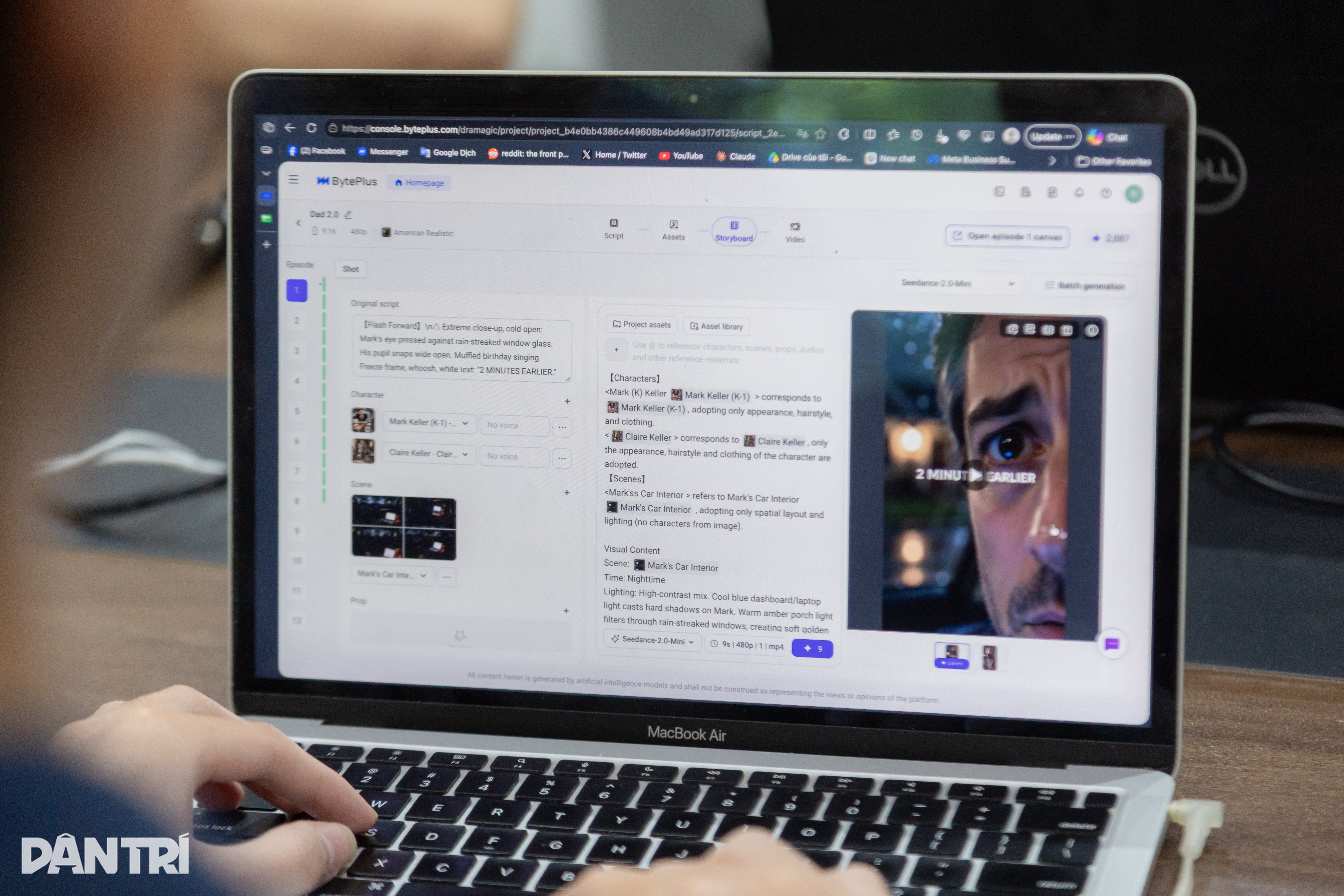
According to lawyer Duy, creators need to save prompts, input data, drafts and edit history to prove their contribution (Photo: Tuan Anh)
According to lawyer Duy, if the user only enters a simple command and then lets the system make all the decisions, without additional choices, edits or significant creative intervention, the ability to establish copyright will be very limited.
On the contrary, if people are deeply involved in the creative process, from formulating ideas, developing commands, selecting results, editing to deciding on the final product, that contribution can be considered for protection.
The important point, according to the lawyer, is not whether a work "uses AI or not", but the actual level of human creativity in the process of creating the product.
What must the creator prove that he or she has done?
When a dispute occurs, the final product is not necessarily enough to prove who has the right.
According to lawyer Duy, a person requesting to protect the rights to a product using AI needs to prove his or her own creative process. At the same time, they must honestly declare their use of AI when requested by competent authorities.
So, instead of just saving the final photo, video or work, creators should keep the entire "trace" of the working process.
These can be prompts and command history, input data, technical parameters, drafts, intermediate versions, original files, editing history as well as notes expressing creative intentions.
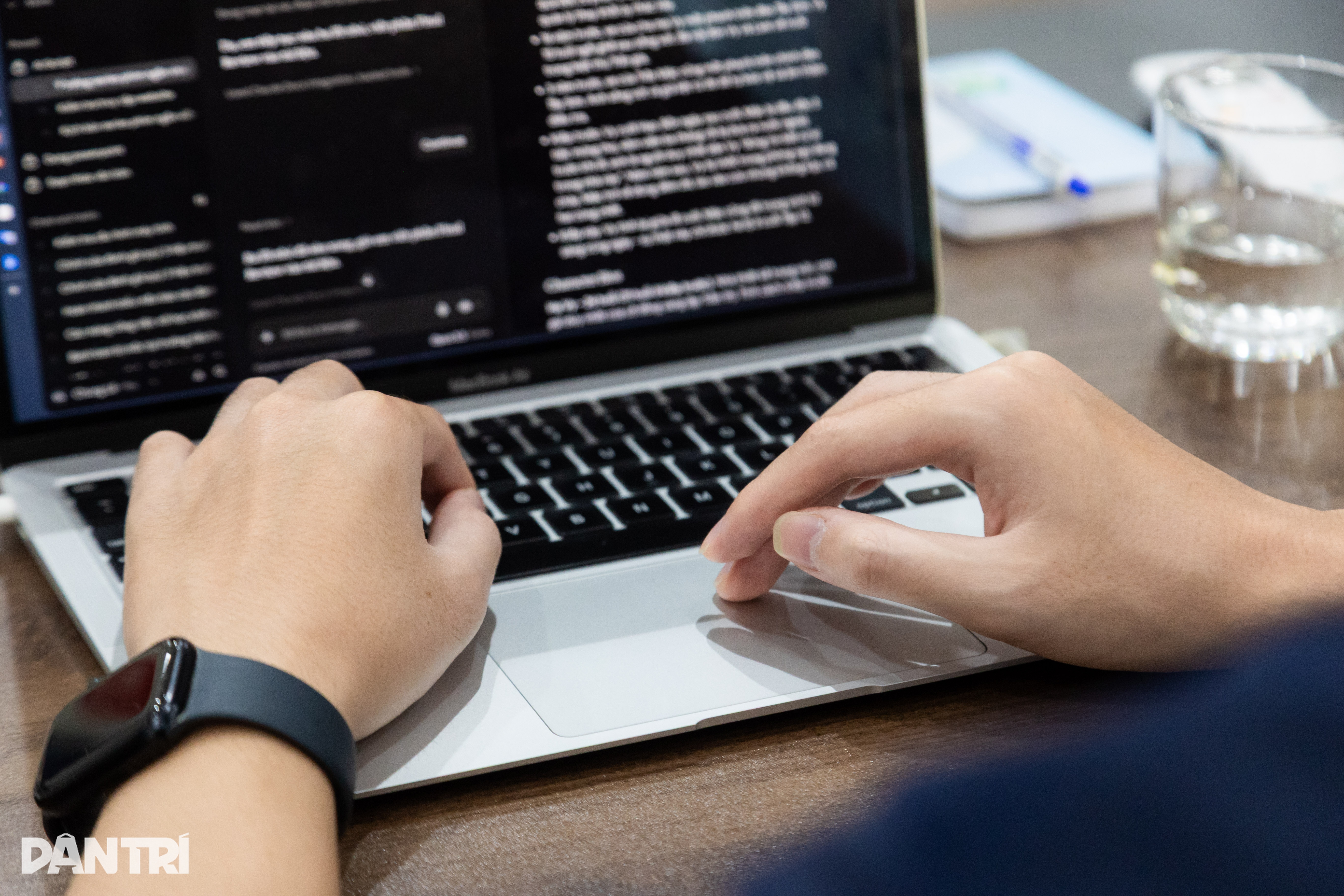
According to lawyer Duy, when a dispute occurs, the final product is not enough, the creator needs to prove the entire process of participation in creating the work (Photo: Tuan Anh)
According to lawyers, these documents should have a clearly established date.
Relying solely on the history saved on a personal account may not be reliable enough because in a dispute, the other side may question whether that data is capable of being edited or not.
For AI characters with commercial value, lawyer Duy recommends that creators consider applying for copyright registration at the Copyright Office as soon as possible, or create a certificate to record the process and time of creation.
Copyright registration is not a mandatory procedure for rights to arise. However, the certificate can become beneficial evidence if a dispute arises.
However, lawyers note that a certificate is not absolute proof if the other side can provide grounds to prove the contrary.
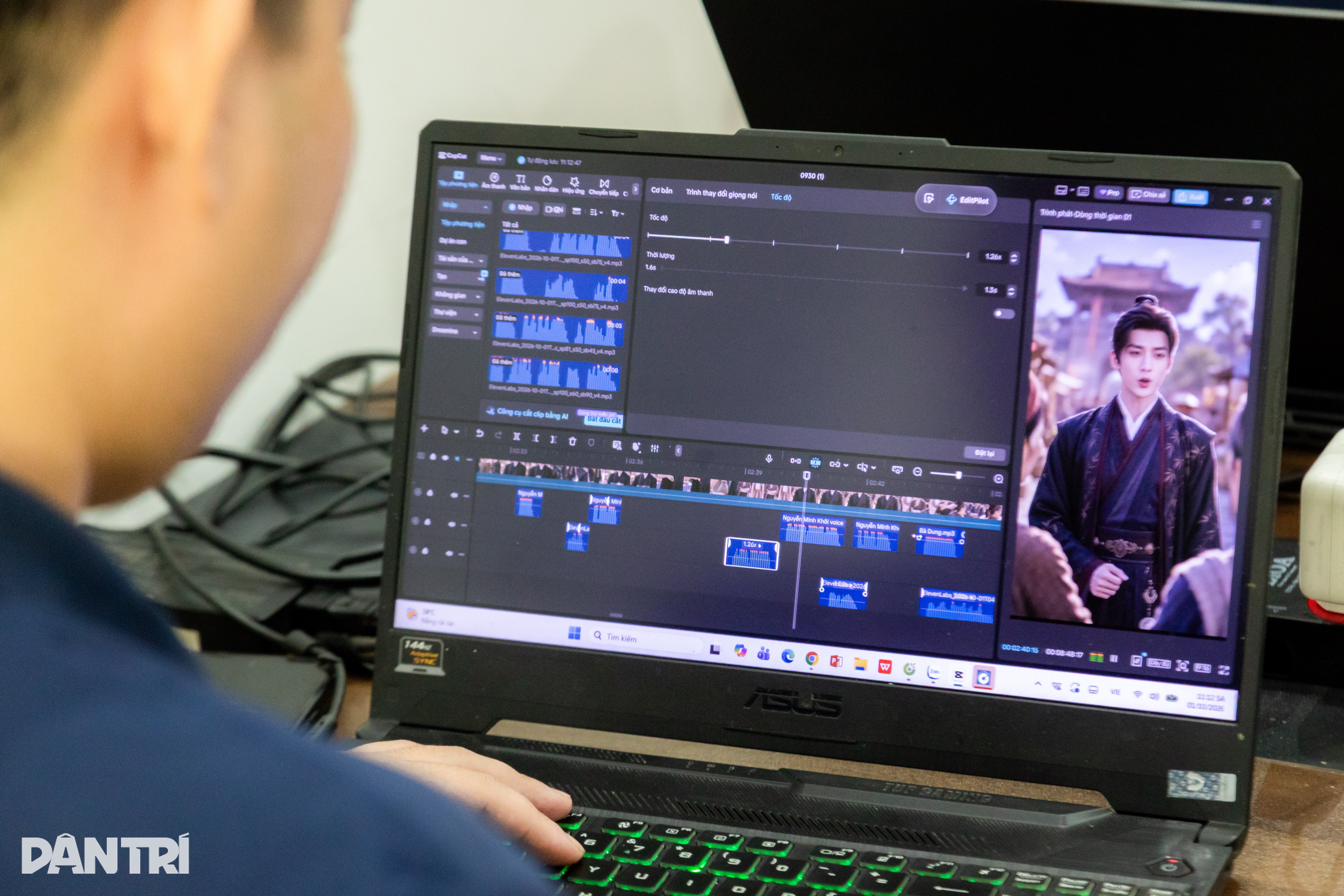
Lawyers recommend that for AI characters with commercial value, creators should soon establish evidence and consider registering copyright (Photo: Tuan Anh).
Another important requirement is that creators must honestly declare their use of AI.
According to lawyer Duy, intentionally concealing the use of AI to obtain a certificate can lead to administrative sanctions according to Decree 341/2025/ND-CP. The issued certificate is also at risk of being canceled if it is later discovered that the declared information is not truthful.
For characters exploited for business activities, such as virtual KOLs or brand mascots, lawyers believe that owners should also consider registering additional trademarks for the character's name and image.
Trademarks cannot prevent all copying of images. However, this can become an additional layer of protection when the character is used commercially.
In the context of AI making it easier to create, copy and transform images, lawyer Duy believes that creators should not wait until a dispute occurs to start looking for evidence.
It is important that right from the beginning of a project, creators need to document the product creation process, clearly define their contribution, and be transparent about the use of AI.
Because when a dispute occurs, the question is not only "who posted the product first", but also who can prove that they actually participated and played a decisive role in the product's creation process.