Schools interact via iPad
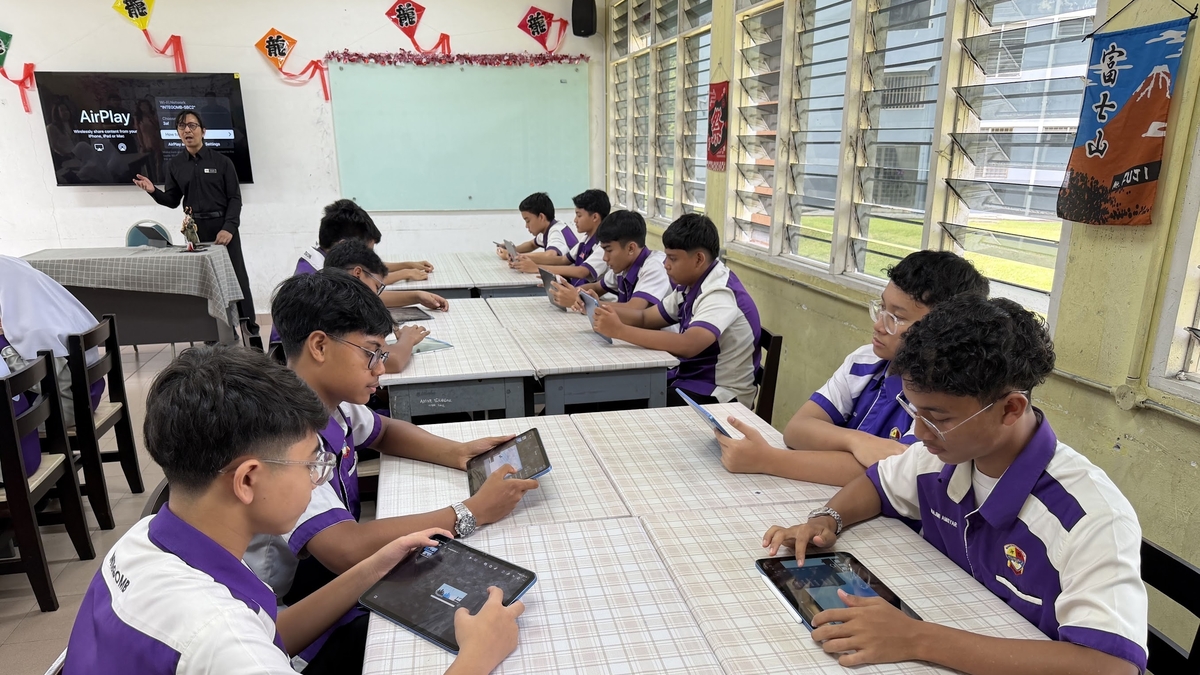
One morning in early August, teacher Muhammad Al Azani Zainal showed up early on campus with nearly 20 students to prepare for physical education class.
Instead of observing and giving instructions based on common sense, the teacher uses an iPad to record each student's squad and jump movements, then gives each student improvement instructions based on the analytical data of specialized software. Each student has a unique code with data saved from the starting date, to facilitate measuring performance and the ability to improve technique after the study period.
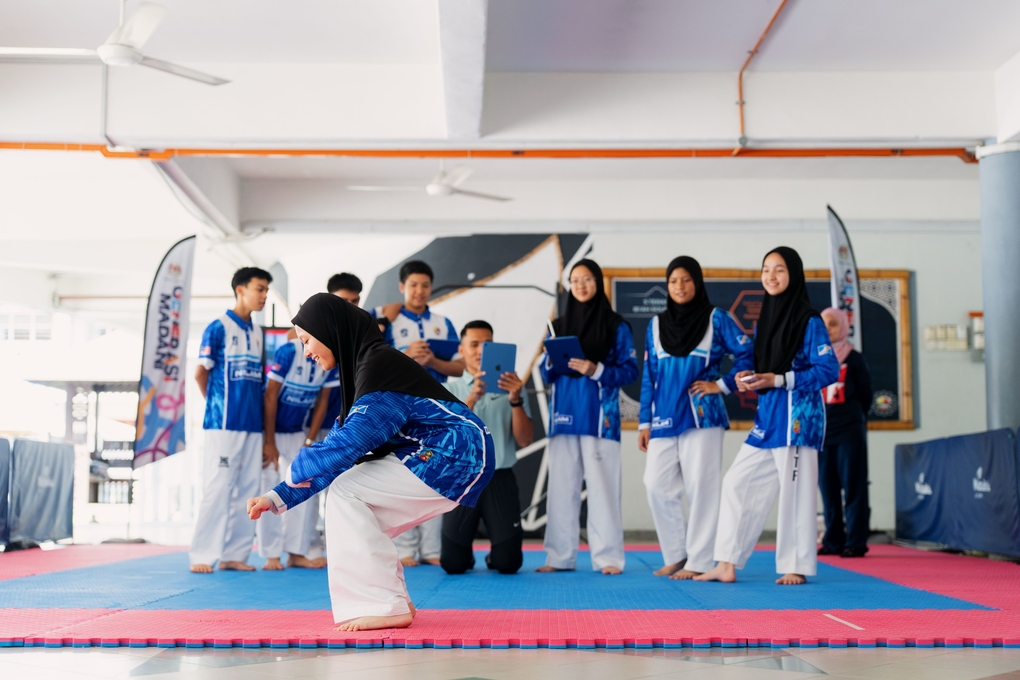
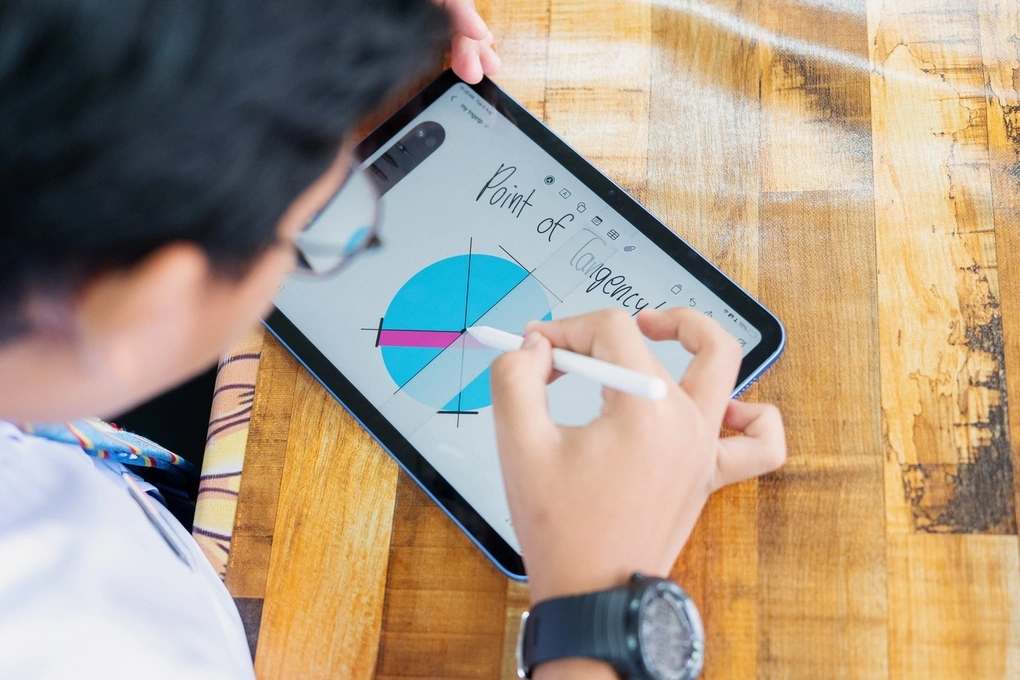
Less than 100 meters away in the school's cultural area, Ms. Fazlina Ibrahim also had a math lesson with 32 students to learn the concepts of tangent lines and radius. Each child uses an iPad, divided into groups of four, takes photos of real-life circular objects such as bottle caps, uses the Freeform application to draw and measure the radius, and determine real-life angles. Thanks to Reality Composer software, students learn how to create 3D shapes according to their personal vision and present them to the class when connecting the tablet they are using to the interactive screen using AirPlay.
In teacher Johan Abd Majid's Japanese class, students are assigned to learn at least 8 vocabulary related to traffic and transportation. Students learn how to use Keynote to write words directly on the screen according to instructions, combined with using Translate software to learn pronunciation support as well as add to the presentation of learning results to the class.
Mr. Al Azani, Abd Majid, and Ms. Fazlina Ibrahim are three of 58 teachers who are teaching via iPad to 596 students aged 13-17 at Sekolah Berasrama Penuh Integrasi Gombak - SBPI Gombak (InteGomb), about 20 km from the center of Kuala Lumpur. This is one of the 10 best boarding schools in Malaysia, notable for applying the 1:1 iPad model (one device per student) in the classroom with more than 500 iPads equipped throughout the school and 48 teachers with Apple Teacher certification.

SBPI Gombak began putting iPads into trial use in 2014 before applying the 1:1 model throughout the school in 2018. Each student is equipped with an individual iPad, used for both studying in class and doing homework in the dormitory. The machines are installed with Apple's specialized management software similar to the business model. Along with the learning program, other information is also updated by the school for students daily via tablets.
In addition to Apple's free training program for teachers using iPads and Macs in education (Apple Teacher), the school expanded the Apple Tech Leaders program from 2018 to accelerate the digital transformation process through peer-to-peer training.
About 100 students in the role of "tech leader" will be responsible for guiding their classmates on daily use of devices and applications, as well as organizing seminars on the use of applications and technology for other students. Team leaders also have access to Apple's own training program (Apple Professional Learning Specialists) to regularly update new skills and applications.
According to Mr. Muhammad Nabil Abdullah, in charge of the school's digital transformation, using tablets on a school-wide scale has helped significantly change the learning efficiency of students. The device helps increase practical experience in multiple fields of learning such as creating STEM ideas, augmented reality (AR) applications, programming, application development, website making or making your own short films.
In 2026, the school had a student win a gold medal in Malaysia's national I-Band competition thanks to the GarageBand application. At the International Creative Creator Playground 2026 software writing competition, the school also achieved much success with one Platinum award, 14 Gold awards and two Silver awards thanks to students' early exposure to Swift Playgrounds software.
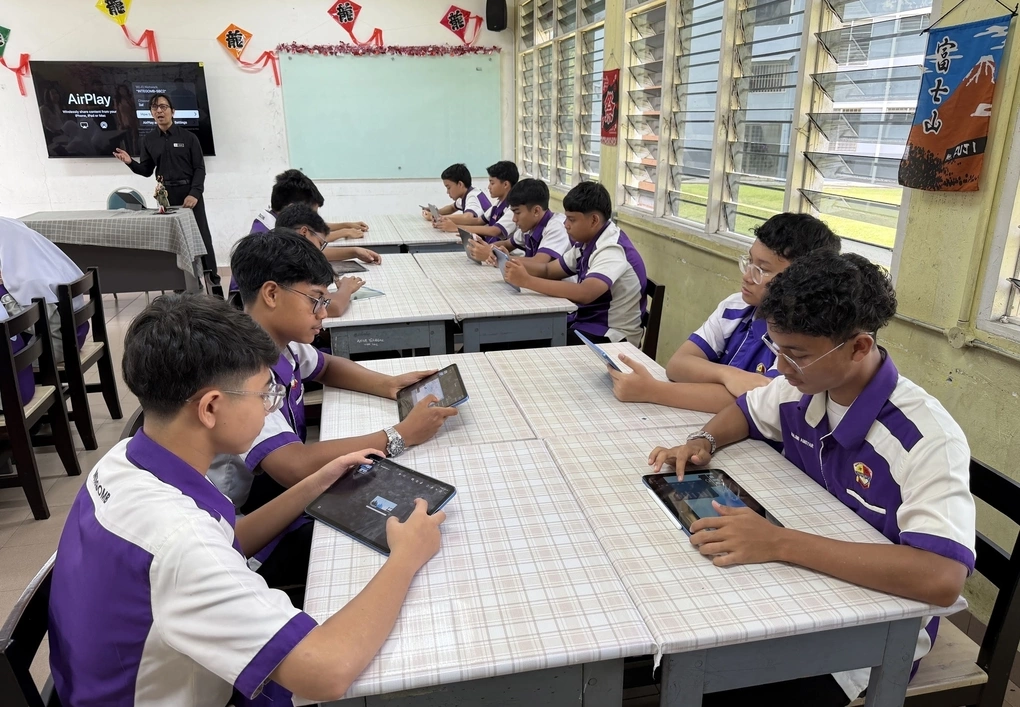
In classrooms, each teacher also uses an iPad with the Apple Classroom classroom management application. The software allows teachers to guide students throughout the class period, track homework progress, launch applications at the same time on their iPads as well as give exercises and quick tests according to a certain duration.
According to Apple's survey in Thailand, which has the highest rate of iPad use in schools in Southeast Asia, the introduction of digital devices to support learning helps 90% of respondents feel more curious and eager to learn, 91% of people feel promoted in critical thinking skills as well as other improvements including willingness to try new things, develop creative skills, autonomy and more confidence.
Early exposure to digital skills also helps students keep up with today's most popular career trends. According to the World Economic Forum's Future of Jobs Report 2025, many technology-related skills include AI and big data, cybersecurity, technology understanding capacity, creative thinking...
Analyst Luis Francisco Vargas-Madriz of the World Organization for Economic Cooperation and Development (OECD) said that currently 88% of high school students (13-15 years old) and 96% of older students use AI every day but have not been instructed to identify the algorithm's biases and evaluate the quality of output information. This is an urgent issue that needs to be recognized by educational systems and given appropriate solutions to guide children in using technology properly to ensure they have all the best skills.
Although teaching does not necessarily require the use of technology, Mr. Dominic Liechti, Apple's Senior Director of Global Product Marketing, believes that technology is truly an important tool in education. "They help amplify the right skills for the future. These are creativity, curiosity and critical thinking," he said.
According to him, in the era of artificial intelligence gradually becoming popular, the application of technology in education is increasingly important and causes the role of teachers to change clearly. Teachers will gradually shift into coordinators and guides for students instead of just explaining knowledge as traditionally. Meanwhile, students also need to be trained in critical thinking when using AI. "AI mainly solves low-level thinking skills, while higher-level thinking skills cannot be replaced," he said.
With rapid changes in AI trends and the use of rapidly developing technology considered an inevitable development direction, Mr. Luis Francisco Vargas-Madriz said that the next Program for International Student Assessment (PISA) held in 2029 will for the first time use real-life situations instead of traditional multiple-choice questions on a large scale in more than 100 countries.